
Cancer Chemotherapy Safety: How to Handle and Administer Antineoplastic Drugs Correctly
- Colin Hurd
- 29 January 2026
- 13 Comments
Why Chemotherapy Safety Isn’t Just a Hospital Rule - It’s a Lifesaver
Chemotherapy drugs don’t just fight cancer. They can poison the people giving them. Nurses, pharmacists, caregivers - even family members cleaning up after treatment - are at risk if these drugs aren’t handled the right way. That’s not scare tactics. It’s science. A 2022 study found that 1 in 5 oncology nurses had detectable traces of chemotherapy drugs on their skin after a shift, even when they thought they were protected. These aren’t just chemicals. They’re cytotoxic agents designed to kill fast-growing cells. That includes cancer. But it also includes your hair follicles, gut lining, and bone marrow. And if they get on your skin, inhaled, or swallowed, they can do the same damage to you.
The Four Pillars of Safe Chemotherapy Administration
The 2024 update from ASCO and ONS didn’t just tweak old rules. It rebuilt the system around four non-negotiable safety pillars. Skip any one, and you’re gambling with lives - patient and provider alike.
1. The Environment Has to Be Built for Safety
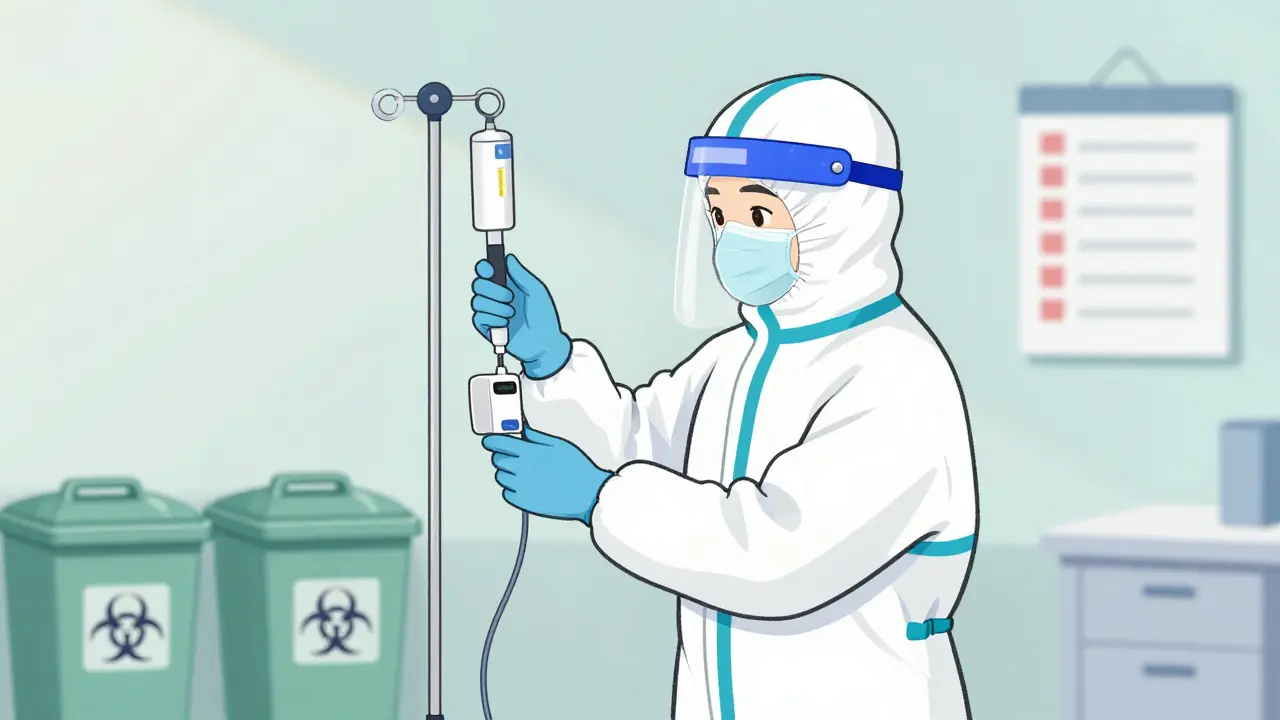
You can’t just slap on gloves and call it safe. The room matters. Engineering controls like closed-system transfer devices (CSTDs) are now standard. These are special connectors that prevent drug vapors and droplets from escaping when you draw up or mix chemo. Facilities without them are playing Russian roulette. The 2024 standards require CSTDs for all hazardous drugs - not just some. And if you’re compounding drugs, you need a certified biological safety cabinet. No exceptions. Even in small clinics. The cost? Up to $25,000 per facility. But the alternative - long-term health risks for staff - is far higher.
2. Patient Consent and Education Are Mandatory
It’s not enough to say, “You’re getting chemo.” You must document the exact drug name, dose, schedule, and what it’s meant to do. Patients need to know what side effects to watch for, especially with newer therapies like immunotherapies that can trigger cytokine release syndrome (CRS). CRS can spike a patient’s temperature to 104°F in minutes, drop their blood pressure, and shut down organs. If the team doesn’t have antidotes like tocilizumab ready, death is possible. That’s why the 2024 standards now require hospitals to have CRS response kits on hand - not just in the pharmacy, but at the bedside.
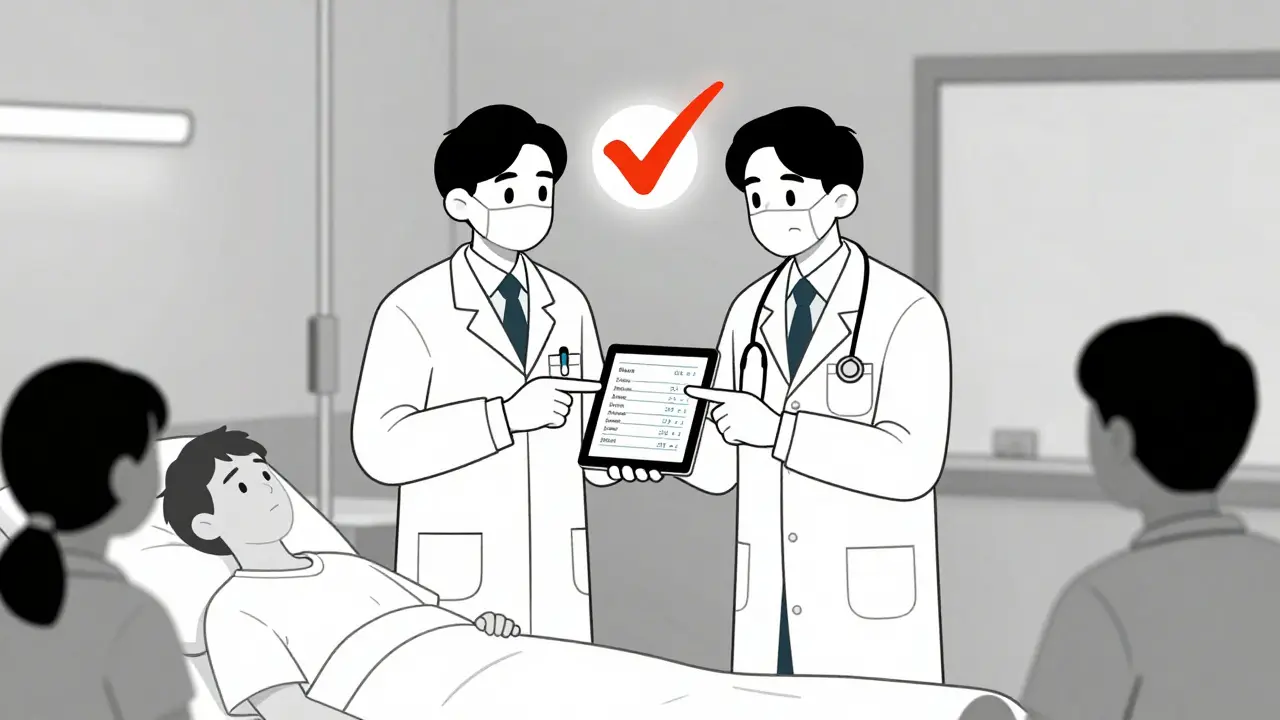
3. Four-Step Verification - No More Guesswork
This is the biggest change since 2009. Before, you checked the patient’s name and date of birth. Now, you need a fourth verification - done right at the bedside, in front of the patient, by two licensed staff members. Both must independently confirm: patient name, DOB, drug name, dose, route, and time. It’s not a formality. It’s a fail-safe. In 2022, the NCCN database showed that 18% of chemotherapy errors were due to wrong patient or wrong drug. That’s not a typo. That’s a death sentence. The fourth step cuts those errors by half. And yes, it adds 7-10 minutes per patient. But that’s better than burying someone because you mixed up two similar-sounding drugs.
4. Monitoring During and After Administration
You don’t just walk away after the IV starts. Patients need to be watched for at least 15-30 minutes after the first dose, especially with new therapies. CRS, infusion reactions, and allergic responses can hit fast. Nurses now have checklists for what to do if a patient’s oxygen drops or their heart races. And it’s not just in-hospital. Home care patients need clear instructions on what symptoms mean danger - and who to call immediately.
What Gear Is Actually Required - Not Just Recommended
Wearing gloves isn’t enough. You need the right gloves. NIOSH and USP <800> require chemotherapy-tested double gloves. Not just any nitrile. They must be tested for permeation resistance against specific drugs like carmustine and thiotepa. Single gloves? They fail within minutes. Studies from 1992 to 2020 show contamination spreads from outer gloves to skin, then to surfaces, then to other people. That’s why PPE isn’t optional. It’s your shield.
Here’s what you actually need:
- Double chemotherapy-tested gloves - changed every 30 minutes or if torn
- Impermeable gown - not just any lab coat. Must be tested to ASTM standards
- Eye protection - goggles or face shield if splashing is possible
- Respirator (N95 or higher) - required if aerosols are likely (e.g., during IV bag changes or spills)
- Chemotherapy spill kit - stocked with absorbent pads, neutralizing agents, and sealed disposal bags
And here’s the hard truth: once you’ve handled chemo, your gloves and gown are contaminated. Not ‘maybe.’ Not ‘if you’re careful.’ They’re contaminated. You don’t reuse them. You don’t wash them. You throw them in a red hazardous waste bin - separate from regular trash. Period.
Home Chemotherapy Is the Wild West - And Families Are Paying the Price
More than 40% of cancer patients now get some chemo at home. But safety standards were written for hospitals. Families get a pamphlet and a phone number. That’s not enough.
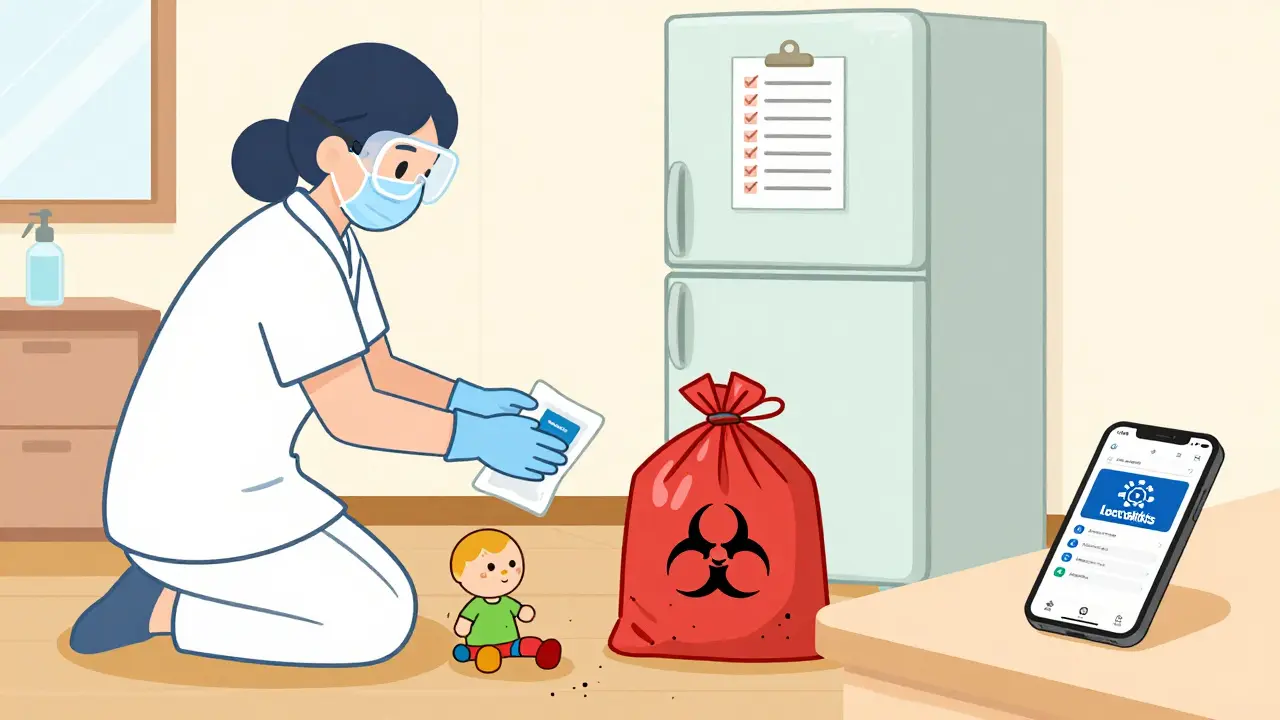
According to the American Cancer Society, 22% of home care incidents involve improper disposal of syringes or IV bags. 17% involve spills cleaned up with paper towels. 82% of caregivers are terrified of handling urine or vomit after treatment. And here’s the kicker: the drugs stay active in bodily fluids for up to 72 hours. That means a toilet seat, a sink, a child’s toy - all can become contaminated.
The ASCO Chemotherapy Safety at Home toolkit helps. It includes color-coded bags for waste, step-by-step spill guides, and a checklist for caregivers. Facilities that use it see a 41% drop in caregiver anxiety. But only 1 in 3 clinics offer it. If you’re giving chemo at home, ask for this toolkit. Don’t wait. Don’t assume it’s included.
The Hidden Cost - Money, Time, and Burnout
Full compliance isn’t cheap. For a medium-sized clinic, it takes:
- $22,000-$35,000 for facility upgrades (CSTDs, cabinets, ventilation)
- $8,500-$12,000 for staff training and certification
- $4,200-$6,800 a year for PPE and waste disposal
- $15,000-$40,000 to modify EHR systems to support the four-step verification
And staff? They’re tired. Nurses report the fourth verification step slows them down. One nurse on Reddit said, “We’re already drowning. Adding 10 minutes per patient feels like adding a brick to our backs.” But here’s what they also say: “I sleep better knowing I didn’t give the wrong drug.”
And the data backs them up. Facilities with full compliance see 63% fewer medication errors and 78% fewer occupational exposures. That’s not just numbers. That’s nurses who don’t get cancer because of their job. That’s patients who don’t die from preventable mistakes.
The Equity Problem - Who Gets Safe Care?
Not every clinic can afford CSTDs. A 2022 study found 43% of rural oncology practices can’t implement full safety protocols because of cost. That means patients in small towns get the same drugs - but not the same protection. Nurses there often use single gloves. Spills are cleaned with paper towels. Verification is done by one person because there’s no second nurse on shift.
This isn’t just unfair. It’s dangerous. It creates a two-tier system: safe care for the wealthy, risky care for the rest. The 2024 standards don’t fix this. They just highlight it. Until funding and policy catch up, the gap will keep growing.
What’s Next? AI, Certification, and the Future
By 2025, the NCCN will require proof of the fourth verification step for facility accreditation. In 2026, a national certification for chemo handlers is expected. And pilot programs are already testing AI tools that scan patient IDs, drug labels, and orders in real time - flagging mismatches before a dose is given. Imagine a system that says, “This patient is on drug A. This order is for drug B. Are you sure?” That’s coming.
But no tech replaces training. No app replaces a second pair of eyes. No algorithm replaces a nurse who knows her patient’s voice when they say, “I don’t feel right.”
What You Can Do Right Now
If you’re a patient: Ask your nurse, “Do you use double gloves? Do you do a fourth check before giving my drug?” Don’t be shy. Your life depends on it.
If you’re a caregiver: Get the ASCO Chemotherapy Safety at Home toolkit. Use the spill kit. Don’t flush syringes. Wear gloves when cleaning up bodily fluids. Wash hands immediately after. And if you’re scared - say so. You’re not alone.
If you’re a provider: Audit your PPE. Check your EHR. Make sure your staff has done the 8-hour certification. And if you’re cutting corners because you’re short on time - stop. One mistake can undo a year of treatment.
Chemotherapy saves lives. But it can also end them - if we don’t treat it with the respect it demands.
Can I reuse chemotherapy gloves if I wash them?
No. Chemotherapy gloves are single-use only. Even if they look clean, microscopic drug particles can remain on the surface. Washing doesn’t remove them. Reusing gloves risks exposure to you and others. Always change gloves after 30 minutes of use or if they tear - no exceptions.
Why do I need two licensed staff for the fourth verification?
One person can make a mistake - misread a name, confuse two similar drugs, mishear a dose. Two independent checks reduce that risk by up to 90%. The 2024 standards require both to verbally confirm all details - patient ID, drug, dose, route, time - right at the bedside. This isn’t bureaucracy. It’s the last line of defense against fatal errors.
Are home caregivers trained properly?
Too often, no. Many caregivers get a printed handout and a phone number. But 65% say they feel unprepared. The best resource is the ASCO Chemotherapy Safety at Home toolkit - it includes videos, checklists, and spill guides. Ask your clinic for it. If they don’t offer it, push for it. Your safety matters.
What should I do if I spill chemotherapy at home?
Don’t use paper towels or a regular mop. Use your chemotherapy spill kit. Put on gloves, goggles, and a gown. Absorb the spill with the provided pads. Place all contaminated items - including gloves and pads - into a red hazardous waste bag. Seal it. Label it. Don’t dispose of it with regular trash. Contact your oncology team for pickup instructions. Wash your hands immediately after, even if you wore gloves.
Is chemotherapy safe for pregnant nurses?
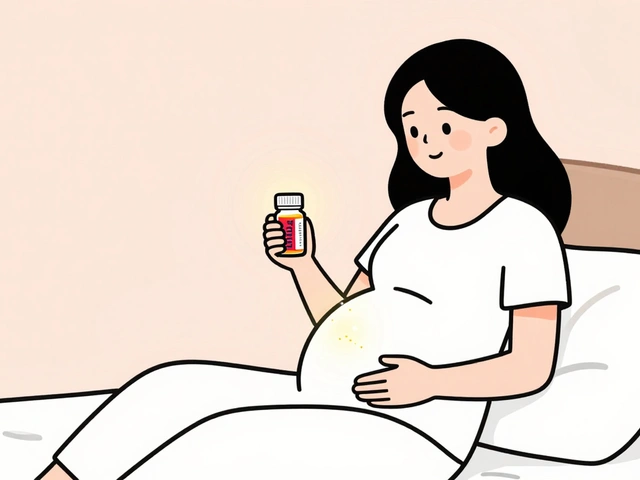
No. The drugs can cross the placenta and harm a developing fetus. Pregnant staff should not handle chemotherapy drugs. Most clinics have policies to reassign pregnant nurses to non-hazardous duties. If your clinic doesn’t, ask for a written policy. Your health and your baby’s health come first.
What are the signs of cytokine release syndrome (CRS)?
CRS can start within hours of an immunotherapy infusion. Watch for: fever above 100.4°F, chills, low blood pressure, trouble breathing, rapid heartbeat, dizziness, or confusion. If any of these happen, tell your nurse immediately. CRS can turn deadly in minutes. Hospitals must have antidotes like tocilizumab ready - don’t wait for them to find it.
Do all chemotherapy drugs require the same safety steps?
No. The 2024 standards group drugs into risk levels. High-risk drugs like carmustine and thiotepa require double gloving and CSTDs. Others may need fewer protections. But the fourth verification and PPE are required for all antineoplastic agents - no exceptions. Always treat every drug as if it’s high-risk until you confirm otherwise.
How often do staff need retraining?
Every year. The 2024 standards require at least 4 hours of annual refresher training. This includes updates on new drugs, changes in PPE, and recent error reports. Written exams and practical demonstrations are mandatory. If your facility doesn’t do annual training, ask why. Safety isn’t a one-time class.
Final Thought: Safety Is a Habit, Not a Checklist
Chemotherapy isn’t just medicine. It’s a weapon. And weapons need discipline. Every glove change, every double-check, every spill kit used - it’s not about following rules. It’s about protecting people. The patient. The nurse. The caregiver. The child who touches the toilet after Mom’s treatment. Everyone. If you skip one step, you’re not saving time. You’re risking lives. And that’s not a risk anyone should take.
Comments
Niamh Trihy
I work in oncology nursing in Dublin and this post hits home. We got CSTDs last year after a colleague got leukemia. Not because of one big mistake, but because of years of "it’s fine, we’re careful." The gloves, the double-checks, the spill kits - they’re not bureaucracy. They’re the only thing standing between us and a slow death. I sleep better now.
January 31, 2026 AT 00:58
Jason Xin
Funny how the same people who scream about "government overreach" are perfectly fine with hospitals mandating double gloves and 10-minute verification steps. Guess safety only matters when it’s not about your freedom.
January 31, 2026 AT 02:56
Holly Robin
THEY’RE LYING. CHemo is a scam. The drugs are designed to make you sick so you need MORE drugs. The "safety protocols"? Just a way to make you pay for more PPE so the pharma giants keep raking it in. My cousin got chemo and died anyway. The gloves didn’t save her. The system didn’t save her. It just made the hospital rich.
January 31, 2026 AT 13:59
KATHRYN JOHNSON
The United States leads the world in cancer survival rates. This is because of rigorous protocols. Any facility that fails to comply is operating illegally. There is no excuse for single gloves. No excuse for skipped verifications. This is not a suggestion. It is a legal and ethical obligation.
February 2, 2026 AT 07:29
Blair Kelly
I work at a rural clinic. We have one nurse. One tech. One set of gloves. We don’t have a CSTD. We don’t have a certified cabinet. But we still give chemo. Because if we don’t, the patients drive 3 hours to get it. And they’ll still get it. So tell me - do you want me to stop helping people because your fancy hospital has $25,000 to burn?
February 3, 2026 AT 01:33
Gaurav Meena
Brothers and sisters, I’ve seen this in India too - nurses using old gloves, no spill kits, families cleaning vomit with rags. But change is possible! Last month, we trained 12 caregivers using the ASCO toolkit. One mom cried and said, "I didn’t know I could die from touching my son’s urine." We gave her the color-coded bags. She’s alive today because she asked. You can too. 💪❤️
February 3, 2026 AT 07:26
Beth Beltway
You say "40% of patients get chemo at home" like it’s a victory. It’s negligence. The system failed. Families aren’t trained. They’re thrown a pamphlet and told to survive. This isn’t innovation. It’s abandonment. And the fact that you call it "progress" proves you’ve lost touch with what medicine actually means.
February 4, 2026 AT 06:52
Natasha Plebani
The epistemological rupture here is profound. We treat cytotoxic agents as if they are merely pharmacological entities, divorced from their ontological violence. The gloves, the CSTDs, the four-step verification - these are not technical fixes. They are performative rituals of containment, attempting to reify the boundary between the self and the toxic other. But the toxin leaks. Always. The system is a metaphor for late-stage capitalism’s inability to reconcile care with capital. We sanitize the surface while the rot festers beneath.
February 4, 2026 AT 22:54
Kelly Weinhold
I just want to say - to every nurse reading this - you are seen. You are loved. You are not just a cog in the machine. You are the heartbeat of this whole thing. When you double-check the drug, when you change your gloves, when you sit with a scared patient - that’s not just protocol. That’s sacred. I’ve had chemo. I’ve seen the fear in your eyes when you’re running from room to room. Please don’t forget to breathe. You’re doing more than you know.
February 5, 2026 AT 14:34
Kimberly Reker
My sister’s oncologist gave her the ASCO home kit. We used the spill pads when she threw up. We didn’t panic. We didn’t use paper towels. We just followed the steps. It felt weird at first. Like we were in a sci-fi movie. But now? We’re not scared anymore. Just careful. And that’s enough.
February 6, 2026 AT 05:40
Eliana Botelho
Okay but what if you’re allergic to nitrile? What if you have eczema and the gloves crack? What if you’re a small clinic with one nurse who’s also the billing clerk? What if the CSTD breaks and the vendor takes 6 weeks to fix it? What if the patient refuses the fourth check because they’re in a hurry? This whole system is built on perfect conditions. Real life isn’t perfect. So why pretend it is?
February 8, 2026 AT 02:59
Rob Webber
I’ve worked in 12 hospitals. I’ve seen 3 nurses get cancer from chemo exposure. I’ve seen a patient die because someone mixed up docetaxel and doxorubicin. I’ve cleaned up spills with paper towels because the kit was locked in a cabinet and no one had the key. This isn’t about safety. It’s about accountability. And accountability means someone gets fired. Someone gets sued. Someone goes to jail. So why are we still talking about gloves?
February 8, 2026 AT 03:06
calanha nevin
Compliance is non-negotiable. The data is clear. The standards are established. The risk is existential. Failure to adhere constitutes a breach of the duty of care. All stakeholders must be held to the same standard regardless of resource availability. Safety is not a privilege. It is a right.
February 8, 2026 AT 16:50