
Medication Safety Basics: How to Use Prescription Drugs Responsibly
- Colin Hurd
- 5 January 2026
- 9 Comments
Every year, over 1.3 million people in the U.S. end up in the emergency room because of something gone wrong with their prescription drugs. Many of these cases aren’t accidents-they’re preventable. You might think, "I’m careful," but even the most responsible people make mistakes. Taking the wrong pill, skipping a dose, mixing meds with alcohol, or not knowing what’s in that little bottle-it all adds up. Medication safety isn’t just for doctors and pharmacists. It’s something you need to know, live by, and protect.
Know Exactly What You’re Taking
You wouldn’t drive a car without knowing how the brakes work. So why take a pill without knowing what it does? The FDA says you should ask your doctor or pharmacist eight key questions every time you get a new prescription:- What’s the name of this drug-both brand and generic?
- What’s it supposed to do for me?
- How much should I take, and when?
- How long should I keep taking it?
- What should it look like? (Color, shape, markings)
- When does it expire?
- What side effects should I watch for?
- What should I avoid while taking it? (Alcohol, other meds, food)
Don’t just nod along. Say it back. If your provider asks, "Can you tell me how you’ll take this?"-that’s the teach-back method. Studies show patients who do this are 40% more likely to take their meds correctly. If they don’t ask, ask them. It’s your right, and it’s your safety.
Keep a Living Medication List
Most medication errors happen during transitions-when you leave the hospital, switch doctors, or go to the ER. Why? Because no one has the full picture. You might be on five prescriptions, three supplements, and a daily aspirin. Your doctor doesn’t know about the turmeric pill your cousin swore by. Your pharmacist doesn’t know you stopped the blood pressure med because it made you dizzy.Build a simple list: write down every pill, patch, injection, or liquid you take. Include:
- Drug name (brand and generic)
- Dose (e.g., 10 mg)
- How often (e.g., once daily at bedtime)
- Why you take it (e.g., "for high blood pressure")
- Who prescribed it
Update this list every time you see a provider. Bring it with you-even if you think they already know. A CDC report found that 50% of medication errors happen because someone didn’t have a complete list. That’s not a glitch. That’s a system failure. And you’re the only one who can fix it for yourself.
Watch Out for High-Risk Drugs
Not all meds are created equal. Some are called "high-alert" because even a small mistake can cause serious harm. These include:- Insulin
- Warfarin (blood thinner)
- Heparin (another blood thinner)
- Intravenous oxytocin (used in labor)
If you’re on one of these, double down on safety. Ask your pharmacist: "Is this a high-alert drug?" They’ll know. Make sure your doctor checks your blood work regularly. For warfarin, that means frequent INR tests. For insulin, it means checking your blood sugar and knowing the signs of low sugar-shakiness, sweating, confusion.
And never, ever change your dose on your own. I’ve seen patients cut their insulin in half because they "felt fine." That’s how people end up in the hospital. These drugs are powerful. They need respect.
Use Pill Organizers and Reminders
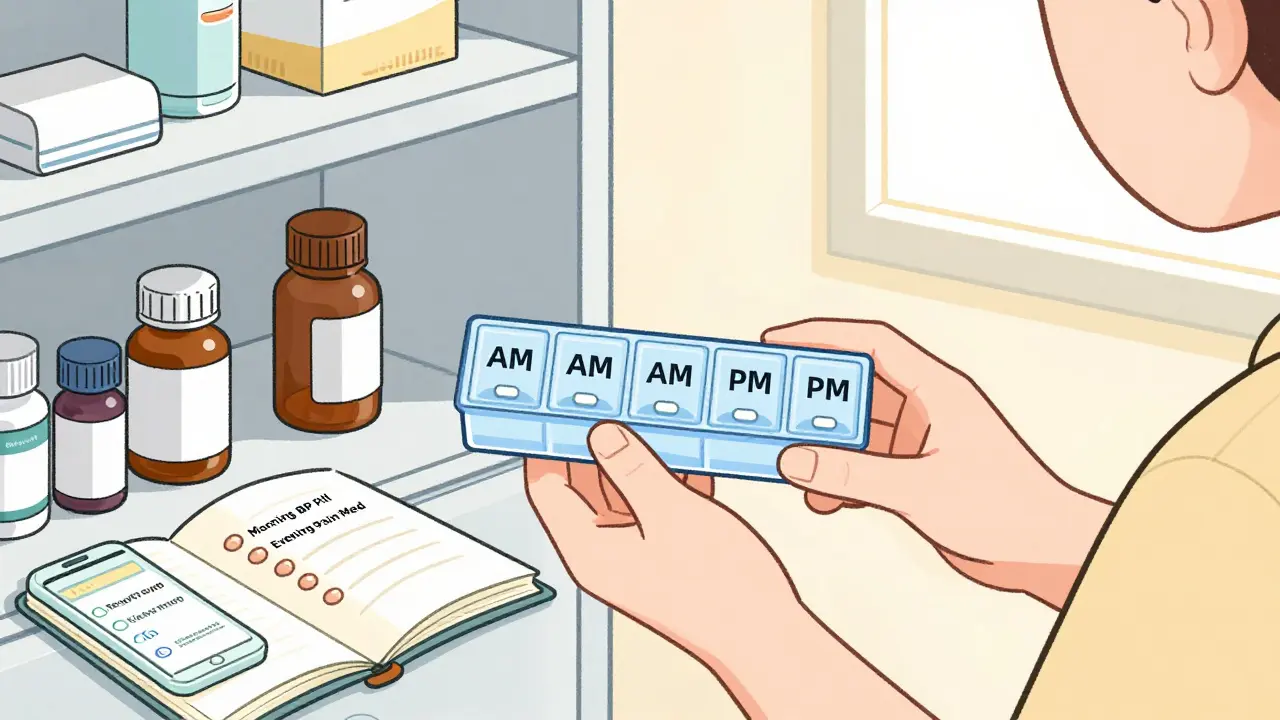
If you take more than two meds a day, you’re at higher risk. Pfizer’s 2022 survey found people on five or more medications have over three times the error rate of those on one or two. That’s not a coincidence. Your brain isn’t built to track that much.Use a pill organizer. Not the fancy one with alarms-just a simple seven-day box with AM/PM slots. Buy it at any pharmacy. Fill it once a week. Watch the pills go in. Do it in daylight, with good lighting. If you’re forgetful, set phone alarms. Name them clearly: "Morning BP Pill," "Evening Pain Med."
One study showed using pill organizers reduced errors by 35% in older adults. That’s not magic. That’s structure. Your brain needs help. Use it.
Never Mix Medications Without Asking
You take Tylenol for a headache. Your friend says, "Try ibuprofen-it works faster." But ibuprofen and Tylenol aren’t the same. One’s an NSAID. One’s not. Mixing them with other drugs can hurt your liver, kidneys, or stomach. Even natural stuff counts. Garlic supplements thin your blood. St. John’s wort can make your antidepressant useless. Grapefruit juice? It can turn a simple statin into a danger zone.Always check with your pharmacist before adding anything new-vitamins, herbs, OTC painkillers, even cough syrup. They’re trained to spot interactions. And if you’re on blood thinners, antibiotics, or heart meds? Be extra careful. The risks are real.
Check Your Pills Before You Take Them
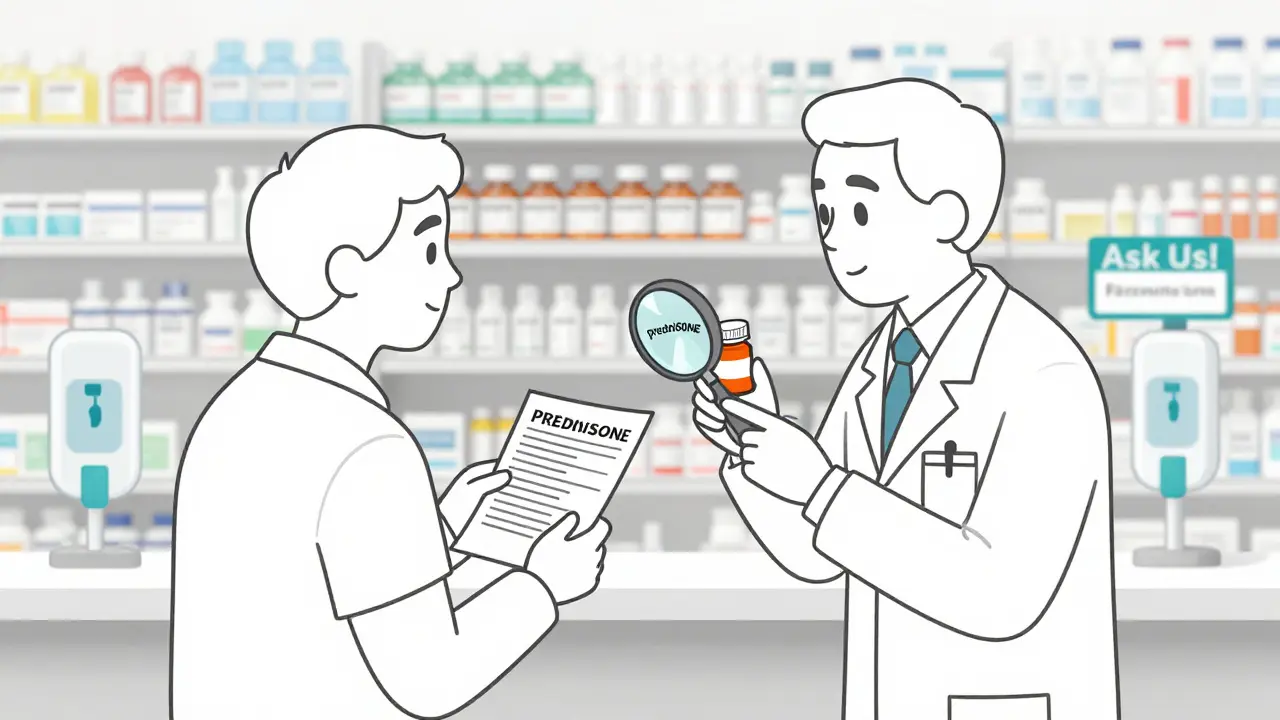
Have you ever opened a new bottle and thought, "Wait, this doesn’t look right?" If you’ve ever felt that, you’re not crazy. Look-alike, sound-alike drugs are a huge problem. Glimepiride. Glyburide. Prednisone. Prednisolone. They sound almost identical. Pharmacists use Tall Man Lettering-writing them as predniSONE and predniSOLONE-to help. But you need to do your part.Before you take any pill, compare it to the last bottle you had. Is the shape the same? The color? The marking? If it looks different, ask. Don’t assume it’s a new brand. Don’t assume it’s fine. That’s how people take the wrong drug for days-like one Reddit user who took the wrong diabetes pill for three days and ended up with dangerous blood sugar crashes.
Don’t Skip or Stop Without Talking to Your Doctor
You feel better. So you stop the antibiotics. You think, "I don’t need it anymore." But that’s how resistant bacteria are born. The FDA says 23% of antibiotic treatment failures happen because people quit early.Same with blood pressure or cholesterol meds. You don’t feel sick, so you skip them. But those drugs work quietly. Stopping them suddenly can spike your pressure, trigger a clot, or cause a heart rhythm problem.
If you can’t afford your meds, say so. Ask about generics. Ask for samples. Ask if there’s a patient assistance program. Don’t just quit. There are options. But never go silent on your provider.
Clean Out Your Medicine Cabinet Twice a Year
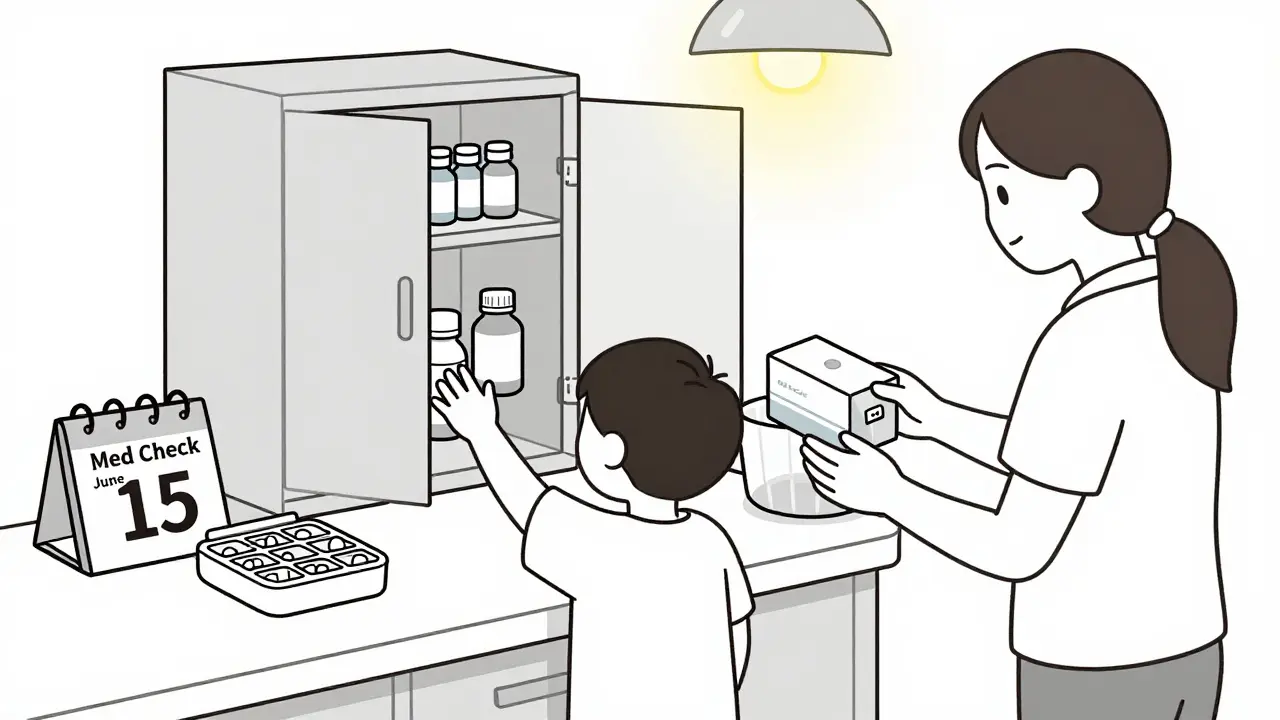
Expired meds? Old prescriptions from last year’s cold? That stuff doesn’t just sit there. It’s a risk. The Illinois Department of Health says 38% of accidental poisonings in kids come from pills found in home medicine cabinets.Do a clean-out every June and December. Take everything out. Check expiration dates. Toss anything old, discolored, or smells weird. Don’t flush pills unless the label says to. Most places have drug take-back programs-pharmacies, police stations, or local events. Use them. It’s safer for your kids, your pets, and the environment.
Pharmacists Are Your Secret Weapon
Most people think pharmacists just hand out pills. They’re wrong. Pharmacists are medication experts. They know interactions, side effects, storage rules, and how to simplify complex regimens. ASHP says patients who talk to their pharmacist when starting a new drug have 27% fewer errors.Next time you pick up a prescription, don’t just say "thanks." Ask: "Is there anything I should watch out for?" "Can you explain how to take this?" "Is there a cheaper version?" They’re paid to help. Use them.
What If You Make a Mistake?
You took two pills by accident. You forgot a dose. You mixed meds you shouldn’t have. Don’t panic. Don’t hide it. Call your pharmacist or doctor right away. Most errors are caught before they cause harm-if you speak up.There’s no shame in admitting a mistake. The shame is in staying silent. Your provider wants to help you, not punish you. The goal is safety, not blame.
Final Thought: Safety Is a Habit, Not a One-Time Fix
Medication safety isn’t about being perfect. It’s about building habits that protect you. Keep your list updated. Check your pills. Ask questions. Use organizers. Talk to your pharmacist. Clean out your cabinet. These aren’t chores. They’re your armor.Every year, thousands of people avoid hospital stays and even death because they took these small steps. You can be one of them. Start today. Not tomorrow. Today. Your body is counting on you to be the last line of defense.
What should I do if I miss a dose of my prescription?
Don’t double up unless your provider says to. Check the drug’s instructions or call your pharmacist. For most meds, if it’s close to the next dose, skip the missed one. For others, like insulin or blood thinners, timing matters a lot. Never guess-ask.
Can I share my prescription meds with family members?
Never. Even if their symptoms seem the same. Your medication is prescribed for your body, your weight, your other drugs, and your health history. What helps you could harm someone else. Sharing prescriptions is illegal and dangerous.
How do I know if a medication is expired?
Look for the expiration date on the bottle or box. It’s usually labeled "EXP" or "Expires." Even if the pill looks fine, it may lose strength or break down into harmful substances. Some meds, like insulin or liquid antibiotics, become unsafe quickly after expiration. When in doubt, toss it.
Why do some pills look different when I refill them?
Pharmacies sometimes switch manufacturers to save costs. The active ingredient is the same, but the shape, color, or markings may change. Always check the label to confirm the drug name and dose. If it looks completely different from your last refill, ask the pharmacist to confirm it’s correct.
What’s the best way to store medications at home?
Keep them in a cool, dry place-like a bedroom drawer-not the bathroom, where humidity can ruin them. Avoid direct sunlight. Some meds, like insulin, need refrigeration. Always keep them out of reach of children and pets. Lock them up if you have young kids or someone in the house with addiction risks.
Are over-the-counter (OTC) drugs safe to use with prescriptions?
Not always. OTC painkillers like ibuprofen or naproxen can interact with blood pressure meds, blood thinners, or kidney drugs. Cold medicines often contain antihistamines or decongestants that can raise blood pressure or cause drowsiness with other sedatives. Always check with your pharmacist before using any OTC product with your prescription meds.
How can I tell if I’m having a bad reaction to a medication?
Watch for sudden rashes, swelling, trouble breathing, severe dizziness, confusion, chest pain, or unusual bleeding. These can be signs of an allergic reaction or dangerous interaction. Call 911 or go to the ER if you have any of these. For milder symptoms like nausea or drowsiness, call your doctor or pharmacist. Don’t wait to see if it gets worse.
What’s the easiest way to remember all my meds?
Use a pill organizer and set phone alarms with clear names like "Morning Heart Pill" or "Night Sleep Med." Keep your written list updated and carry it with you. Apps like Medisafe or MyTherapy can also send reminders and track refills. The key is consistency-find a system that works for your routine and stick to it.
Can I crush or split my pills if I have trouble swallowing them?
Some pills can be crushed or split safely-others can’t. Extended-release, enteric-coated, or capsule-form meds can become dangerous if altered. Crushing them might release the full dose at once, leading to overdose. Always ask your pharmacist before splitting or crushing any pill.
Why is medication reconciliation important?
Medication reconciliation means comparing your current meds with what’s written in your medical record. It catches mistakes like duplicates, omissions, or wrong doses. Studies show it reduces harmful errors by 20-45% when done by pharmacists. It’s especially critical during hospital admissions, discharges, or doctor visits. Always bring your list-it’s your best tool.


Comments
Vinayak Naik
Man, this post is a godsend. I used to just grab pills like candy till my grandma slapped sense into me. Now I keep a list on my phone, check every bottle like it’s a bomb squad job, and ask my pharmacist every damn time. That ‘teach-back’ thing? Genius. My uncle died because he didn’t ask what that blue pill was for. Don’t be him.
January 6, 2026 AT 23:09
Kiran Plaha
I’m from rural India. We don’t always have pharmacists nearby. But I write everything down on a small notebook. My mother taught me: if you don’t know what it is, don’t take it. Even if your neighbor says it’s the same. Safety first.
January 8, 2026 AT 10:18
Cam Jane
YES. This is the kind of info we NEED more of. Seriously. I work in home care and see people mixing OTC stuff with warfarin like it’s tea. Just yesterday, someone took ibuprofen with their blood thinner and ended up in the ER. Please, if you take more than 3 meds, get a pill organizer. They’re $5 at CVS. Set alarms named ‘Morning BP’ not ‘Pill 3’. Make it stupid simple. Your future self will thank you.
January 9, 2026 AT 22:05
Harshit Kansal
I took my dad’s blood pressure pill once because I felt dizzy. I thought it’d help. I nearly passed out. Ended up in the ER. My dad didn’t even know I took it. Don’t be me. Don’t be stupid. Ask. Always ask.
January 10, 2026 AT 19:46
Katelyn Slack
so i just found out my last refill was a different brand and i didnt even notice… i feel dumb. but now i’m checking every time. thanks for the reminder.
January 11, 2026 AT 12:38
Saylor Frye
It’s amusing how we’ve turned medicine into a DIY survival guide. In the 19th century, people just trusted doctors. Now we’re all pharmacists, data analysts, and pill detectives. The irony? We’re more likely to die from overthinking than underthinking.
January 12, 2026 AT 21:45
Matt Beck
Medication safety… it’s not just about pills-it’s about reclaiming agency in a system designed to keep you dependent. 🤔💊 Every time you ask a question, you’re not being annoying-you’re breaking the cycle of passive consumption. 🌱✨ We’ve been conditioned to swallow without thinking. But now? Now you’re awake. And that’s revolutionary.
January 13, 2026 AT 10:43
Venkataramanan Viswanathan
In India, we often rely on family advice for medicines. But after reading this, I’ve started asking for generic names and writing everything down. Even my aunt, who used to say ‘trust the doctor,’ now asks for the eight questions. Change starts small. Thank you for this.
January 13, 2026 AT 17:00
Brian Anaz
Why are we even having this conversation? In America, we’ve got doctors, pharmacists, insurance, apps, and laws. If you can’t figure out how to take a pill safely, maybe you shouldn’t be taking pills at all. This isn’t a parenting blog. It’s a country of adults.
January 14, 2026 AT 11:01