Why Cheaper Drugs Feel Less Effective: The Psychology of Price and Healing
- Colin Hurd
- 21 April 2026
- 0 Comments
You’ve probably been there: you stand at the pharmacy counter, and the pharmacist tells you there is a generic version of your medication that costs a fraction of the brand-name price. You take the cheaper option to save some money, but a week later, you start wondering if it's actually working. You might even feel that your symptoms are returning or that the drug just isn't "strong" enough. Here is the strange part: in many cases, that cheaper pill contains the exact same active ingredients as the expensive one. So why does it feel different?
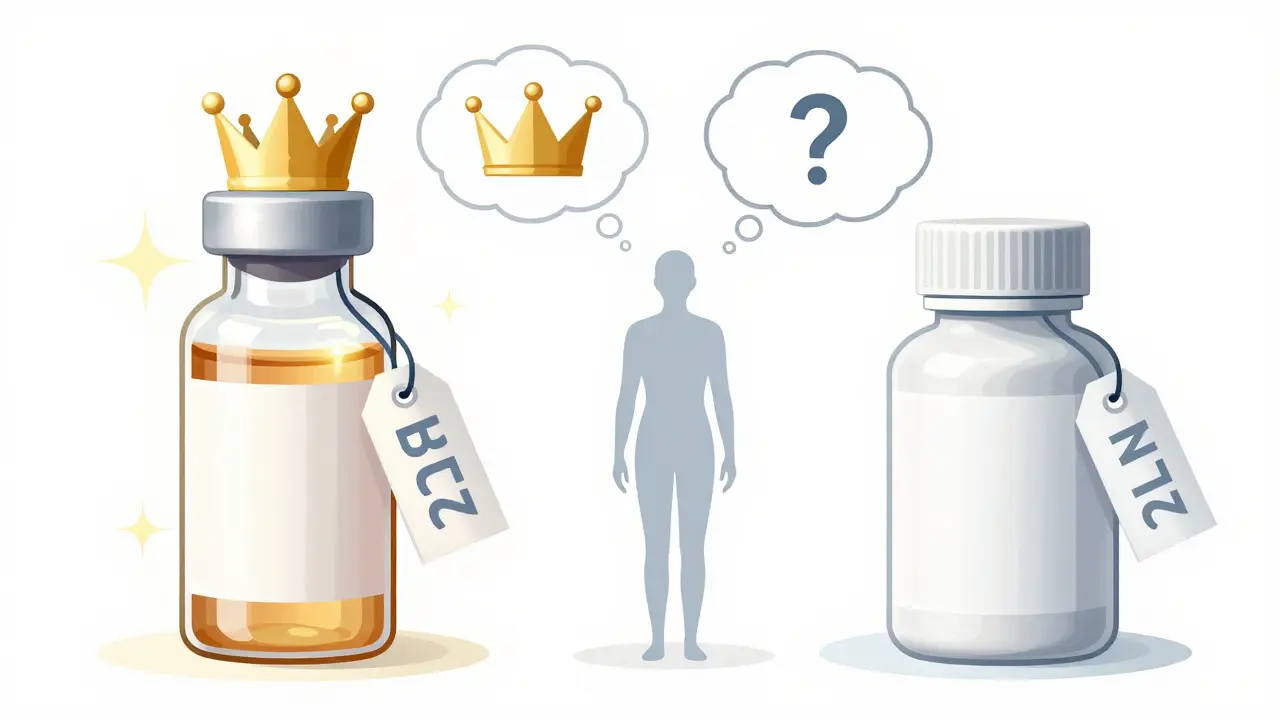
The truth is that your brain is playing a trick on you. When we perceive something as expensive, we subconsciously assign it a higher value and a greater level of power. In the world of medicine, this translates to a psychological phenomenon where the price tag actually alters how you experience the treatment. It isn't about the chemistry in the pill; it's about the chemistry in your head.
The Price-Quality Heuristic: Your Brain's Shortcut
Our minds love shortcuts. Instead of researching every single chemical compound in a medication, we use what psychologists call a brand psychology the study of how brand perceptions and marketing influence consumer behavior and psychological responses shortcut, or a heuristic. Specifically, we use the price-quality heuristic: the assumption that if something costs more, it must be better.
This isn't just a quirk of shopping for electronics or clothes; it's deeply embedded in how we view health. When you see a high price, your brain flags the medication as "premium." This expectation triggers a physiological response. For example, a 2023 study by M Díaz-Lago showed that people rated a drug as significantly more effective simply because they were told it was expensive, even when the actual healing rate was identical for both the expensive and inexpensive groups. The price didn't change the drug, but it changed the patient's judgment of the drug.
How Price Acts as a Placebo
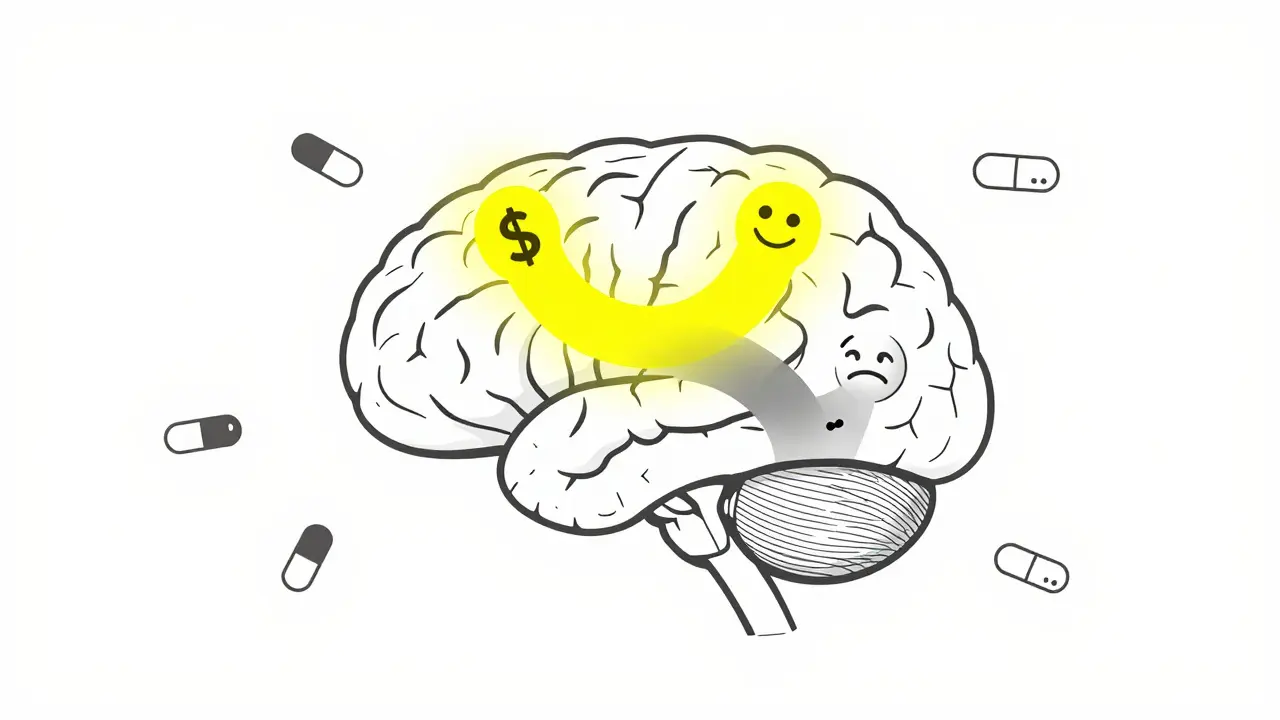
We usually think of a placebo a harmless pill, medicine, or procedure prescribed more for the psychological benefit to the patient than for any pharmacological effect as a sugar pill. But the placebo effect is actually a complex biological response driven by expectation. When you believe you are taking a powerful, expensive medication, your brain may release endorphins or dopamine that actually make you feel better.
Conversely, when you take a generic drug that you perceive as "cheap," you may experience a "nocebo" effect-where negative expectations lead to a perceived decrease in efficacy or even the appearance of new side effects. A University of Auckland study highlighted this perfectly. Participants took branded and generic versions of ibuprofen a nonsteroidal anti-inflammatory drug (NSAID) used for pain relief and reducing inflammation (both of which were actually placebos). The participants reported significantly less pain relief and more symptoms after taking the generic version. Their bodies were reacting to the idea of the generic drug, not the medicine itself.
The "Chalky Pill" Problem: Sensory Cues
It’s not just the price tag that fools us; it’s the packaging and the physical feel of the medication. Pharmacists from UCSF have noted that observable differences often reinforce the idea that generics are inferior. Think about it: a brand-name tablet might have a smooth, shiny coating, a pleasant taste, and a professional-looking box. The generic equivalent might be a chalky white pill with a bitter aftertaste.
These sensory details act as secondary cues. When the pill tastes "cheap" or feels "chalky," it confirms the internal bias that the drug is less potent. You aren't reacting to a lack of active ingredients; you're reacting to the lack of premium manufacturing polish. This creates a loop: the cheap price suggests low quality, and the chalky texture proves it, even if the active chemical is identical to the one in the shiny pill.
| Attribute | Brand Name Perception | Generic Perception |
|---|---|---|
| Price | High / Premium | Low / Discounted |
| Expected Efficacy | Strong / Potent | Weak / "Watered Down" |
| Sensory Experience | Polished, coated, palatable | Chalky, bitter, basic |
| Psychological Trigger | Confidence and trust | Skepticism and doubt |
| Actual Chemistry | Identical Active Ingredient | Identical Active Ingredient |
The Reality of Bioequivalence
To combat these perceptions, it's helpful to understand the actual science. In the United States, the FDA the Food and Drug Administration, a federal agency of the US Department of Health and Human Services has very strict rules about what can be called a "generic." For a drug to be approved, it must demonstrate bioequivalence. This means the generic must deliver the same amount of active ingredient into the bloodstream at a similar rate as the brand-name version.
The FDA requires that the generic’s performance falls within a tight 80-125% confidence interval compared to the reference product. In plain English: if the brand drug delivers 100mg of a chemical to your system, the generic must do effectively the same. The difference in price isn't because the generic is "watered down"; it's because the generic company didn't have to spend billions of dollars on the initial research, clinical trials, and marketing that the original creator did.
Overcoming the Mental Block
Knowing the science is one thing, but feeling it is another. Interestingly, research shows that simply educating patients doesn't always fix the problem. In the Auckland study, an educational intervention improved people's understanding that generics are equal, but it didn't actually change how they felt when they took the medicine. The psychological association between "cheap" and "ineffective" is surprisingly stubborn.
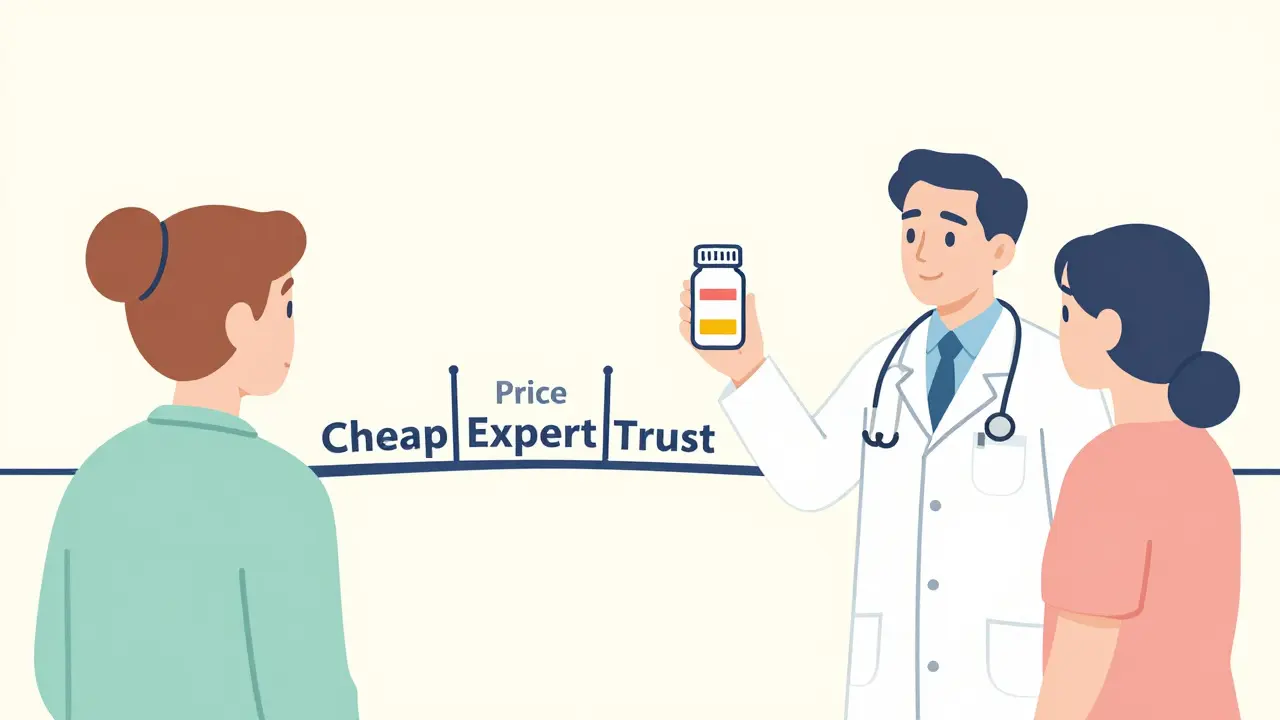
The most effective way to bridge this gap is through communication with a healthcare provider. When a doctor explicitly explains why a generic is a safe and effective choice for a specific condition, patients are much more likely to trust the medication. It turns out that professional validation is more powerful than a pamphlet. If your doctor tells you, "This generic is identical to the brand name and is the gold standard for this treatment," your brain starts to associate the drug with the doctor's expertise rather than the low price tag.
Are generic drugs really identical to brand-name ones?
Yes, in terms of the active pharmaceutical ingredient. Regulatory bodies like the FDA require generics to be bioequivalent, meaning they provide the same amount of the active drug to the body. They may differ in "inactive ingredients" like dyes, binders, or coatings, which is why they might look or taste different, but the part that actually treats the illness is the same.
Why do some people feel like generics don't work as well?
This is largely due to the price-quality heuristic. Because generics are cheaper, our brains subconsciously expect them to be less potent. This can trigger a nocebo effect, where the negative expectation actually makes the patient perceive less relief or more side effects, even though the chemistry of the drug is identical.
Can the placebo effect actually make an expensive drug work better?
In a sense, yes. While the chemical efficacy is the same, the psychological confidence gained from using an expensive brand can trigger the release of feel-good chemicals in the brain, which can reduce the perception of pain or symptoms. This doesn't mean the drug is "better," but the experience of taking it is enhanced by the price.
Does the taste or color of a pill affect its efficacy?
Chemically, no. However, psychologically, yes. If a pill tastes bitter or looks "cheap," it reinforces the belief that the medication is lower quality. This sensory feedback loops back into the price-quality heuristic, potentially making the patient feel the drug is less effective.
How can I stop feeling like my generic medication isn't working?
The best way is to talk to your doctor or pharmacist. Having a professional confirm that the generic is the correct and effective choice for your specific health needs can shift your mental association from "cheap drug" to "expert-recommended treatment," which helps neutralize the negative psychological effects.
Next Steps for Patients
If you're struggling with the feeling that your medication isn't working because it's a generic, try these steps:
- Track your symptoms objectively: Use a journal to record your symptoms. Often, we feel like a drug isn't working, but the data shows our symptoms are actually improving.
- Ask about inactive ingredients: If the taste or texture of a generic bothers you, ask your pharmacist if there is another generic manufacturer. Different companies use different binders and coatings, and one might be more palatable than another.
- Discuss bioequivalence with your doctor: Ask your provider to explain the specific bioequivalence of your prescription. Understanding the science can help override the psychological bias.