
Colorectal Cancer Screening and Chemotherapy: What You Need to Know at 45 and Beyond
- Colin Hurd
- 15 December 2025
- 9 Comments
Colorectal cancer is one of the most preventable cancers-if you catch it early. Yet, too many people wait until symptoms appear, by which time treatment becomes harder, costlier, and less effective. The good news? Screening works. And the guidelines have changed. Starting at age 45, routine screening is no longer optional for average-risk adults. This isn’t just a recommendation-it’s a lifeline.
Why Screening Starts at 45 Now
For decades, colorectal cancer screening began at age 50. But over the last 20 years, something alarming happened: more and more people under 50 were being diagnosed. Between 1995 and 2019, the rate of colorectal cancer in adults under 50 rose by 2.2% every year. Rectal cancer, in particular, jumped 3.2% annually. By 2020, the American Cancer Society reported a 51% increase in cases among this younger group since 1994. That’s why major health groups-like the U.S. Preventive Services Task Force, the American College of Gastroenterology, and the CDC-updated their guidelines in 2021. Now, everyone at average risk should start screening at 45. It’s not about fear. It’s about timing. Finding and removing polyps before they turn cancerous can stop the disease before it starts.Screening Options: Colonoscopy vs. Stool Tests vs. Imaging
There are five main screening methods, each with trade-offs. Your choice depends on your health, comfort, access, and risk level.- Colonoscopy is still the gold standard. It looks at your entire colon, finds polyps, and removes them during the same procedure. Studies show it cuts colorectal cancer risk by 67% and death by 65%. But it requires full bowel prep, sedation, and carries a small risk of perforation (about 1 in 1,000 procedures). Most people get one every 10 years if results are normal.
- Flexible sigmoidoscopy checks only the lower third of the colon. It’s less invasive, needs lighter prep, and is done every 5 years. It reduces distal cancer risk by 26%, but misses polyps higher up. Often paired with annual FIT tests for full coverage.
- Fecal Immunochemical Test (FIT) checks for hidden blood in stool. It’s simple-do it at home, mail it in. No prep, no discomfort. Sensitivity for cancer is 79-88%, but it misses many polyps. Must be done every year. Adherence is higher than colonoscopy, especially in underserved communities.
- Multi-target stool DNA test (sDNA-FIT) looks for both blood and DNA changes linked to cancer. It’s more sensitive than FIT alone-detecting 92% of cancers-but has more false positives (13% vs. 5% for FIT). That means more unnecessary colonoscopies. Done every 3 years.
- CT colonography (virtual colonoscopy) uses X-rays to create a 3D image of your colon. No sedation, but you still need bowel prep. Radiation exposure is low (1-10 mSv), but if something’s found, you still need a colonoscopy to remove it. Done every 5 years.
Colonoscopy gives you the most protection in one go. Stool tests are easier to do-but only if you do them every year. Missing one year means you’re back to square one.
Who Needs to Start Earlier Than 45?
If you have a family history of colorectal cancer or polyps, inflammatory bowel disease (like Crohn’s or ulcerative colitis), or a known genetic condition like Lynch syndrome or familial adenomatous polyposis (FAP), your risk is much higher. You may need to start screening at 40-or even earlier. For example, if a parent or sibling was diagnosed before age 60, you should begin screening at age 40, or 10 years younger than their diagnosis age-whichever comes first. And colonoscopy is the only recommended method in these cases. Stool tests aren’t sensitive enough to catch early signs in high-risk people.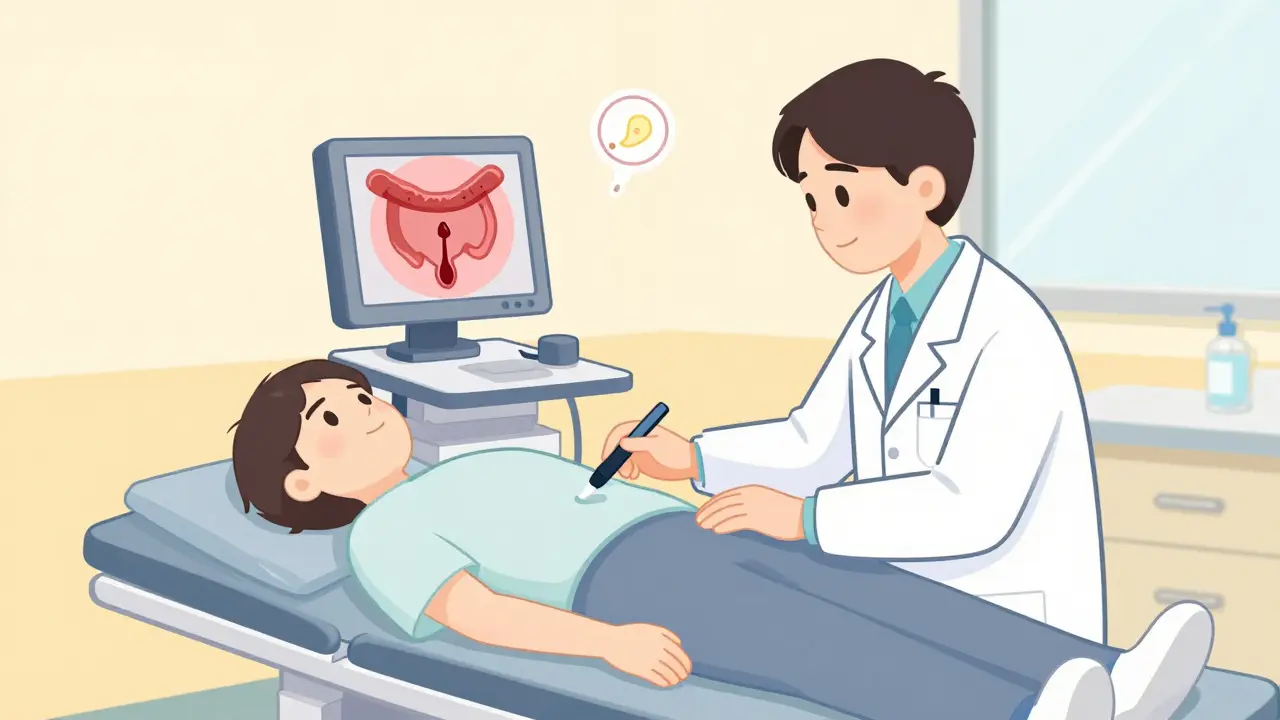
What Happens If a Polyp Is Found?
Finding a polyp during a colonoscopy isn’t a cancer diagnosis-it’s a warning sign. Most polyps are benign, but some can turn cancerous over 10-15 years. If your doctor finds one, they’ll remove it and send it for testing. The follow-up schedule depends on what they find:- One or two small adenomas (less than 1 cm): Next colonoscopy in 7-10 years.
- Three to ten adenomas, or any larger than 1 cm: Next in 3 years.
- More than ten adenomas, or any with advanced features: Next in 1-3 years.
- Any cancer found: Treatment begins immediately, and screening frequency changes entirely.
Skipping your follow-up colonoscopy after polyp removal is one of the biggest mistakes people make. It’s not a one-and-done. It’s a long-term plan.
Chemotherapy Regimens for Colorectal Cancer
If cancer is found, treatment depends on the stage. Early-stage (Stage I or II) cancer is often cured with surgery alone. But if the cancer has spread to lymph nodes (Stage III) or beyond (Stage IV), chemotherapy becomes part of the plan.For Stage III colon cancer, the standard is a 6-month course of FOLFOX or CAPOX:
- FOLFOX: Fluorouracil (5-FU), leucovorin, and oxaliplatin. Given every two weeks.
- CAPOX: Capecitabine (an oral pill version of 5-FU) and oxaliplatin. Also every two weeks.
Both are effective. CAPOX is often preferred because patients can take the pill at home, reducing clinic visits. But oxaliplatin can cause nerve damage-tingling or numbness in hands and feet-that may last months or years. Some patients stop treatment early because of this side effect.
For Stage IV (metastatic) cancer, treatment is longer-term and often includes targeted drugs:
- Bevacizumab (Avastin): Blocks blood vessel growth to starve the tumor.
- Cetuximab or panitumumab: Used only if the tumor has a wild-type RAS gene (tested via biopsy).
- Regorafenib or trifluridine/tipiracil: Used later, when other treatments stop working.
These drugs don’t cure metastatic cancer-but they can extend life by months, sometimes years. The goal is control, not cure. Side effects vary: high blood pressure, fatigue, diarrhea, skin rashes. Many patients manage these well with support.
Real People, Real Outcomes
A 47-year-old man in Georgia had no symptoms, no family history. He got his first colonoscopy at 45, as recommended. They found a small, early-stage cancer. He had surgery. Five years later, he’s cancer-free. His 5-year survival rate? 95%. Compare that to someone diagnosed at Stage IV-when cancer has spread to the liver or lungs. Their 5-year survival? About 14%. It’s not a matter of luck. It’s about timing.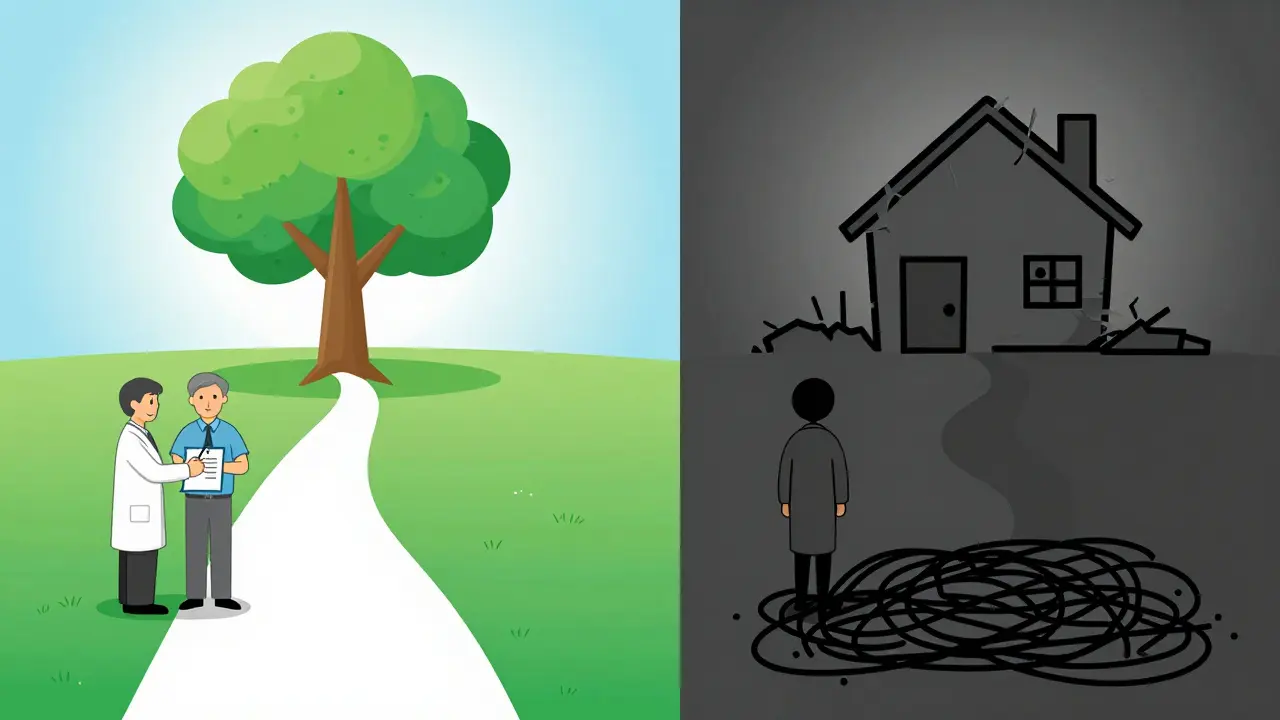
Barriers to Screening-and How to Beat Them
Despite all the evidence, only 67% of adults aged 50-75 are up to date with screening. Among uninsured people, it’s below 58%. Why?- Bowel prep is awful: People hate the clear liquid diet and the laxatives. But newer prep solutions are easier. Ask your doctor about split-dose regimens or low-volume options.
- Cost and access: Colonoscopy can be expensive without insurance. But FIT tests cost under $25 and are covered by Medicare and most plans. If you can’t get a colonoscopy right away, start with FIT.
- Fear of the unknown: Many people think colonoscopy will be painful. Most patients report little to no discomfort during the procedure thanks to sedation. The real pain? Waiting.
- Language and culture: In some communities, cancer is never talked about. Patient navigators-trained staff who guide people through screening-have been shown to increase completion rates by 35%.
If you’re unsure where to start, talk to your primary care doctor. Ask: “What’s my risk? What’s the best test for me? And what happens if something’s found?”
The Future of Screening
Blood tests for colorectal cancer are on the horizon. The Guardant SHIELD test, tested on 10,000 people in 2023, detected cancer with 83% accuracy. It’s not ready for prime time yet-but it’s coming. AI-assisted colonoscopies are already here. The GI Genius system boosts polyp detection by 14%, catching what human eyes might miss. The goal isn’t just to screen more people. It’s to screen smarter. Future guidelines may use your genetics, diet, weight, and even gut bacteria to personalize your screening schedule. One size won’t fit all.What You Should Do Right Now
If you’re 45 or older:- Ask your doctor if you’re at average risk or high risk.
- If average risk, choose a screening method and schedule it now. Don’t wait for symptoms.
- If you’ve had a colonoscopy in the last 10 years and it was normal, you’re covered.
- If you’re 76-85, talk to your doctor. Screening may still make sense if you’re healthy and haven’t been screened before.
- If you’re under 45 but have symptoms-rectal bleeding, unexplained weight loss, persistent diarrhea or constipation-don’t wait. Get checked.
Colorectal cancer doesn’t care if you’re busy, scared, or busy being scared. But screening does. It’s the one cancer we can truly stop before it starts. All you have to do is say yes.

Comments
Joe Bartlett
Just had my first colonoscopy at 46. Worst part? The prep. Everything else? Easy. Do it. No excuses.
December 16, 2025 AT 04:25
Jigar shah
Interesting breakdown of screening options. I’m curious-how do the false positive rates for sDNA-FIT compare across different ethnic populations? Some studies suggest higher variability in non-Caucasian groups, which could affect screening efficacy in diverse communities.
December 16, 2025 AT 23:02
Philippa Skiadopoulou
Colonoscopy remains the most effective single intervention for reducing colorectal cancer mortality. The data is robust. Stool tests are valuable for adherence but cannot replace endoscopic surveillance in high-risk individuals. Screening is preventive medicine at its best.
December 18, 2025 AT 15:54
Virginia Seitz
Just did my FIT test at the pharmacy for $18 😍 No prep no stress no fear. Why are we still making this complicated?
December 20, 2025 AT 12:48
Sam Clark
Thank you for presenting this information with such clarity and compassion. The statistics are sobering, but the path forward is clear. Early detection saves lives-not just in survival rates, but in quality of life. I’ve shared this with my entire family.
December 22, 2025 AT 02:18
Marie Mee
They changed the age to 45 because they want to make more money from colonoscopies. They know people are scared and will pay for it. The real cause? GMOs and fluoridated water. I’ve seen it in my research.
December 23, 2025 AT 10:09
Patrick A. Ck. Trip
I appreciate the thoroughness of this post. Though I’m not a medical professional, I’ve seen friends struggle with the side effects of oxaliplatin. The nerve damage is real. I hope future treatments focus more on minimizing long-term toxicity while maintaining efficacy.
December 24, 2025 AT 07:32
Brooks Beveridge
Screening isn’t just about catching cancer-it’s about giving people back their time. The man in Georgia? He got to keep working, hiking, watching his kid grow up. That’s worth every awkward hour of prep. You’re not just saving a life-you’re saving a future.
And to those scared of the procedure? Think of it like changing your oil. You don’t wait until the engine blows. You do it before it’s too late.
December 24, 2025 AT 10:10
amanda s
My uncle died of colon cancer at 48 and they told him it was "just hemorrhoids" for TWO YEARS. This system is broken. Why do doctors ignore young people? I’m never going to a doctor again. They don’t care unless you’re rich or old.
December 25, 2025 AT 23:41