
Dietary Supplement-Drug Interactions: What You Need to Know for Safety
- Colin Hurd
- 4 March 2026
- 9 Comments
Every year, millions of people take dietary supplements-vitamins, herbs, minerals, amino acids-to feel healthier, boost energy, or support immunity. But few realize that these everyday products can clash dangerously with prescription drugs. A person on blood thinners might not know that a daily ginkgo biloba pill could send their INR levels soaring. Someone managing epilepsy might start taking St. John’s wort for mood and suddenly have seizures because their medication levels dropped by more than half. These aren’t rare cases. They’re happening right now, often without anyone noticing-because most patients don’t tell their doctors what they’re taking.
How Supplement-Drug Interactions Actually Work
Not all supplements interact with drugs. But the ones that do? They do it in two main ways: by changing how your body handles the drug, or by changing how the drug works in your system.
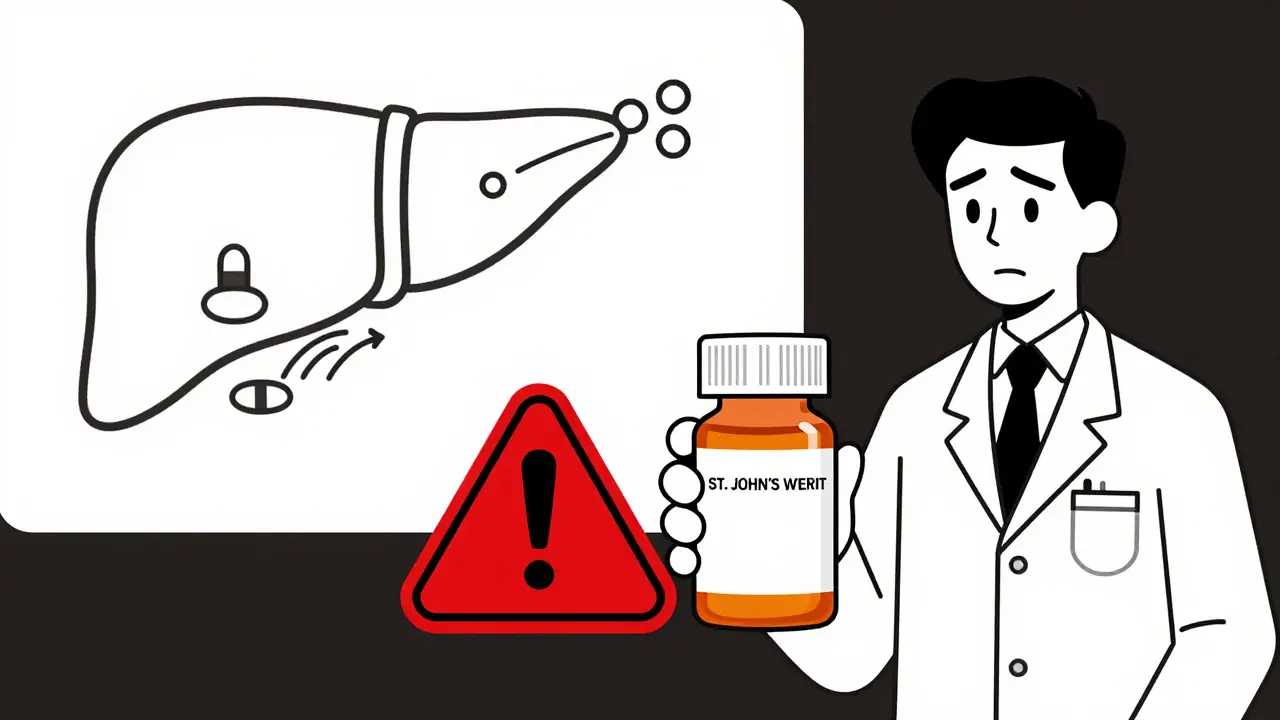
The first kind is called a pharmacokinetic interaction. This means the supplement changes how your body absorbs, breaks down, or gets rid of the drug. For example, St. John’s wort activates an enzyme called CYP3A4. This enzyme is like a cleanup crew in your liver. When it’s turned on too hard, it starts breaking down drugs too fast-before they can do their job. That’s why people on cyclosporine (after transplants) or HIV meds like indinavir can end up with drug levels so low they’re useless. One study found St. John’s wort cut cyclosporine levels by 57%. That’s not a small drop. That’s life-threatening.
The second kind is a pharmacodynamic interaction. Here, the supplement doesn’t change drug levels-it changes what the drug does. Take vitamin K. It helps your blood clot. Warfarin, a blood thinner, works by blocking vitamin K. So if you start taking a vitamin K supplement-or even a green tea extract rich in vitamin K-you’re fighting against your own medication. Your INR drops. Your blood clots easier. Suddenly, you’re at risk for stroke or heart attack.
High-Risk Supplements and Real-World Dangers
Some supplements are far more dangerous than others when mixed with common medications. Here are the big ones:
- St. John’s wort: This herb is the most notorious. It’s linked to over 30% of serious supplement-drug interactions. It doesn’t just affect antidepressants-it can wreck immunosuppressants, birth control pills, and even some cancer drugs. One case report showed a woman on carbamazepine (for seizures) had her drug levels crash after starting St. John’s wort. Her seizures returned. She ended up in the ER.
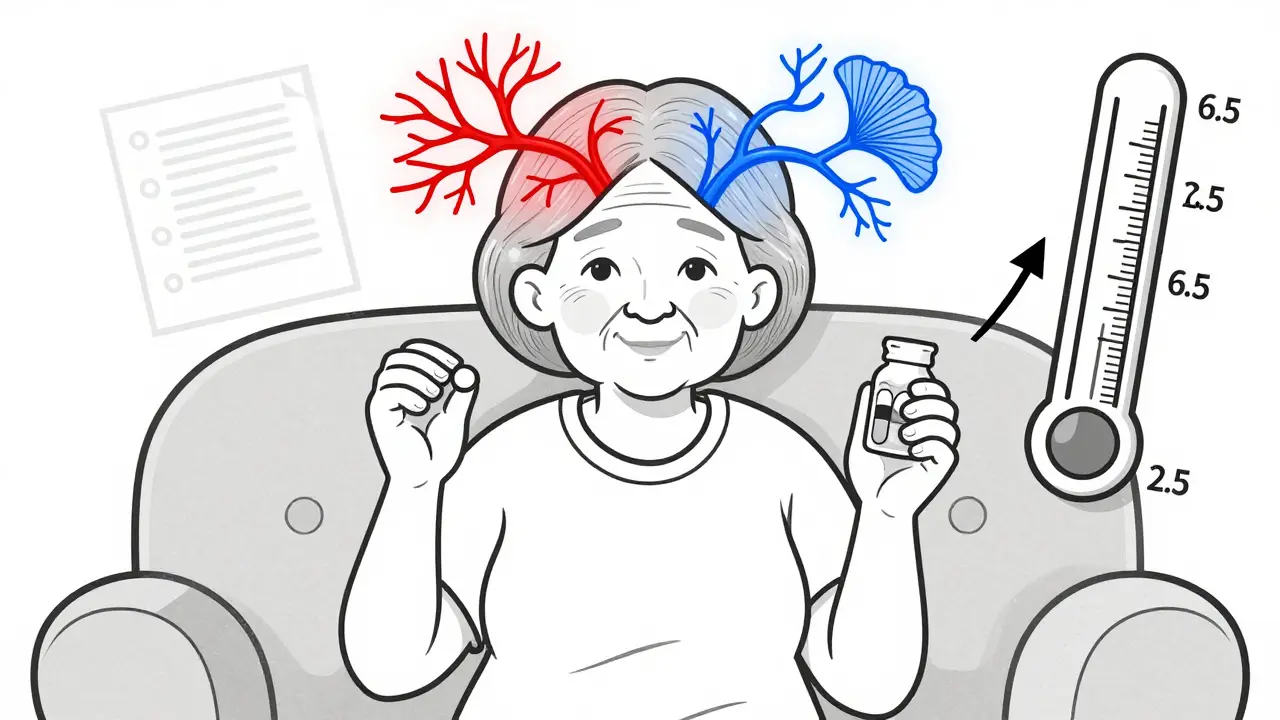
- Ginkgo biloba: Often taken for memory, it thins the blood. When combined with warfarin or aspirin, it can cause bleeding so severe that INR levels jump from 2.5 to over 6.5. That’s more than triple the safe range.
- Calcium supplements: If you take levothyroxine for hypothyroidism, calcium can block its absorption. One study showed absorption dropped by 25-50%. That means you’re not getting the full dose. Your fatigue, weight gain, and brain fog won’t improve-and your doctor might think you need more medication.
- Magnesium antacids: These are common for heartburn. But if you’re on a quinolone antibiotic like ciprofloxacin, magnesium can bind to it in your gut and stop it from being absorbed. One study found absorption dropped by up to 90%. You’re not just wasting your antibiotic-you’re risking a resistant infection.
- CBD (cannabidiol): Newer but dangerous. CBD can slow down how fast your liver breaks down drugs like clobazam (used for epilepsy). One study found clobazam levels spiked by up to 500%. That can cause drowsiness, falls, or even breathing problems.
These aren’t theoretical risks. The FDA’s Adverse Event Reporting System recorded over 1,800 reports between 2019 and 2022. Warfarin interactions made up 32% of them. Antidepressant interactions? 24%. And that’s just what got reported. Experts say less than 1% of real events are ever reported.
Why Most People Don’t Know About the Risks
Here’s the uncomfortable truth: supplements aren’t held to the same standards as drugs.
Under the Dietary Supplement Health and Education Act (DSHEA) of 1994, manufacturers don’t need to prove safety or effectiveness before selling. The FDA can only act after harm happens. That’s backwards. It’s like letting a car roll off the assembly line without brakes, then waiting for crashes to happen before inspecting it.
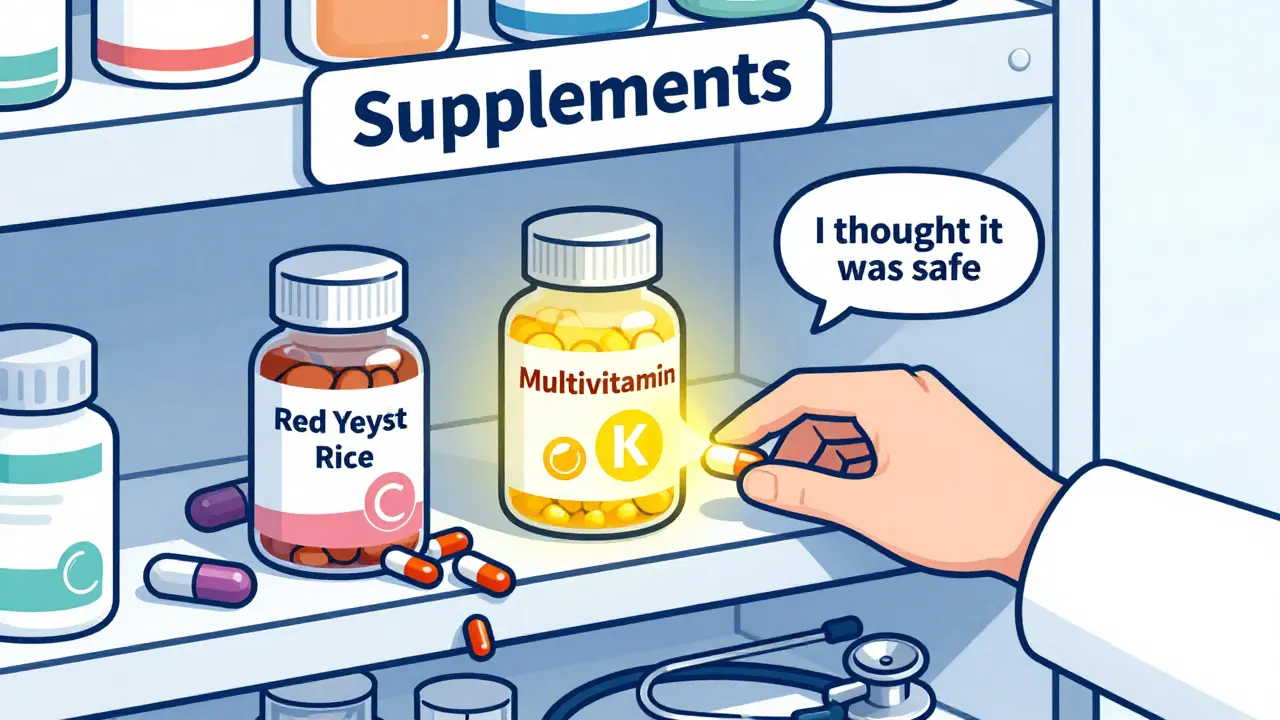
And the labeling? Often useless. A 2019 study found 20% of supplements contained unlisted ingredients. One popular “natural” weight loss product had hidden sildenafil (the active ingredient in Viagra). Another, sold as “red yeast rice,” contained lovastatin-a prescription cholesterol drug. People taking it with gemfibrozil (another cholesterol drug) ended up with rhabdomyolysis, a condition where muscle tissue breaks down and can cause kidney failure.
Even when warnings exist, they’re buried. Dr. Paul Kemper of the NCCIH pointed out that 78% of supplement labels carry no interaction warning-even when the risks are well-documented.
Meanwhile, patients assume supplements are “safe because they’re natural.” But natural doesn’t mean harmless. Willow bark contains salicin-a compound chemically similar to aspirin. Garlic can thin blood. Even vitamin E in high doses increases bleeding risk.
Who’s at Highest Risk?
You don’t have to be elderly to be at risk-but older adults are the most vulnerable.
Why? Because they’re taking more medications. The average American over 60 takes four to five prescription drugs. Add three supplements on top? That’s seven different chemicals interacting in one body. And older adults often have slower liver and kidney function, meaning drugs and supplements stick around longer-increasing the chance of buildup and toxicity.
People with chronic conditions are also at higher risk: heart disease, diabetes, epilepsy, cancer, autoimmune disorders. These patients are often on narrow-therapeutic-index drugs-medications where even a small change in blood level can cause harm. Warfarin, digoxin, cyclosporine, levothyroxine-they all fall into this category.
And here’s the kicker: studies show 43-69% of patients don’t tell their doctors about supplement use. Why? Because they think it’s not important. Or their doctor didn’t ask. Or they’ve been told, “We don’t know much about supplements.”
What You Can Do to Stay Safe
Here’s the practical side. You don’t need to be a pharmacist. You just need to be smart.
- Always tell your doctor and pharmacist what you’re taking. Not just pills. Not just “vitamins.” Say: “I take St. John’s wort for anxiety,” or “I have a ginkgo supplement for memory.” Use the exact brand name if you can.
- Ask: “Could this interact with my medications?” Don’t wait for them to bring it up. Be proactive. Say: “I’m thinking of starting this. Is it safe with my blood pressure pill?”
- Use reliable sources. The Natural Medicines Database, NIH’s LiverTox, and the FDA’s MedWatch are trustworthy. Avoid random blogs or supplement company websites.
- Watch for signs. Unexplained bruising? Dizziness? Changes in mood? Worse symptoms? A sudden drop in energy? These could be red flags.
- Don’t assume “natural” = safe. If it’s powerful enough to help you, it’s powerful enough to hurt you.
And if you’re a healthcare provider? Ask specifically. Don’t say, “Do you take any herbal supplements?” Say: “What vitamins, herbs, or other products do you buy over the counter?” The word “herbal” makes people think of tea bags and tinctures. They might not think of a capsule labeled “Multivitamin + Antioxidants.”
The Bigger Picture: Why This Matters
The U.S. supplement market is worth over $52 billion-and growing fast. But behind the sales numbers are real people. A 72-year-old woman on warfarin who takes ginkgo and ends up in the ER with a brain bleed. A 58-year-old man on statins who takes red yeast rice and develops kidney failure. A young woman on birth control who starts St. John’s wort and gets pregnant because the pill stopped working.
These aren’t accidents. They’re preventable. And they happen because we treat supplements like harmless candy. But they’re not. They’re active chemicals. And like any medicine, they can hurt you if used carelessly.
The FDA, NIH, and medical societies agree: we need better labeling, mandatory interaction warnings, and stricter oversight. Until then, the burden falls on you. Know what you’re taking. Talk to your provider. Don’t assume. Always ask.
Can dietary supplements be as dangerous as prescription drugs?
Yes, some can. While many supplements are safe, others-like St. John’s wort, ginkgo biloba, and high-dose vitamin K-can cause life-threatening interactions with medications. For example, St. John’s wort can reduce blood levels of cyclosporine by 57%, leading to organ rejection in transplant patients. Ginkgo biloba can cause dangerous bleeding when taken with warfarin. These aren’t mild side effects-they’re clinical emergencies.
Why don’t supplement labels list drug interactions?
Because they’re not required to. Under current U.S. law (DSHEA), supplement manufacturers don’t need FDA approval before selling their products, and they aren’t required to test for interactions or include warnings. Only about 12% of major supplement makers conduct formal interaction studies. This means many products on shelves carry no warning-even when the risks are well-documented in medical journals.
I take a multivitamin. Should I be worried?
Most standard multivitamins don’t cause serious interactions. But some ingredients can. For example, vitamin K can interfere with warfarin. Calcium and iron can block absorption of thyroid meds and antibiotics. If you’re on any prescription medication, check the label. If your multivitamin contains more than 100% of the daily value for vitamin K, calcium, or iron, talk to your doctor. It’s not about avoiding multivitamins-it’s about knowing what’s in them.
I told my doctor I take supplements, but they didn’t seem concerned. What now?
Don’t assume they know. Many doctors haven’t been trained on supplement interactions. If your doctor dismisses your concerns, ask for a pharmacist consultation. Pharmacists are trained specifically in drug interactions and often have access to databases like Natural Medicines. You can also ask: “Is there a chance this supplement affects how my medication works?” That’s a direct, evidence-based question that’s harder to ignore.
Are there any supplements that are generally safe with most medications?
Some have very low interaction risk. Examples include vitamin D (at standard doses), vitamin B12, and magnesium (unless you’re on certain antibiotics or kidney meds). However, “generally safe” doesn’t mean “always safe.” Dose matters. Form matters. And your health condition matters. Always check before combining-even with “safe” supplements.



Comments
Milad Jawabra
Let me tell you something straight - supplements are not candy. I’ve seen too many people die because they thought ‘natural’ meant ‘safe.’ My uncle took ginkgo with warfarin, thought it was ‘just for memory,’ and ended up in the ICU with a brain bleed. No warning on the bottle. No doctor asked. Just another statistic. Stop being naive. If it’s strong enough to change your body, it’s strong enough to kill you.
Ask your pharmacist. Not your yoga instructor. Not your Instagram guru. A real professional with a database that actually tracks interactions. And if they brush you off? Find someone who cares.
March 4, 2026 AT 11:57
Shivam Pawa
Supplements and drugs mix like oil and water - one floats, the other sinks, and nobody notices until the whole thing explodes. I’ve worked in pharmacy for 14 years. Seen it all. St. John’s wort cutting cyclosporine levels by half. Calcium blocking levothyroxine. CBD turning clobazam into a sedative bomb.
Most patients don’t even know what’s in their multivitamin. Label says ‘antioxidant blend’ - means nothing. No regulation. No accountability. Just profit.
But still - people will keep taking them. Because hope is cheaper than science.
March 5, 2026 AT 18:34
Diane Croft
My mom takes a multivitamin every day. She’s 71, on blood pressure meds, and just started turmeric because ‘it’s anti-inflammatory.’ I didn’t say anything. But I looked it up. Turmeric can thin blood. It can interfere with her meds.
I’m not going to scare her. I’m going to take her to the pharmacist. Quietly. Gently. And make sure they check the interaction database.
Knowledge isn’t about fear. It’s about care.
March 7, 2026 AT 11:17
Ethan Zeeb
They say ‘natural’ like it’s a virtue. Natural doesn’t mean safe. Natural means unregulated. Untested. Unmonitored.
And yet people treat supplements like they’re harmless. Like they’re not chemicals. Like they’re not pharmacologically active.
St. John’s wort is a CYP3A4 inducer. That’s not a buzzword. That’s a life-or-death mechanism.
Doctors don’t ask because they’re not trained. Patients don’t tell because they’re ashamed. The system is broken. And we’re all paying for it with our health.
March 8, 2026 AT 08:19
Mariah Carle
Think about it - we live in a world where a $12 bottle of ‘energy boost’ can override a $300 prescription. Where the FDA waits for death before acting. Where ‘natural’ is a marketing label, not a medical one.
We’ve turned health into a consumer choice. Like buying sneakers. But your liver doesn’t care about your brand. It just processes. And when it’s overwhelmed? It doesn’t ask politely. It just fails.
Are we really so disconnected from biology that we think we can outsmart it with a capsule?
Maybe the real supplement we need is humility.
March 8, 2026 AT 17:56
Megan Nayak
Oh wow. Another ‘awareness’ post. How revolutionary.
Let me guess - next you’ll tell us oxygen can be toxic at high doses? Or that water can cause hyponatremia?
Every. Single. Thing. Can be dangerous. That’s not a reason to panic. It’s a reason to stop treating supplements like they’re the enemy.
People take them because they feel neglected by medicine. Because doctors don’t listen. Because ‘wellness’ is the only thing that feels like agency in a broken system.
So instead of scaring people with graphs and stats - maybe fix the system first. Then people won’t need to gamble with ginkgo.
March 9, 2026 AT 20:52
Divya Mallick
USA has the most dangerous supplement market because they don’t regulate anything. In India, we have Ayurveda - thousands of years of tradition. No one dies from ashwagandha. No one gets brain bleeds from turmeric.
But here? You get a pill labeled ‘Super Immune Boost’ with unlisted sildenafil and then blame the supplement?
It’s not the herbs. It’s the greed. It’s the capitalism. It’s the American obsession with quick fixes.
Stop blaming the medicine. Blame the system that lets this happen.
March 11, 2026 AT 07:20
Pankaj Gupta
There’s a difference between ‘natural’ and ‘unregulated.’ Ayurvedic herbs have been used for millennia, but they were also documented, studied, and passed down through clinical observation.
Modern supplements? No tradition. No peer review. No dosage standardization. Just a factory, a label, and a hope.
What we need is not fear - but clarity. Standardized labeling. Mandatory interaction disclosures. Third-party testing.
And yes - doctors need to ask. Not ‘Do you take herbs?’ but ‘What are you swallowing every day?’
March 13, 2026 AT 07:13
Alex Brad
Just tell your doctor. Always. No exceptions. No shame. No ‘it’s not a big deal.’
That’s it. That’s the whole post.
March 15, 2026 AT 00:16