
Medication Shortages: How to Manage When Drugs Aren’t Available
- Colin Hurd
- 25 January 2026
- 12 Comments
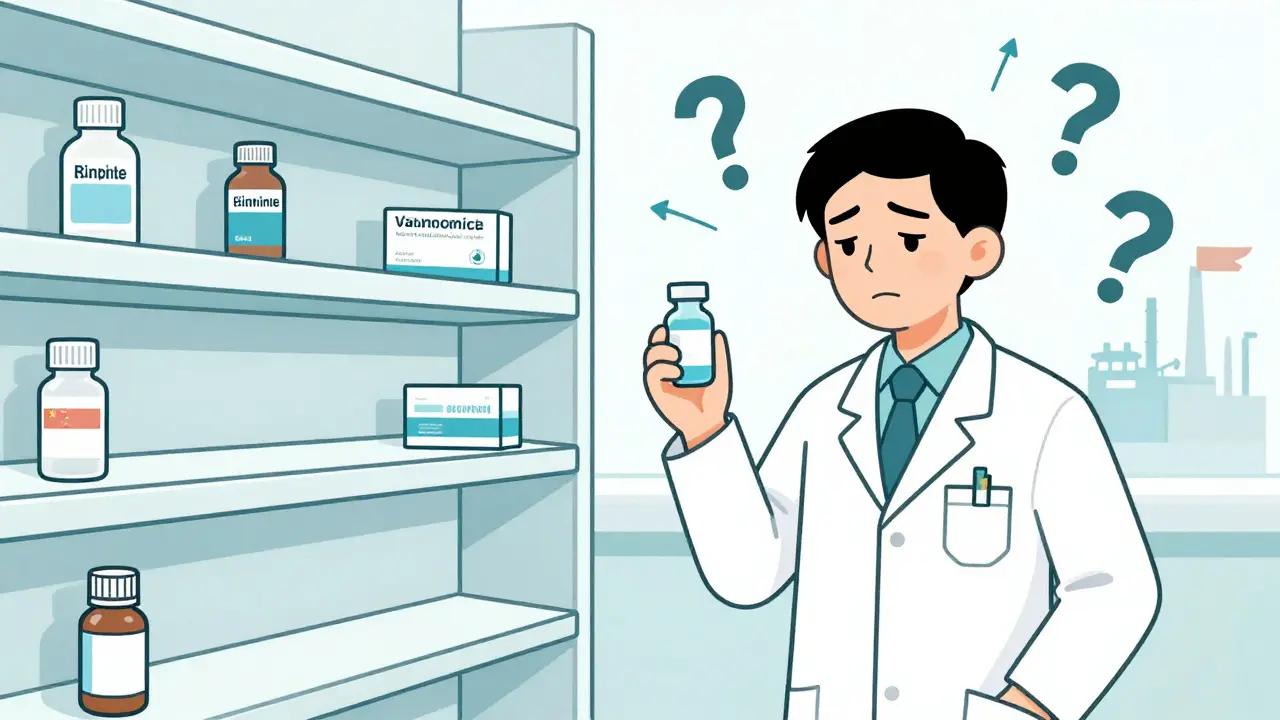
When a life-saving drug disappears from the shelf, it’s not just an inconvenience-it’s a crisis. In 2022, the U.S. faced 287 drug shortages, affecting nearly one in five essential medications in hospitals. These aren’t rare glitches. They’re systemic failures that hit hardest in cancer care, emergency rooms, and rural clinics. If you’ve ever waited hours for a saline bag, switched from morphine to hydromorphone because the original ran out, or watched a patient’s treatment get delayed because the IV antibiotic wasn’t in stock-you know how real this is.
Why Do Medication Shortages Keep Happening?
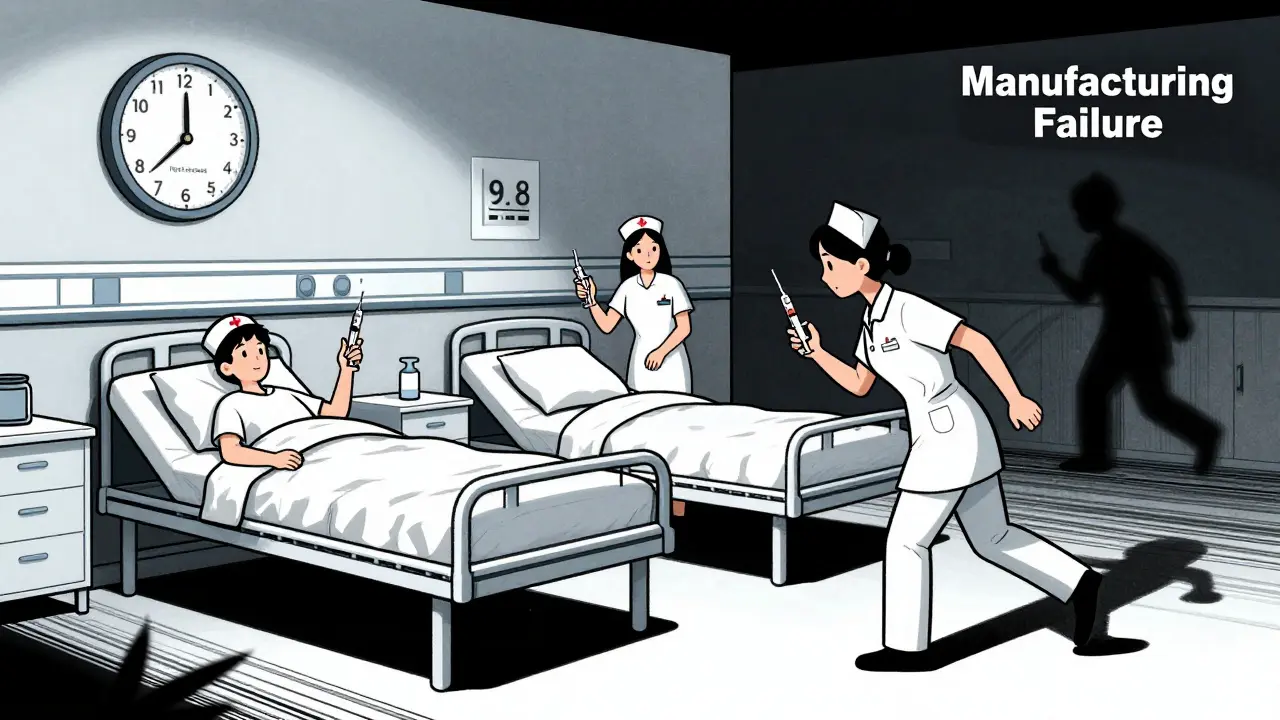
Most shortages aren’t caused by sudden spikes in demand. They’re rooted in broken manufacturing and economic incentives. Over 60% of all drug shortages involve generic sterile injectables-things like morphine, antibiotics, chemotherapy agents, and IV fluids. These are cheap drugs, made in bulk, often by just three manufacturers who control 75% of the U.S. market. When one factory has a quality issue-a leaky pipe, mold in the clean room, or a mislabeled batch-the whole supply chain stalls. The FDA found that 46% of shortages in 2022 were due to manufacturing quality problems. That’s down from 62% a decade ago, but still the top cause. Why? Because there’s little financial incentive for companies to invest in better equipment or backup systems. Generic drug prices are locked in by Medicaid rebates and 340B program rules. If a manufacturer tries to raise prices to cover upgrades, they lose sales in the very markets that rely on those drugs the most. Add to that: 80% of the active ingredients in U.S. drugs come from overseas, mostly China and India. A single flood, political disruption, or inspection delay abroad can ripple through American hospitals. The average shortage now lasts 9.8 months. For cancer drugs, it’s over 14 months.What Happens When a Drug Disappears?
It’s not just about running out of pills. It’s about chaos. Pharmacists scramble to find alternatives. Nurses get retrained on new dosing protocols. Doctors face impossible choices: delay surgery, use a less effective drug, or risk a dangerous substitution. In one 2023 case, a hospital switched from saline to dextrose for IV hydration because saline was unavailable. Patients developed electrolyte imbalances. Errors jumped by 15%. The burden falls hardest on safety-net hospitals serving Medicaid and uninsured patients. 78% of these facilities report canceling or delaying procedures due to drug shortages. Meanwhile, pharmacy teams are working 12.7 extra hours per week on average just to manage the fallout. Nurses report patient wait times for critical meds increasing by 22 minutes. And it’s not just hospitals. 84% of physician practices in the U.S. dealt with at least one shortage in 2022. One in five patients had their treatment changed because the prescribed drug wasn’t available.How Hospitals Are Trying to Cope
Some hospitals have built systems to fight back. The most effective ones have a dedicated shortage management team: pharmacists, nurses, IT staff, risk managers, and finance officers-all trained to act fast. Here’s what works:- Weekly shortage committee meetings-even when there’s no crisis. This keeps everyone alert.
- Real-time tracking systems that flag when a drug order is delayed or reduced, not just when it’s gone.
- Buffer inventories of 14-30 days for critical drugs. But here’s the catch: only 35% of hospitals can afford this. Most safety-net hospitals keep just 8-12 days’ worth.
- Simulation drills every quarter. Hospitals that run these see 33% fewer medication errors during actual shortages.
- Clear communication protocols-updates sent to staff within 4 hours of a shortage being confirmed.
What Are Your Alternatives?
When your usual drug is gone, you need options. But not all alternatives are equal. For example:- Morphine shortage? Hydromorphone is a common substitute, but it’s 5-7 times more potent. Dosing errors spike without clear protocols.
- Vancomycin unavailable? Linezolid or daptomycin may work, but they’re far more expensive and require different monitoring.
- IV saline gone? Dextrose or lactated Ringer’s can be used, but they don’t replace electrolytes the same way. This can lead to complications in trauma or sepsis patients.
What’s Being Done to Fix This?
There’s movement, but it’s slow. In 2022, the U.S. Department of Health and Human Services created a new role: Supply Chain Resilience and Shortage Coordinator. Their job? To coordinate between the FDA, CDC, and manufacturers. They’ve started building a national response framework, but it’s still in early stages. The FDA is also pushing manufacturers to submit Risk Management Plans under new draft guidance. These plans must include:- Supply chain mapping (who supplies what, where)
- Quality control thresholds (what triggers a shutdown)
- Contingency plans for production failures
What Can You Do?
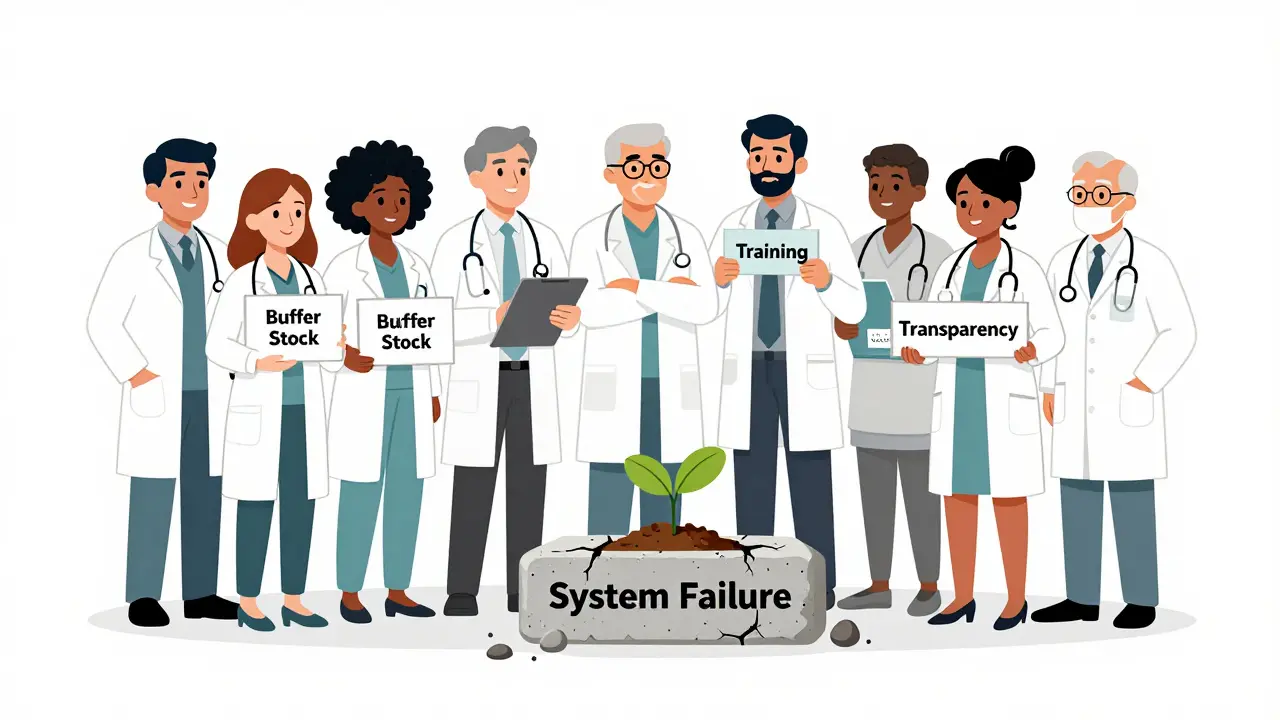
If you’re a patient: Keep a list of your medications and their generic names. Ask your pharmacist: “Is this drug in short supply? What are the alternatives?” Don’t assume your prescription will be filled the same way next time. If you’re a healthcare worker: Advocate for your hospital to build a shortage response team. Push for regular training. Document every substitution and error-it’s the only way to prove this is a systemic problem. If you’re a policymaker or advocate: Support legislation that funds buffer inventories for safety-net hospitals. Push for Medicare reimbursement reform. Demand transparency from manufacturers.What’s Next?
Without major changes, drug shortages will grow by 8-12% per year through 2030. Oncology, anesthesia, and critical care drugs will be hit hardest. The cost to hospitals? Over $1.2 billion a year just to manage the chaos. The problem isn’t going away. But it’s not inevitable. The tools to fix it exist: better manufacturing, smarter incentives, national coordination, and preparedness. What’s missing is the political will to make it happen. Until then, the people on the front lines-pharmacists, nurses, doctors-will keep making do. With less. With more stress. And with the constant fear that the next missing drug might be the one that saves someone’s life.What are the most common drugs in shortage right now?
As of late 2025, the most commonly reported shortages include generic sterile injectables like morphine, saline, vancomycin, propofol, and dobutamine. Chemotherapy drugs such as cisplatin and doxorubicin also remain in short supply. These are often used in hospitals for emergency care, cancer treatment, and critical care-making their absence especially dangerous.
Can I get a prescription for a different drug if mine is unavailable?
Yes, but only under medical supervision. Substituting one drug for another isn’t always safe. For example, switching from morphine to hydromorphone requires a dose adjustment because hydromorphone is much stronger. Your doctor and pharmacist should review your medical history, allergies, and current conditions before making any change. Never switch medications on your own.
Why aren’t more drugs made in the U.S. to avoid shortages?
Making drugs in the U.S. is expensive, and generic medications have very low profit margins. Most manufacturers outsource production to countries like China and India because labor and regulatory costs are lower. Even when U.S. companies do produce drugs domestically, they often lack the financial incentive to build backup capacity or upgrade aging equipment. Without policy changes that reward reliability over cost-cutting, this won’t change.
How long do drug shortages usually last?
The average drug shortage now lasts 9.8 months, up from 6.2 months in 2015. Some, especially cancer drugs or complex injectables, can last over a year. Shortages tied to manufacturing quality issues often take longer to resolve because fixing a facility, getting FDA approval for changes, and restarting production can take many months.
Is there a national list of current drug shortages?
Yes. The U.S. Food and Drug Administration (FDA) maintains a public Drug Shortage Database that’s updated daily. It includes the drug name, reason for shortage, expected resolution date, and any available alternatives. Health professionals can also access real-time alerts through the American Society of Health-System Pharmacists (ASHP) and other hospital networks.
Do drug shortages affect rural areas more than cities?
Yes. Rural hospitals often have smaller inventories, fewer pharmacy staff, and limited access to alternative suppliers. They’re also more likely to rely on Medicaid and 340B programs, where drug pricing rules discourage manufacturers from investing in reliable production. As a result, rural clinics report higher rates of treatment delays and canceled procedures during shortages compared to urban hospitals.

Comments
Napoleon Huere
It's wild to think that a life-saving drug can vanish because a factory pipe leaked and no one wanted to pay for a backup system. We treat medicine like it's a commodity instead of a human right. We've optimized for profit, not survival. And now we're surprised when people die because the math didn't add up? We don't need more reports. We need a moral reckoning.
January 26, 2026 AT 21:45
Shweta Deshpande
Oh my goodness, this post made me cry a little 😢 I work in a small clinic in Kerala and we’ve had to switch antibiotics three times in the last six months because shipments got delayed from China. Last week, a diabetic patient couldn’t get insulin for four days because the local pharmacy had no stock and the distributor said ‘it’s on a boat somewhere’. I swear, we’re all just trying to keep people alive with duct tape and hope. But I’m so proud of my team-they never give up. Even when the meds are gone, we still show up. 💪❤️
January 27, 2026 AT 12:06
Robin Van Emous
I’ve seen this happen. I’ve seen nurses cry because they couldn’t give a kid the right dose. I’ve seen doctors pick between two bad options. I’ve seen patients get worse because we ran out of saline. It’s not just logistics-it’s trauma. And yet, we keep doing it. Maybe because we’re trained to fix things. But no one’s fixing the system. And that’s the real tragedy.
January 29, 2026 AT 08:10
James Nicoll
So let me get this straight… we outsource 80% of our drugs to countries we’re currently calling ‘adversaries’… and then we’re shocked when the supply chain breaks? 🤦♂️ Meanwhile, our politicians are out here debating whether to put flags on Mars. Meanwhile, grandma’s chemo is on hold because a factory in Mumbai had a power outage. This isn’t a shortage. This is a farce with a side of negligence.
January 30, 2026 AT 22:41
Uche Okoro
The structural inefficiencies in the pharmaceutical supply chain are symptomatic of a neoliberal economic paradigm that prioritizes shareholder value over public health imperatives. The absence of vertical integration, coupled with oligopolistic market concentration in generic injectables, creates systemic vulnerability. The FDA’s voluntary Risk Management Plans are insufficient without mandatory capacity buffers, contingent sourcing protocols, and tiered reimbursement structures incentivizing resilience over cost-minimization. Without regulatory intervention, this is not a crisis-it is an inevitability.
January 31, 2026 AT 23:52
shivam utkresth
Man, I remember when I was in med school in Delhi-we used to joke that if your IV bag ran out, you’d just ask the guy at the chai stall if he had a spare. Now I work in a Boston ER and it’s the same damn thing. Only now, instead of chai, we’re begging the pharmacy for a vial of morphine. It’s like watching a car crash in slow motion and everyone’s too busy arguing about the color of the car to pull the driver out. We need a national drug reserve. Like, now. Not in 2027. Now.
February 2, 2026 AT 06:56
John Wippler
Listen. I know it’s easy to feel powerless. But here’s the truth: you’re not powerless. If you’re a nurse, document every delay. If you’re a pharmacist, push for your hospital to build that shortage team. If you’re a patient, ask for the generic name. If you’re a voter, demand your rep fund buffer stocks. This isn’t about one big fix-it’s about a thousand small acts of courage. We don’t need a hero. We need a movement. And it starts with you. Keep going. You’re not alone.
February 3, 2026 AT 20:17
Aurelie L.
Someone’s gonna die because of this. And then the news will say ‘tragic shortage’ and move on. I’ve seen it. I’ve seen the paperwork. I’ve seen the silence after the heart stops. And nobody gets fired. Nobody goes to jail. Just more meetings. More reports. More ‘we’re working on it.’
February 4, 2026 AT 19:21
Joanna Domżalska
Okay but what if the real problem is that people are just too lazy to take their meds on time? Like, maybe if we stopped treating every little thing with a pill, we wouldn’t be in this mess. Maybe we need less medicine, not more. Maybe we should just eat more kale and stop expecting science to fix our bad habits.
February 5, 2026 AT 03:53
Josh josh
man i just got back from the er last night and we were out of saline so we used sugar water and a couple of patients got weird dizzy spells but hey at least we tried right lol
February 6, 2026 AT 03:47
bella nash
It is imperative to acknowledge the systemic disjunction between pharmaceutical manufacturing economics and the ethical obligations of public health infrastructure. The absence of a centralized, federally mandated strategic reserve for essential injectables constitutes a profound governance failure. Furthermore, the reliance upon international supply chains, while economically expedient, introduces unacceptable vulnerability to geopolitical and climatic perturbations. A recalibration of reimbursement structures, coupled with mandatory investment in domestic manufacturing capacity, is not merely advisable-it is a moral imperative.
February 7, 2026 AT 05:13
SWAPNIL SIDAM
My cousin is a nurse in Texas. She told me last week they ran out of propofol. They had to wake up a guy after surgery because they couldn’t put him back to sleep. He screamed for 20 minutes while they tried to finish the procedure. She said she’ll never forget the sound. I’m not even a doctor. But I cried for three hours. We can’t keep doing this.
February 8, 2026 AT 19:26