
St. John’s Wort and Prescription Drugs: What You Need to Know About Dangerous Interactions
- Colin Hurd
- 4 December 2025
- 13 Comments
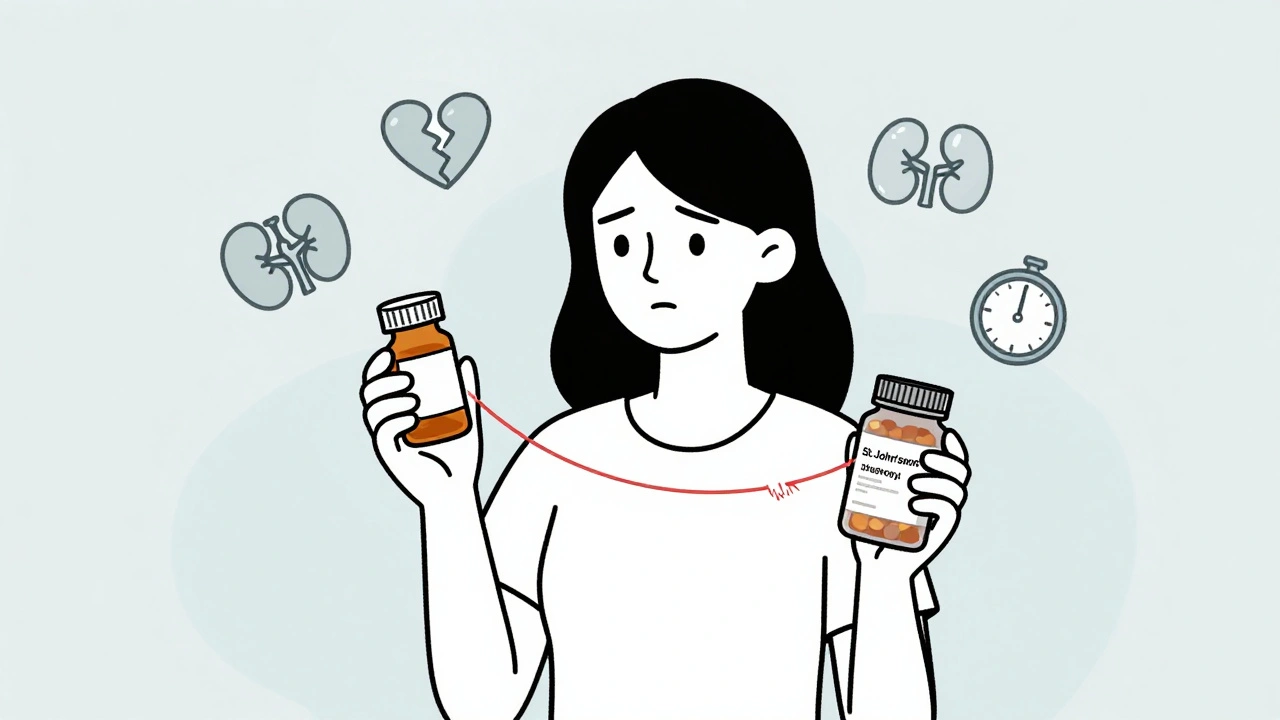
St. John’s Wort isn’t just another herbal supplement. For many people, it’s the go-to remedy for mild depression - affordable, natural, and seemingly gentle. But here’s the catch: St. John’s Wort doesn’t play nice with most prescription medications. And when it doesn’t play nice, things can go wrong - fast.
Imagine taking your birth control pills every day, perfectly on schedule. Then you start a bottle of St. John’s Wort because you’ve been feeling down. A few weeks later, you miss your period. You take a test. You’re pregnant. That’s not a myth. It’s happened. And it’s not rare.
St. John’s Wort - or Hypericum perforatum - is one of the most studied herbal supplements for depression. But it’s also one of the most dangerous when mixed with other drugs. Unlike prescription meds, which go through years of testing for safety and interactions, St. John’s Wort is sold as a supplement. That means no FDA approval, no mandatory interaction warnings on every label, and no doctor oversight. Just a bottle on the shelf, quietly changing how your body handles life-saving medications.
How St. John’s Wort Changes Your Body’s Chemistry
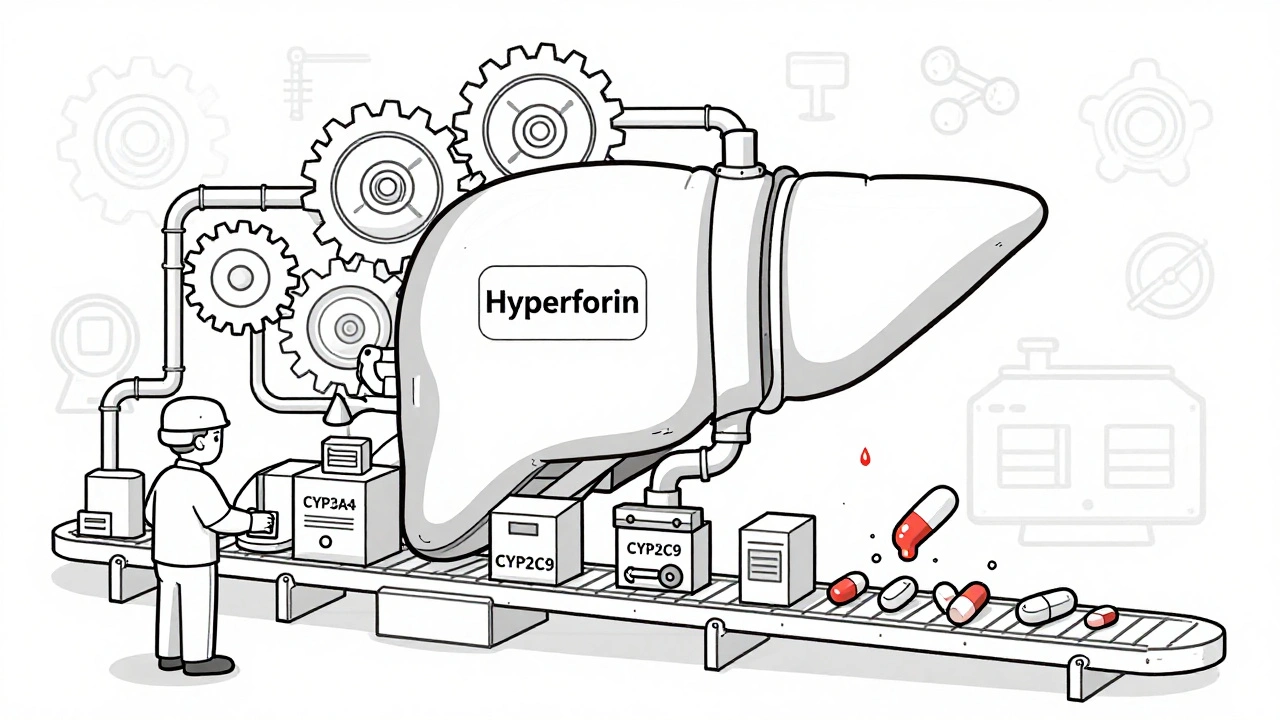
The real culprit behind most of these interactions isn’t hypericin - the red compound you see on the label. It’s hyperforin. This one chemical turns on a switch in your liver called the pregnane-X-receptor, or PXR. When PXR flips on, your body starts producing more of certain enzymes - especially CYP3A4 and CYP2C9 - that break down drugs.
Think of your liver like a factory. Normally, it processes your medications at a steady pace. But when St. John’s Wort shows up, it’s like someone turns on all the machines at once. Your body starts chewing through drugs way faster than it should. The result? The medication doesn’t stick around long enough to work.
This isn’t theoretical. In 2019, a 34-year-old woman in the U.S. had a kidney transplant. Her tacrolimus levels were stable - between 5 and 15 ng/mL. Then she started taking St. John’s Wort for anxiety. Eight weeks later, her tacrolimus dropped to 0.8 ng/mL. Her body rejected the new kidney. She was hospitalized. She nearly died. That’s not an outlier. It’s a pattern.
Medications That Can Fail - or Kill - When Mixed With St. John’s Wort
There are over 50 documented interactions between St. John’s Wort and prescription drugs. Some are mild. Others are deadly. Here are the big ones:
- Immunosuppressants - Cyclosporine, tacrolimus, sirolimus. These keep your transplanted organs from being rejected. St. John’s Wort can slash their levels by up to 70%. One study showed 100% of transplant patients taking both had organ rejection.
- Anticoagulants - Warfarin. Your blood thinners. In 2000, a patient’s INR (a measure of blood clotting) dropped from 2.5 to 1.4 in just 10 days after starting St. John’s Wort. That’s like turning off your car’s brakes while driving downhill.
- Oral contraceptives - Birth control pills, patches, rings. Multiple cases of unintended pregnancy have been reported. The European Medicines Agency requires this warning on every label.
- Antidepressants - SSRIs like sertraline, fluoxetine, and SNRIs like venlafaxine. Mixing them with St. John’s Wort can trigger serotonin syndrome - a dangerous spike in serotonin that causes high fever, seizures, irregular heartbeat, and even death.
- HIV medications - Protease inhibitors like ritonavir and non-nucleoside reverse transcriptase inhibitors. St. John’s Wort can make these drugs useless. That means the virus rebounds. Resistance builds. Treatment fails.
- Pain meds - Oxycodone, methadone, tramadol. St. John’s Wort can reduce their pain-relieving effects by up to 50%. People end up in more pain, take higher doses, and risk overdose.
- Heart medications - Digoxin, statins, some blood pressure drugs. Levels drop. Control is lost.
And here’s the scary part: these interactions don’t show up right away. It takes about 10 days for your liver to ramp up enzyme production. You might feel fine for weeks. Then - boom - your medication stops working. You don’t know why. Your doctor doesn’t know why. You’re left guessing.
Why People Still Take It - And Why They Shouldn’t
It’s not hard to see why St. John’s Wort is popular. It works - for mild to moderate depression. In Germany, it’s used in 20% of antidepressant prescriptions. A 2022 review in the Journal of Clinical Psychiatry found it as effective as low-dose SSRIs, with fewer side effects like weight gain or sexual dysfunction.
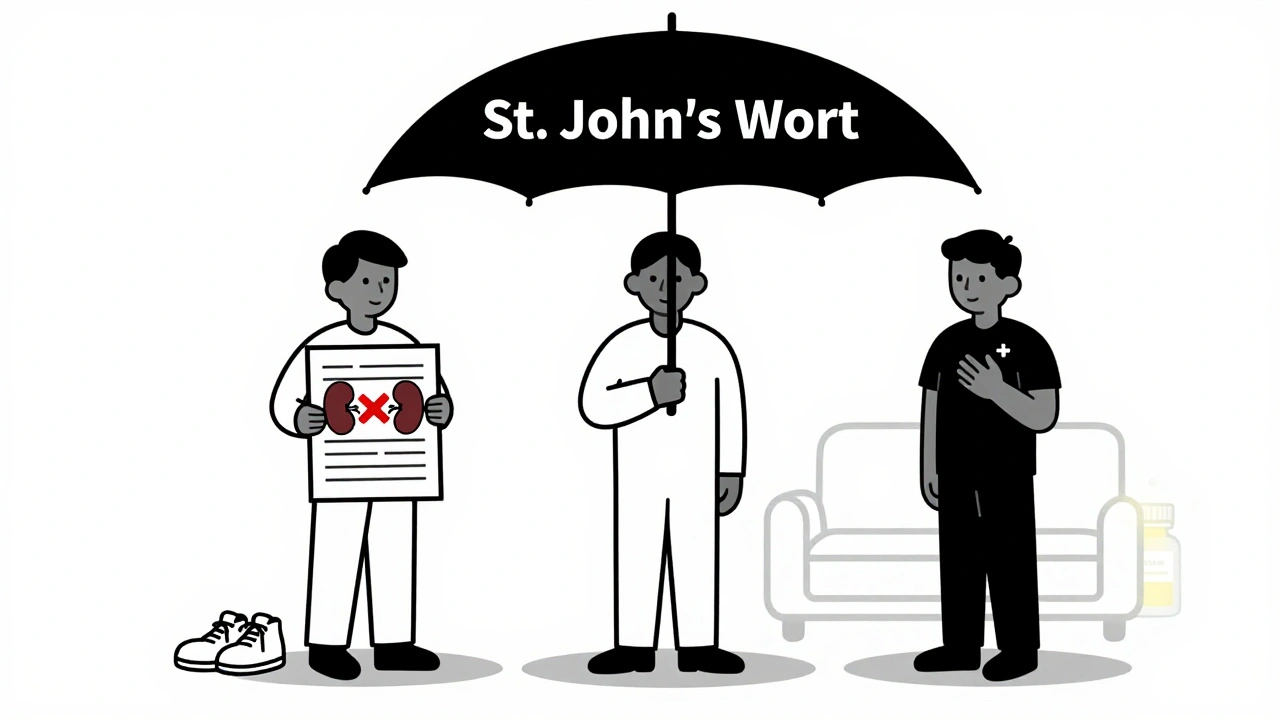
But here’s the trade-off: you can’t have both. If you’re on any prescription drug - even something as simple as a statin for cholesterol - St. John’s Wort is a gamble you can’t afford to take. The risk isn’t just side effects. It’s organ failure. Unplanned pregnancy. HIV progression. Death.
And no, “I only take it for a week” doesn’t help. The enzyme-inducing effects last for two weeks after you stop. That’s longer than most people realize. You can’t just stop it before surgery or a new prescription. You need to wait. Two full weeks.
What You Should Do Instead
If you’re considering St. John’s Wort for depression, ask yourself this: What am I taking right now? Check your pill bottle. Look at your prescription list. If you’re on anything - even one thing - stop. Talk to your pharmacist.
There are safer alternatives:
- SAM-e - Works for depression, minimal interactions. Only avoid if you’re on MAO inhibitors.
- 5-HTP - Also used for mood, but still carries some serotonin risk. Use with caution.
- Exercise - A 30-minute walk five days a week is as effective as antidepressants for mild depression, according to a 2021 study in The Lancet Psychiatry.
- Cognitive behavioral therapy (CBT) - Free or low-cost options through community health centers. Proven, safe, and lasting.
If you’re already taking St. John’s Wort and you’re on a prescription drug, don’t quit cold turkey. Talk to your doctor. You might need to wean off slowly and monitor your medication levels. For drugs like warfarin or tacrolimus, blood tests every two weeks are standard during the first month of stopping St. John’s Wort.
The Bottom Line: It’s Not Worth the Risk
St. John’s Wort isn’t a harmless herb. It’s a powerful drug - one that your body doesn’t know how to treat as anything but. It’s not regulated like a prescription. It’s not labeled like one. And it doesn’t come with a doctor’s warning.
But the consequences? They’re very real. People have lost transplants. Had babies they didn’t plan for. Had seizures. Died.
Even if you feel fine, even if you’ve been taking it for years, even if your doctor didn’t warn you - this isn’t a risk you should take. The science is clear. The warnings are out there. The deaths have been documented.
If you want to treat depression without drugs, there are better, safer paths. If you’re already on medication, St. John’s Wort isn’t an option. It’s a hazard.
Don’t assume it’s safe because it’s natural. The most dangerous drugs aren’t the ones you need a prescription for. They’re the ones you can buy without one.
Can St. John’s Wort cause birth control to fail?
Yes. Multiple cases have been documented where women using St. John’s Wort while on oral contraceptives became pregnant despite perfect pill use. St. John’s Wort increases the breakdown of estrogen and progestin, making birth control ineffective. The European Medicines Agency requires this warning on all labels. If you’re on birth control, do not take St. John’s Wort.
How long does it take for St. John’s Wort to affect other medications?
It takes about 10 days for St. John’s Wort to fully induce liver enzymes that break down other drugs. But the effects can last up to two weeks after you stop taking it. That means even if you quit St. John’s Wort before surgery or starting a new medication, you still need to wait two weeks before it’s safe.
Is St. John’s Wort safe if I’m not on any medications?
For someone not taking any prescription drugs, St. John’s Wort may be relatively safe for short-term use in mild depression. But even then, risks remain - including increased sun sensitivity, anxiety, and gastrointestinal upset. It’s not risk-free, and long-term safety data is limited. Safer alternatives like exercise, therapy, or SAM-e exist.
Can I take St. John’s Wort with over-the-counter painkillers like ibuprofen or acetaminophen?
Ibuprofen and acetaminophen aren’t strongly affected by St. John’s Wort. But that doesn’t mean it’s safe. Many people take multiple OTC meds - cold pills, sleep aids, antacids - and some of those contain ingredients that interact. The safest approach is to avoid St. John’s Wort unless you’ve reviewed every single substance you take with a pharmacist.
What should I do if I’ve been taking St. John’s Wort and just started a new prescription?
Stop taking St. John’s Wort immediately and contact your doctor or pharmacist. Do not wait for symptoms. For critical drugs like transplant meds, anticoagulants, or HIV drugs, you may need urgent blood tests to check levels. Never assume the new medication will work as expected - St. John’s Wort may have already reduced its effectiveness.

Comments
Stephanie Fiero
i took st. john’s wort for 3 months last year and my anxiety went away but my birth control totally failed and i got preggo like wtf?? my doc never told me this shit
December 4, 2025 AT 16:13
Laura Saye
the real tragedy isn't just the pharmacokinetic interference-it's the epistemic rupture between folk medicine and biomedical governance. we treat herbs as benign because they're 'natural,' but biochemistry doesn't care about your intentions. hyperforin is a transcriptional modulator, not a tea leaf.
December 5, 2025 AT 09:02
Krishan Patel
you people are idiots. if you're dumb enough to mix herbal garbage with real medicine, you deserve what happens. my uncle took this stuff with his blood thinner and ended up in the hospital-he was a walking cautionary tale. no one forced him. he chose ignorance.
December 6, 2025 AT 10:16
Carole Nkosi
they don't warn you because the pharma giants own the FDA. st. john’s wort is cheaper than a pill, so they silence the truth. they want you dependent. they want you paying monthly. this is controlled oppression disguised as healthcare.
December 8, 2025 AT 00:46
Philip Kristy Wijaya
imagine being so naive you think a plant can be safe without a prescription label in triplicate and a 12 page insert written in 6 point font and a barcode that tracks your dna and your emotional state and your credit score and your google searches for 'how to die quietly' i mean really
December 8, 2025 AT 21:57
Rupa DasGupta
my mom took this stuff after dad died and she cried every day for 3 weeks then stopped and started crying again 😭 i think it made her worse?? but she says it 'cleared her soul' idk anymore
December 9, 2025 AT 01:35
Marvin Gordon
if you're on meds and thinking about this herb, just pause. breathe. call your pharmacist. they’re not there to judge-they’re there to save your life. seriously, five minutes on the phone could keep you out of the ER.
December 10, 2025 AT 23:25
ashlie perry
the government knows this is dangerous but they let it sell because they want us all on antidepressants so they can track us with our prescriptions and implant microchips in our brains through the pill bottles
December 11, 2025 AT 02:31
James Moore
Look. Let’s be clear. The United States of America has built a healthcare system that treats natural remedies as 'unregulated junk' while simultaneously allowing Big Pharma to patent compounds derived from plants that indigenous cultures have used for millennia. This isn’t about safety-it’s about control. The FDA doesn’t protect you-it protects profits. And now, they’re using your ignorance as a weapon.
St. John’s Wort isn’t the villain. The system is.
And yes-I’ve seen patients on tacrolimus who didn’t know they were taking it. They thought it was ‘just a mood booster.’ One lost a kidney. Another lost his job. Another lost his family because he didn’t understand that his meds weren’t working-and no one told him why.
So don’t tell me it’s ‘just a supplement.’ It’s a chemical weapon disguised as wellness.
And if you’re still taking it while on statins? You’re not being brave. You’re being reckless. And you’re putting your whole family at risk.
Wake up.
December 12, 2025 AT 19:36
Kylee Gregory
it's wild how we treat medicine like it's either 'pharma evil' or 'herbs are magic' when the truth is somewhere in between. st. john’s wort works for some people-but it's not harmless. i think the real solution is better education, not fear-mongering or demonization. maybe if pharmacists actually talked to people instead of just handing out pills, we wouldn't be here.
December 14, 2025 AT 10:41
Lucy Kavanagh
the EU forces warning labels but the US doesn't? that's because corporations own our lawmakers. they don't want you to know that your 'natural' remedy is sabotaging your heart meds. they want you to die quietly so they can sell you another pill next month.
December 15, 2025 AT 05:41
Chris Brown
It is profoundly irresponsible to suggest that a substance with documented, life-threatening interactions-especially with immunosuppressants, anticoagulants, and antiretrovirals-should be casually consumed by the general public under the guise of 'natural wellness.' This is not alternative medicine. This is medical negligence masquerading as empowerment.
And yet, here we are, allowing it to be sold alongside protein powder and energy drinks. The regulatory vacuum is not a feature-it is a failure. A catastrophic one.
December 16, 2025 AT 11:36
sean whitfield
oh so now we're scared of a plant because some people can't read? i mean yeah if you take it with your transplant meds you're gonna die. but if you're not on anything? chill. it's not the devil. it's just a herb. you're all acting like someone just invented fire
December 17, 2025 AT 15:28