
Switching Health Plans: How to Evaluate Generic Drug Coverage to Save Money
- Colin Hurd
- 18 February 2026
- 13 Comments
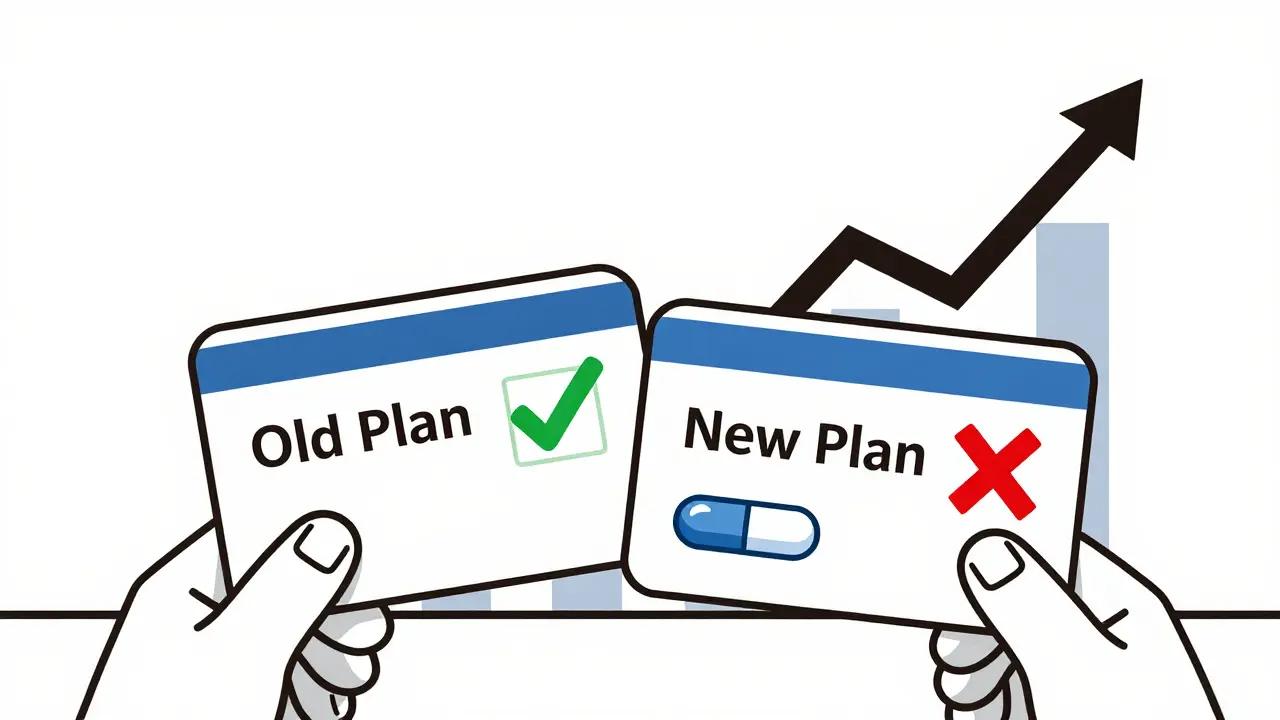
When you switch health plans, one of the biggest surprises isn’t the premium-it’s the cost of your generic drugs. You might be paying $5 a month for your blood pressure medication now, only to find out next year it’s $45 because your new plan put it in a higher tier. Or worse, it’s not covered at all. This isn’t a glitch. It’s how formularies work. And if you don’t check them before switching, you could end up paying thousands more per year.
What Are Formulary Tiers, and Why Do They Matter?
Every health plan has a list of approved drugs called a formulary. But not all drugs are treated the same. They’re split into tiers, and each tier has a different price tag. The lower the tier, the cheaper your out-of-pocket cost. Tier 1 is almost always reserved for generic drugs. These are the same as brand-name medications but cost 80-90% less. In 2022, generics made up 84% of all prescriptions filled in the U.S., yet they accounted for just 14% of total drug spending. That’s because they’re cheap-and plans want you to use them. But here’s the catch: not all Tier 1 drugs are equal. Some plans charge $3 for a 30-day supply. Others charge $20. Some waive your deductible for Tier 1 drugs. Others make you pay the full deductible before you even get to the copay. If you’re on a high-deductible plan, that could mean paying $1,500 before your $5 generic even kicks in.How Different Plans Handle Generic Drugs
Not all health plans are built the same. Here’s how the major types handle generics:- Marketplace Silver SPD Plans: These are the gold standard for generic drug users. They waive the medical deductible for Tier 1 drugs and charge a fixed $20 copay. If you take three generics monthly, you’ll pay $720 a year-no matter how much your other medical costs are.
- Standard Non-Silver Marketplace Plans: These often combine your medical and prescription deductibles. So if your deductible is $1,600, you pay that first-even for your $5 generic. Many people don’t realize this until they get hit with a $1,200 bill for a drug they thought was covered.
- Medicare Part D Plans: The base deductible in 2023 was $505, but most plans have lower or no deductible for generics. Preferred generics often cost $0-$10. But if your drug is on Tier 2 (non-preferred), you could pay $20-$40. And if you switch plans, your levothyroxine might move from Tier 1 to Tier 2 overnight.
- Employer-Sponsored Plans: These vary wildly. Some charge $5 for generics before the deductible. Others charge $15 after. MHBP Federal Health Plans, for example, offer $5 copays on their Basic Option but $10 on their Consumer Option. If you’re on a fixed income, that $5 difference adds up to $60 a year.
- Medicare Advantage with Drug Coverage (MA-PD): These often have lower out-of-pocket costs than standalone Part D plans. On average, users save 18% on generics. But only if you pick the right plan. Many people assume all MA-PDs are equal-until they find out their insulin copay jumped from $0 to $35.
State Laws Change Everything
Where you live can make a bigger difference than your plan choice.- In New York, most plans cover Tier 1 generics with $0 copay-no deductible required.
- In California, you pay an $85 outpatient drug deductible before generics kick in, then 20% coinsurance up to $250 a year.
- In Washington D.C., there’s a separate $350 drug deductible, with a $150 cap on specialty drugs.
What You Must Check Before Switching
You can’t just look at the plan summary. You need to dig into the details. Here’s your checklist:- Get the full formulary: Don’t trust the website’s “Tier 1” label. Download the complete list from the insurer’s website. Look for your exact drug name, strength, and manufacturer.
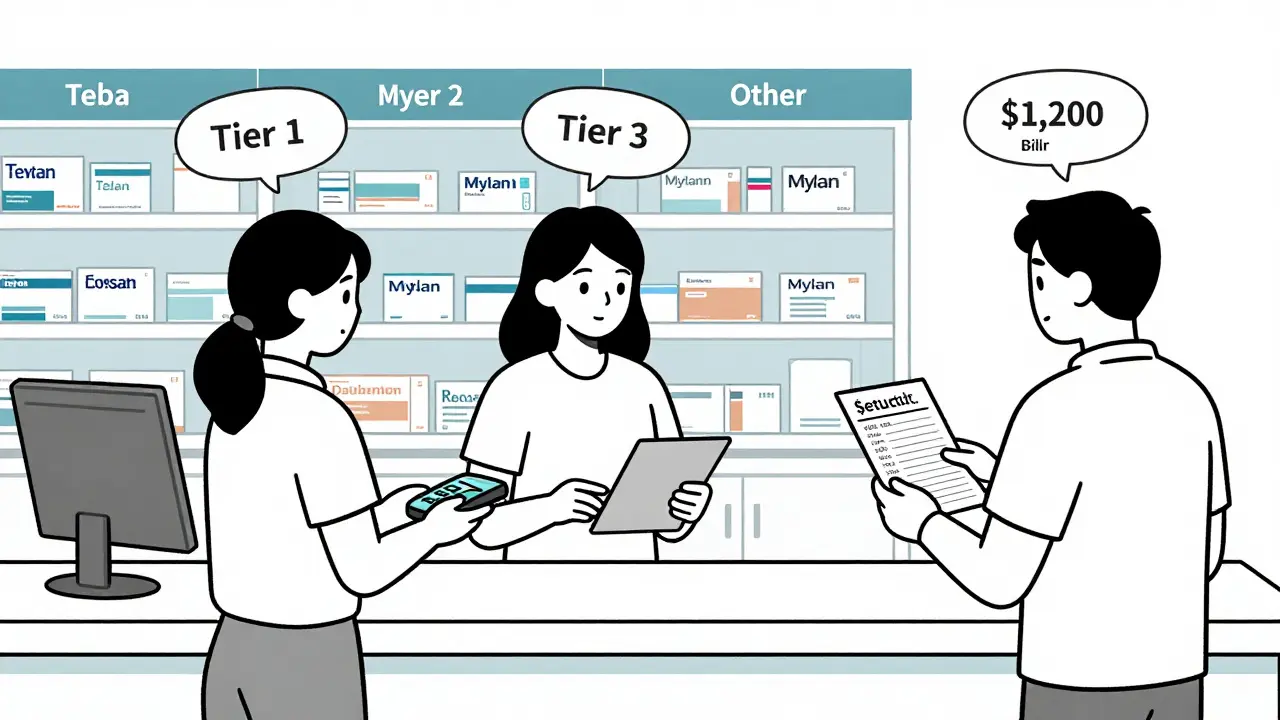
- Check the manufacturer: A generic isn’t just a generic. Metformin made by Teva might be Tier 1. Metformin made by Mylan might be Tier 2. They’re chemically identical-but plans treat them differently.
- Verify your pharmacy network: Your drug might be $3 at CVS, but $40 at Walgreens if it’s not in-network. Some plans have narrow networks that exclude local pharmacies.
- Calculate annual cost: Multiply your monthly copay by 12. Then add any deductible you’ll have to pay first. For example: $15 copay × 12 = $180 + $1,000 deductible = $1,180 total. That’s $1,000 more than a plan with a $3 copay and no deductible.
- Use a cost calculator: Medicare.gov’s Plan Finder and Healthcare.gov’s plan selector let you enter your exact drugs and see real costs. In 2022, users who used these tools had 37% fewer billing surprises.
Common Mistakes People Make
Most people think they’re covered. They’re not.- Assuming all generics are equal: A 2022 study found 68% of people switching plans didn’t check if their specific generic formulation was covered. That’s like buying a new car and assuming it comes with the same engine.
- Ignoring mail-order options: Some plans offer 90-day supplies for $10. But only if you use their mail-order pharmacy. If you stick with retail, you pay 3x more.
- Not checking for formulary changes: Plans change their formularies every year. A drug that was Tier 1 last year might be Tier 3 this year. You won’t get a letter. You have to check.
- Trusting the plan’s “low-cost” label: A plan might say “low premiums” but hide high drug costs. One Reddit user reported switching to a “budget” plan, only to pay $480 extra for their diabetes meds.
What Experts Say
Dr. Karen Pollitz from KFF says: “The elimination of deductibles for Tier 1 drugs in Silver SPD plans is the most important consumer protection since the Affordable Care Act.” She estimates it saves low-income users $1,200 a year. The Medicare Rights Center warns that 15% of seniors lose coverage for their generic meds during annual switches. Diabetes and blood pressure drugs are most likely to be dropped. And here’s a chilling stat: 41% of people pick the wrong plan because they don’t understand formulary tiers. That’s not ignorance. It’s poor design. Insurers don’t make it easy.What’s Changing in 2025
The rules are shifting fast:- Starting in 2025, Medicare Part D will cap out-of-pocket drug costs at $2,000 a year. That’s huge for people on multiple generics.
- The $35 monthly insulin cap is already in effect-and it’s working. People are filling prescriptions again.
- By 2027, 80% of marketplace plans are expected to drop integrated drug deductibles. That’s because consumers keep getting burned.
- New AI tools like CMS’s “Medicare Plan Scout” are rolling out. They predict your drug costs with 90% accuracy. Use them.
Final Advice: Don’t Guess. Verify.
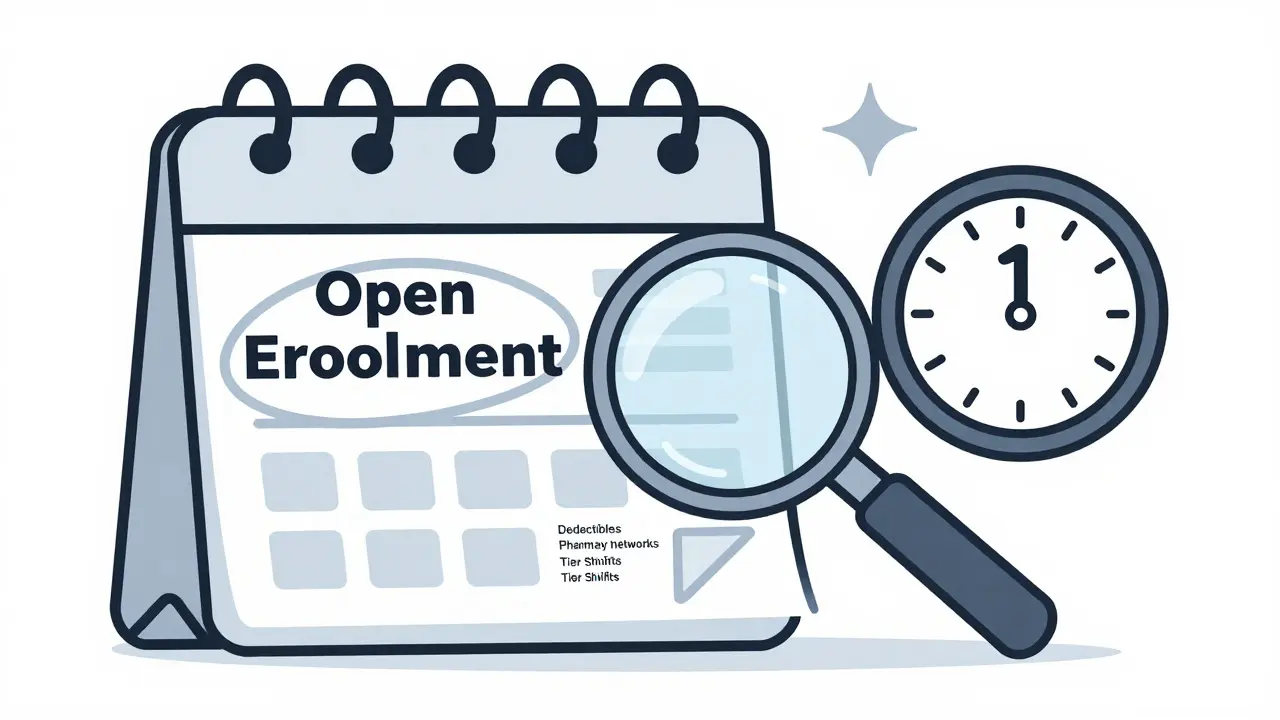
Switching health plans isn’t about the monthly premium. It’s about what happens when you walk into the pharmacy. If you take even one generic drug, you need to spend 30 minutes checking your formulary. Not an hour. Not a day. Thirty minutes. Do it before open enrollment. Do it when you move. Do it when your plan sends a notice saying “formulary changes effective January 1.” Because if you don’t, you’re not saving money. You’re gambling.Are generic drugs as effective as brand-name drugs?
Yes. Generic drugs contain the same active ingredients, dosage, and strength as brand-name versions. The FDA requires them to meet the same safety and effectiveness standards. The only differences are inactive ingredients (like fillers) and packaging. Most people won’t notice any difference in how the drug works. The reason generics cost less is because manufacturers don’t have to repeat expensive clinical trials.
Why does my generic drug cost more on my new plan?
It’s likely because the plan moved your drug to a higher tier-or switched to a different manufacturer. Even if two generics have the same active ingredient, insurers treat them differently based on contracts with manufacturers. A $5 metformin from Teva might be Tier 1, while the same dose from Mylan is Tier 2 at $25. Always check the manufacturer name on your prescription label.
Do all health plans cover the same generic drugs?
No. Each plan creates its own formulary. One plan might cover all generic versions of your medication. Another might cover only one brand. Some plans exclude certain generics entirely if they have deals with brand-name makers. Always compare formularies side by side before switching.
Can I switch plans mid-year if my drug costs go up?
Generally, no. You can only switch during open enrollment (November-January for Medicare, and November-December for marketplace plans). Exceptions exist if you move, lose job-based coverage, or experience a major life change. If your drug cost spikes unexpectedly, contact your insurer to see if they offer a temporary exception or appeal process. Otherwise, you’ll have to wait.
What if my drug isn’t on the formulary at all?
You have a few options. First, ask your doctor if there’s a similar drug on the formulary. Second, file a formulary exception request with your insurer-they must respond within 72 hours for urgent cases. Third, pay out of pocket if it’s a short-term need. And fourth, consider switching plans next year. Always document your request in writing. Many people don’t realize they can appeal, and end up going without medication.
Comments
Ashley Paashuis
Thank you for laying this out so clearly. I’ve been on metformin for years, and I had no idea my plan’s formulary changed last year-until I got hit with a $42 copay. Took me three calls and a spreadsheet to realize they switched from Teva to Mylan. Now I’m on mail-order and paying $3. Still mad, but at least I’m not bleeding cash.
February 19, 2026 AT 08:46
Marie Crick
This is why people go bankrupt.
February 20, 2026 AT 03:42
Jonathan Rutter
You think this is bad? Let me tell you about my cousin’s sister’s neighbor who switched plans and ended up paying $1,800 out of pocket for lisinopril because the plan didn’t cover the generic version they’d been using for 8 years. And get this-she didn’t even know the drug name on her prescription changed from ‘Lisinopril 10mg’ to ‘Lisinopril-HCTZ 10-12.5mg’ because the pharmacy auto-substituted it. The insurer said ‘it’s still the same drug.’ But no, it’s not. One’s a single agent. The other’s a combo. And the combo? Tier 3. $58 copay. No deductible waiver. No grace period. Just a letter in the mail they didn’t read. And now she’s skipping doses. You can’t tell me this isn’t predatory design. Insurance companies don’t want you healthy. They want you to forget to check the formulary. They count on it. And guess what? It works. 41% of people pick the wrong plan. That’s not ignorance. That’s a business model.
February 20, 2026 AT 14:52
Nina Catherine
OMG YES!! I just switched plans last month and thought I was being smart going with the ‘low premium’ option… until I got my first Rx bill for $89 for my thyroid med. Turns out they moved it to Tier 2 and made me hit my $1,500 deductible first. I cried in the pharmacy. Then I called my doc and we switched to a different generic brand-same thing, $5 copay. I’m so glad I found this guide. Bookmarking it for next year!! 😭🙏
February 21, 2026 AT 17:58
Amrit N
Bro this is so real. I’m from India but living in Texas, and I was shocked how wild the system is here. My dad’s on blood pressure meds and we had to compare 5 plans just to get his generic down to $4. The formulary thing? Total maze. But yeah, using the Medicare plan finder saved us. Now he’s on mail order and it’s chill. Just check your damn formulary. 30 mins = $1000 saved.
February 22, 2026 AT 11:02
Greg Scott
Yeah I learned this the hard way too. My plan said ‘$5 generics’ but didn’t mention the separate $1,200 drug deductible. I paid $1,180 out of pocket for one month’s supply of atorvastatin. Just… didn’t know. Now I print the formulary and stick it on my fridge.
February 23, 2026 AT 19:49
Caleb Sciannella
The structural inequities embedded in pharmaceutical formularies represent a profound failure of public policy to align with the ethical imperative of equitable access to essential therapeutics. The tiered copayment model, while ostensibly designed to incentivize cost-effective prescribing, instead functions as a regressive tax on chronically ill populations, particularly those reliant on long-term pharmacotherapy. The fact that manufacturers’ corporate contracts with PBMs dictate therapeutic access-rather than clinical evidence or patient outcomes-reveals a system commodifying health rather than preserving it. The 2025 Medicare out-of-pocket cap, while a step forward, remains insufficient without mandatory transparency in formulary reclassification protocols. We must demand algorithmic accountability from insurers and legislative intervention to standardize tier assignment across state lines.
February 25, 2026 AT 13:51
Freddy King
Let’s be real-this isn’t about drug costs. It’s about behavioral economics. Insurers know people are lazy. They know you won’t check the formulary. They know you’ll trust the ‘low premium’ label. So they bury the real cost in fine print. That’s not a bug. That’s the feature. The whole system is designed to extract maximum profit from maximum ignorance. And guess what? It works. 41% of people pick the wrong plan. That’s not a statistic. That’s a profit margin. The only winners? The actuaries. The losers? You. And your kidneys.
February 25, 2026 AT 21:20
Laura B
I’m so glad someone finally broke this down. I’ve been helping elderly neighbors navigate their Medicare plans for years. One lady thought her insulin was ‘free’-until her new plan moved it to Tier 2. She was rationing doses. We had to call her doctor, file an exception, and switch pharmacies. Took 3 weeks. She’s fine now. But imagine if no one had helped her. This isn’t just paperwork. It’s life or death. Please, if you take meds-check. Check again. Check with your pharmacist. Don’t wait for the bill.
February 27, 2026 AT 13:09
Scott Dunne
As an Irish citizen who moved to the U.S. last year, I find this system utterly barbaric. In Ireland, all generics are covered under the Medical Card scheme with no co-pay for those over 70. No tiered formularies. No deductible traps. No pharmacy network restrictions. Here, you need a law degree just to get your blood pressure pills. The fact that this is normalized is a national disgrace. This isn’t healthcare. It’s a casino.
March 1, 2026 AT 07:21
Oana Iordachescu
Did you know that 89% of formulary changes happen right after open enrollment? And they don’t notify you. They don’t have to. It’s all hidden in the ‘annual notice of changes’-a 47-page PDF you’ll never read. I once found out my levothyroxine was dropped because the insurer struck a deal with a brand-name maker to phase out generics. I had to switch brands. My TSH spiked. I got anxiety. I had to go to the ER. I’m not paranoid. I’m informed. Always check the manufacturer. Always. 💀
March 2, 2026 AT 04:53
Benjamin Fox
Bro I just switched plans and my generic was $3 now it's $40 😭 I didn't even know I had a drug deductible smh. I'm never trusting a 'low premium' plan again. 🤡
March 3, 2026 AT 11:53
Jana Eiffel
The philosophical underpinnings of pharmaceutical tiering reveal a deeply problematic ontological assumption: that human health can be quantified, commodified, and stratified by corporate contract. The notion that a chemically identical molecule may be deemed ‘worth less’ based on the corporate identity of its manufacturer is not merely economically irrational-it is morally incoherent. To treat therapeutic access as a function of contractual negotiation rather than medical necessity is to invert the Hippocratic Oath into a balance sheet. The system does not merely fail the patient. It betrays the very concept of care.
March 4, 2026 AT 12:52