
Inactive Ingredients: What They Are and Why They Matter in Your Medications
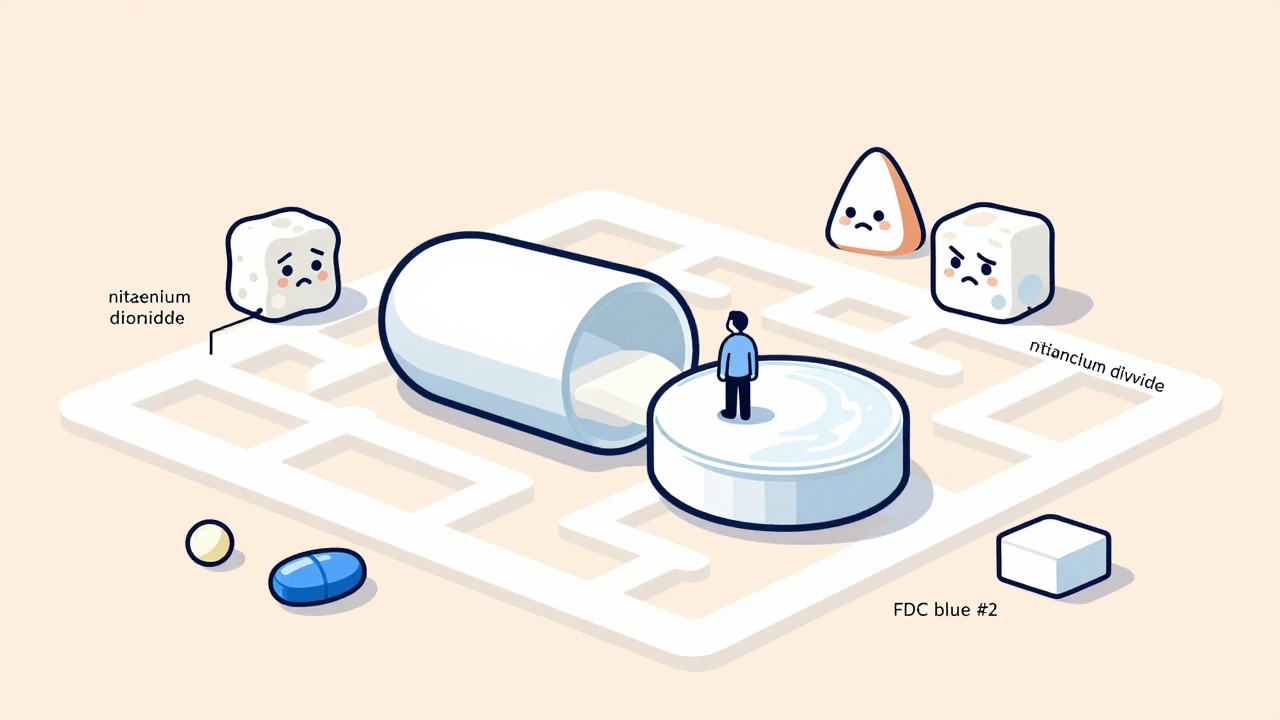
When you take a pill, the active ingredient is what treats your condition—but the inactive ingredients, non-medical components like fillers, binders, and coatings that help deliver the drug. Also known as excipients, they make the medicine stable, easy to swallow, and shelf-ready. Without them, most drugs would crumble, dissolve too fast, or be impossible to manufacture safely. You might think these are just harmless additives, but they can trigger allergies, interfere with absorption, or even cause side effects in sensitive people.
For example, someone with a gluten intolerance might react to a pill that uses wheat starch as a filler—even if the drug itself is gluten-free. Or a person allergic to lactose could get stomach upset from a generic version that uses milk sugar as a binder, while the brand-name version uses a different one. The FDA, the U.S. agency that regulates drugs and ensures safety and consistency requires generic drugs to match brand-name drugs in strength, dosage, and active ingredient—but not necessarily in inactive ones. That’s why two pills that treat the same thing can still feel different to your body.
That’s also why drug labeling, the fine print on medication packaging that lists all ingredients matters more than most people realize. You can’t assume two generics are identical just because they have the same active drug. One might contain dyes, preservatives, or coatings that another doesn’t. If you’ve ever had an unexpected reaction after switching brands, it’s often not the medicine changing—it’s the filler.
And it’s not just about allergies. Inactive ingredients affect how quickly a drug enters your bloodstream. Some coatings are designed to release the drug slowly—others dissolve fast. Change the coating, and you change how the drug works in your body. That’s why switching to a cheaper generic isn’t always as simple as saving money. For people on tight schedules—like those managing epilepsy, heart conditions, or thyroid disorders—even small differences in absorption can throw off their entire treatment.
It’s also why the Hatch-Waxman Act, the law that made generic drugs possible by balancing innovation and affordability doesn’t require identical inactive ingredients. The system works because the active part is the same—but that doesn’t mean all generics are created equal for every person. If you’ve had issues with one generic, ask your pharmacist for another brand. They can often swap it out without a new prescription.
And here’s the thing: most people never check the label. They trust that if it’s labeled the same, it’s the same. But the truth is, your body might care more about what’s *not* the active ingredient than what is. That’s why bringing your pill bottles to doctor visits—something we’ve seen in multiple posts—isn’t just a good habit, it’s a safety step. You need to see exactly what’s in each pill, not just what it’s supposed to do.
Below, you’ll find real-world examples of how inactive ingredients connect to everything from liver safety and drug interactions to generic pricing and patient adherence. Some posts show how hidden fillers cause reactions. Others explain why two identical-looking pills can behave differently. You’ll learn how to read labels, when to question a switch, and why the cheapest option isn’t always the safest one for you.
- Colin Hurd
- Dec, 9 2025
- 8 Comments
Excipients in Generics: How Inactive Ingredients Affect Tolerance and Side Effects
Many people experience side effects after switching to generic medications - not because of the active drug, but because of hidden inactive ingredients like lactose, dyes, or preservatives. Learn how excipients affect tolerance and what you can do about it.