
Benzodiazepine Tapering: Safe Strategies to Reduce Dependence
- Colin Hurd
- 23 January 2026
- 8 Comments
Stopping benzodiazepines cold turkey can be dangerous. If you’ve been taking them for more than a month, your body has adapted. Abruptly quitting can trigger seizures, panic attacks, hallucinations, or even life-threatening complications. That’s why benzodiazepine tapering isn’t just recommended-it’s essential for safety.
Why Tapering Matters
Benzodiazepines like Xanax, Valium, and Klonopin work fast. They calm anxiety, help you sleep, and stop seizures. But after weeks or months of daily use, your brain starts relying on them. When you stop, your nervous system goes into overdrive. Withdrawal isn’t just feeling “off.” It’s your brain struggling to rebalance without the drug. The 2024 Joint Clinical Practice Guideline, backed by 10 medical societies, confirms what doctors have seen for years: most people can safely stop benzodiazepines-with the right plan. The key? Slow, controlled reductions. Not just any reduction. A structured one.How Fast Should You Taper?
There’s no single speed that works for everyone. But guidelines give clear starting points. - If you’ve been taking benzodiazepines for 2-8 weeks: taper over at least 2 weeks. - For 8 weeks to 6 months: aim for 4 weeks minimum. - For 6 months to a year: 8 weeks or longer. - For over a year: plan for 6 to 18 months. The most common starting point is reducing your daily dose by 5-10% every 2-4 weeks. That might sound slow, but it’s the sweet spot between safety and progress. Going faster increases the risk of severe symptoms. Going slower can make you hyper-focused on the process, which sometimes makes anxiety worse.Which Benzodiazepine Are You Taking?
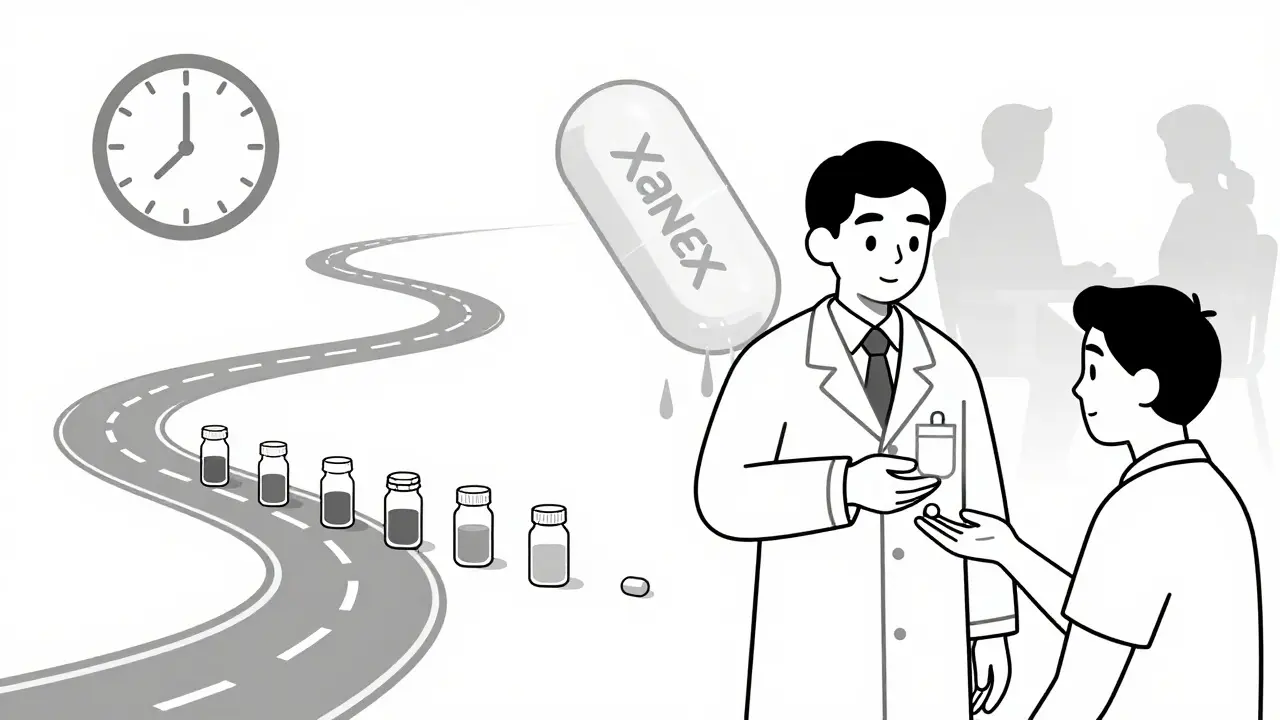
Not all benzos are the same. Your tapering plan depends heavily on the specific drug. Short-acting benzos like alprazolam (Xanax) or triazolam (Halcion) leave your system quickly. That means withdrawal hits harder and faster. Xanax, in particular, is linked to higher seizure risk during abrupt stops. These need the slowest tapers. Long-acting benzos like diazepam (Valium) stay in your body longer. That smooths out withdrawal symptoms. That’s why many doctors switch patients from Xanax to Valium before tapering. The conversion is precise: 1 mg of alprazolam equals about 20 mg of diazepam. This switch lets you reduce in smaller, more manageable steps. Triazolam is an exception. Because it’s so short-acting and rarely causes dependence, some guidelines say it can be stopped without tapering-only if you’ve used it for less than a few weeks.Three Main Tapering Approaches
There are three proven paths to reduce dependence:- Stay on the same medication. Gradually lower your current dose. Best for people who’ve been on a long-acting benzo like diazepam.
- Switch to a longer-acting equivalent. Most often, this means switching from alprazolam or lorazepam to diazepam. This is the gold standard for people on short-acting drugs.
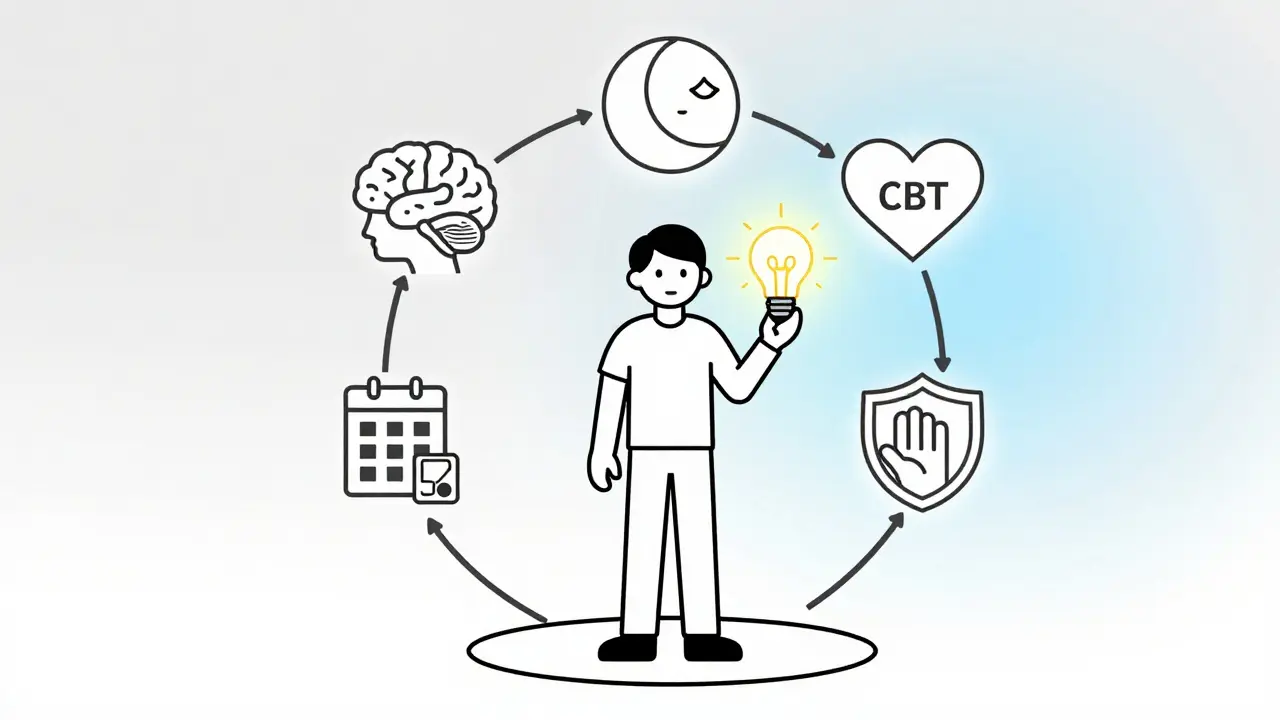
- Add supportive medications. Sometimes, doctors use non-benzodiazepine drugs to ease symptoms. Antidepressants like SSRIs can help with anxiety. Melatonin or sleep hygiene tools help with insomnia. Beta-blockers might reduce physical symptoms like tremors or rapid heartbeat.
Who Needs Tapering the Most?
Not everyone on benzodiazepines needs to quit. But some groups are at higher risk and should prioritize tapering:- Older adults. Benzodiazepines increase fall risk, confusion, and car accidents. The Beers Criteria lists them as potentially inappropriate for people over 65.
- People with a history of substance use. Mixing benzos with alcohol, opioids, or stimulants raises overdose risk.
- Those with PTSD or chronic pain. Studies show benzos interfere with trauma therapy and don’t help long-term pain.
- People on multiple prescriptions. Taking two or more benzos? That’s a red flag. Tapering should start immediately.
What to Expect During Tapering
Withdrawal symptoms aren’t the same for everyone. But common ones include:- Anxiety (often worse than before you started the drug)
- Insomnia or vivid dreams
- Tremors or muscle twitches
- Heart palpitations
- Sensory changes: buzzing in ears, light sensitivity, tingling
- Depersonalization: feeling detached from yourself
How to Make Tapering Work
Tapering isn’t just about pills. It’s about support.- Use one doctor and one pharmacy. This prevents accidental overuse or diversion.
- Get prescriptions for only 1-2 weeks at a time. This forces regular check-ins.
- Schedule weekly or biweekly appointments. Your doctor should track symptoms, not just doses.
- Involve a pharmacist. They can help with dose conversions and spot potential interactions.
- Consider peer support. People who’ve been through it can offer real advice and encouragement.
When Tapering Isn’t the Answer
Some people need to stay on low-dose benzodiazepines. That’s not failure. It’s medicine. If you’ve tried everything-therapy, other meds, multiple tapers-and you still can’t function without a tiny dose, staying on it may be the safest option. The goal isn’t to quit at all costs. It’s to reduce harm. For example, someone with severe treatment-resistant anxiety who’s been stable on 0.5 mg of clonazepam for 15 years might be better off staying there than risking a relapse. But even then, the dose should be the lowest possible. And regular reviews are still needed.What’s Changing in 2026
The field is evolving fast. In 2024, the FDA updated labeling to require warnings about sudden discontinuation. Twenty-eight states now require tapering plans for prescriptions over 90 days. And the NIH is funding a $2.4 million study on a mobile app that tracks symptoms and suggests dose adjustments in real time. The app will launch in mid-2026. Health systems are moving toward integrated care: tapering paired with therapy, lifestyle changes, and regular check-ins. By 2028, this won’t be optional. It’ll be standard.Final Thoughts
Benzodiazepine tapering isn’t a race. It’s a process. It takes patience. It takes support. It takes listening to your body. If you’re thinking about stopping, don’t do it alone. Talk to your doctor. Ask about switching to diazepam. Ask about therapy. Ask about peer support. Ask for a written plan. If your provider won’t help, find someone who will. The goal isn’t just to stop taking the pill. It’s to feel like yourself again-without the drug, without the fear, without the cycle.Can I taper off benzodiazepines on my own?
No. Tapering off benzodiazepines without medical supervision carries serious risks, including seizures and psychosis. Even if you feel fine, your body may be adapting in ways you can’t detect. A doctor can monitor your symptoms, adjust your dose safely, and intervene if complications arise. Never reduce or stop benzodiazepines without professional guidance.
How long does benzodiazepine withdrawal last?
Acute withdrawal symptoms usually last 1-4 weeks after each dose reduction. But some people experience protracted withdrawal-milder symptoms like anxiety, insomnia, or brain fog-that can last months. This doesn’t mean you’re addicted. It means your nervous system is still healing. Slowing the taper or adding therapy often helps. Most people see major improvement within 6-12 months after completing their taper.
Is diazepam better than alprazolam for tapering?
Yes, for tapering purposes. Diazepam has a long half-life, meaning it stays in your system longer and provides a smoother decline in drug levels. Alprazolam leaves your body quickly, causing sharper drops in concentration that trigger stronger withdrawal symptoms. Switching from alprazolam to diazepam before tapering is a standard, evidence-based strategy used by most clinics.
Can I use marijuana or alcohol to help with withdrawal symptoms?
No. Alcohol and marijuana can worsen withdrawal, increase seizure risk, and lead to new dependencies. They may offer temporary relief but interfere with long-term recovery. Many people who try to self-medicate end up needing treatment for multiple substance use disorders. Stick to medically approved strategies like CBT, sleep hygiene, and prescribed supportive medications.
What if my symptoms get worse during tapering?
If symptoms become severe-like seizures, extreme confusion, or hallucinations-contact your doctor immediately. For milder increases in anxiety or insomnia, your provider may pause the taper for 1-2 weeks, then resume at a slower pace. Never increase your dose to “fix” symptoms. That resets your progress. Instead, work with your team to adjust the schedule. Slower is safer.
Are there alternatives to benzodiazepines for anxiety and sleep?
Yes. For anxiety, SSRIs like sertraline or escitalopram are first-line treatments with fewer risks. For sleep, cognitive behavioral therapy for insomnia (CBT-I) is more effective long-term than any sleep medication. Other options include melatonin, magnesium, or low-dose trazodone under medical supervision. The goal is to replace dependency with sustainable coping skills.

Comments
Juan Reibelo
Man, I wish I'd known this five years ago. I tapered off Xanax cold turkey after six months and ended up in the ER with tremors and hallucinations. No joke-thought I was having a stroke. The diazepam switch saved me when I tried again. Slow and steady, 5% every three weeks. Took 14 months, but I haven't had a panic attack since. My brain finally feels like my own again.
January 25, 2026 AT 04:42
Josh McEvoy
bro i tried to quit benzos and it was like my brain turned into a broken alarm clock 🤯😭 kept waking up at 3am screaming into my pillow. switched to valium like they said? game changer. still tapering but at least i can sleep without crying now. thanks for the guide 👏
January 26, 2026 AT 09:29
Heather McCubbin
Let me tell you something about dependency you’re not hearing from the medical industrial complex. Benzodiazepines aren’t the problem. Our society is. We’ve turned anxiety into a product to be sold and then medicated. You think tapering fixes it? No. You need to dismantle the system that made you need it in the first place. Therapy helps but only if you stop blaming yourself and start blaming capitalism. I’m not just tapering pills-I’m tapering out of this broken world.
January 27, 2026 AT 22:33
Sawyer Vitela
That 5-10% rule is outdated. Meta-analysis from 2023 shows 3-5% every 4 weeks has 37% lower relapse rates. Also, triazolam isn’t an exception-any use over 14 days requires taper. And no, CBT doesn’t jump success rates to 68%-it’s 59% with CI 52-65%. Stop misquoting.
January 29, 2026 AT 16:38
Tiffany Wagner
I’ve been on 0.5mg clonazepam for 12 years. My doctor said I could try tapering but I’m scared. I tried once and it felt like my soul was being pulled out. I’m not quitting because I’m weak-I’m staying because I’m still alive. And that’s okay. I’m not broken for needing it. I’m surviving.
January 30, 2026 AT 14:33
Phil Maxwell
Just wanted to say thanks for writing this. I’m 4 months into my taper off Klonopin and I’ve been too scared to talk about it. The tremors and brain zaps were brutal. But I started doing yoga every morning and it’s helped more than I expected. Also, my dog sits on my lap when I get anxious. He’s the real MVP.
February 1, 2026 AT 11:15
Tommy Sandri
While the clinical guidelines presented are broadly accurate, it is imperative to recognize regional disparities in access to care. In rural communities, especially in the American South and Midwest, specialist-led tapering programs are often unavailable. Primary care providers may lack training in benzodiazepine withdrawal management. Policy interventions must extend beyond labeling and mandates to include funding for community-based behavioral health integration.
February 2, 2026 AT 19:25
asa MNG
ugh i hate how everyone acts like theyre so enlightened now that they tapered. i did it and it sucked. now im just a sad person who cant even drink coffee without shaking. and dont even get me started on the people who say "just do cbt" like its magic. i tried. i cried in the therapist's office for 45 minutes straight. and then i went home and took my pill. because i cant do this alone. and honestly? i dont wanna be "fixed". i just wanna feel normal. and if that means a little pill? so be it. 🤷♂️💊
February 2, 2026 AT 22:44