
How to Use Naloxone Nasal Spray for Opioid Overdose: A Step-by-Step Guide

- Colin Hurd
- 3 January 2026
- 13 Comments
When someone overdoses on opioids, every second counts. Their breathing slows, then stops. Their skin turns blue. They don’t respond to shouting or shaking. In these moments, naloxone nasal spray can bring them back - if you know how to use it. No medical degree is needed. No special tools. Just the right steps, done quickly and correctly.
What Naloxone Nasal Spray Does
Naloxone nasal spray - sold under the brand name NARCAN - is a medication that blocks opioids from binding to brain receptors. It doesn’t work on alcohol, benzodiazepines, or stimulants. But if someone has taken heroin, fentanyl, oxycodone, or any other opioid, naloxone can reverse the overdose in minutes. The FDA approved it for over-the-counter sale in 2023, meaning you can buy it at pharmacies without a prescription. Each spray delivers 4 mg of naloxone in a single, easy-to-use device. It’s small, lightweight, and designed to be used by anyone - a parent, a friend, a stranger.
Recognizing an Opioid Overdose
You don’t need to be sure someone has taken opioids to act. If they show these signs, assume it’s an overdose:
- Slow, shallow, or stopped breathing (fewer than 12 breaths per minute, or no chest movement for 15 seconds)
- Unresponsive to loud voices or physical stimulation (try rubbing your knuckles hard on their sternum for 5-10 seconds)
- Pinpoint pupils (very small, dark circles in the center of the eyes)
- Blue, gray, or pale lips and fingernails
- Limp body, snoring, or gurgling sounds
Don’t wait for all these signs. If someone is unresponsive and breathing poorly, act now. Fentanyl - the most common cause of overdose deaths today - can kill in under two minutes. Waiting for EMS to arrive is not an option.
Step-by-Step: How to Use Naloxone Nasal Spray
Follow these nine steps exactly. There’s no room for guesswork.
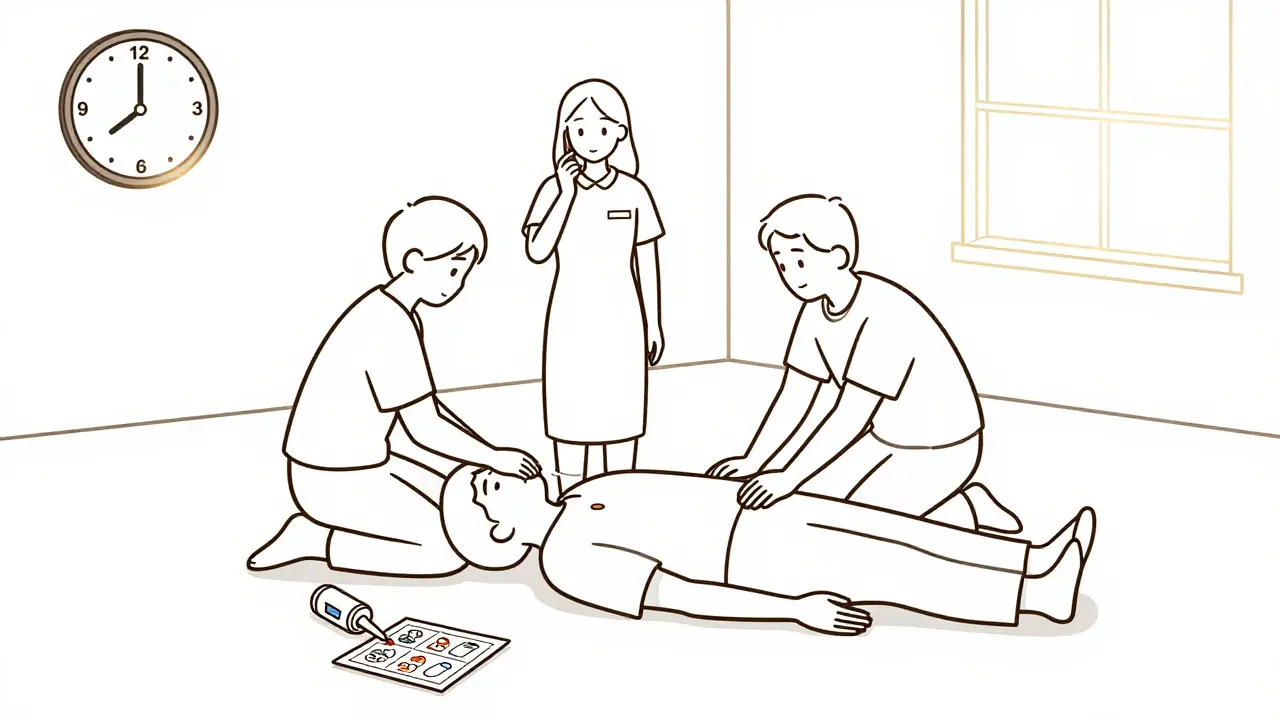
- Call 911 immediately. Before you do anything else, call emergency services. Tell them it’s a suspected opioid overdose. Even if you give naloxone, the person still needs medical care. Naloxone wears off in 30-90 minutes, but opioids like fentanyl can stay in the body much longer.
- Position the person on their back. Gently lay them flat. Tilt their head back slightly by lifting the chin. This opens the airway. Don’t waste time trying to sit them up or move them unnecessarily.
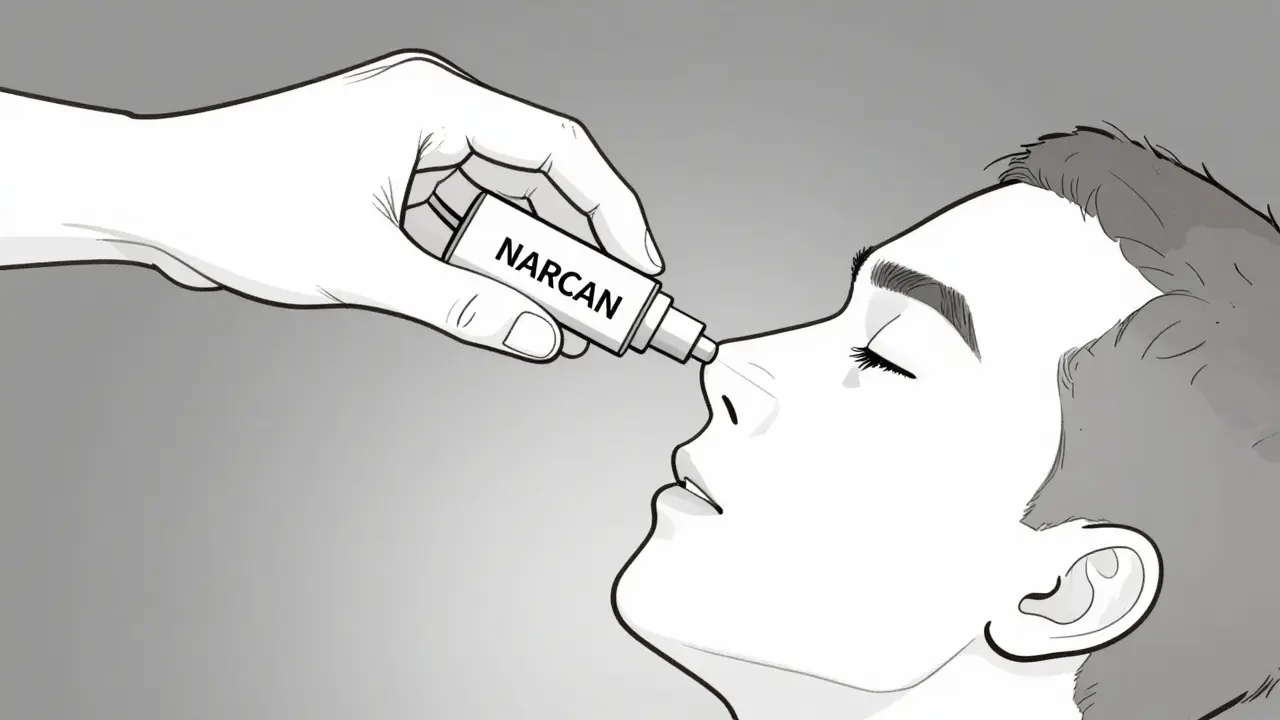
- Remove the nasal spray from its package. Hold the device with your thumb on the bottom and two fingers on the nozzle. Don’t press the plunger yet. Some people accidentally trigger the spray while opening the package - that wastes the dose. If this happens, you’ll need a second spray.
- Insert the nozzle into one nostril. Gently slide the tip into one nostril until your fingers touch the bottom of the nose. It should go in about half an inch to one inch. Don’t force it. The device is designed to fit snugly.
- Press the plunger all the way down. Push firmly and steadily until you hear a click. Make sure the entire dose is delivered. Studies show 18% of first-time users don’t press the plunger fully, which means less medication gets in. Don’t pull the device out until the plunger is fully depressed.
- Remove the spray and wait 2-3 minutes. Watch the person closely. Are they breathing normally? Is color returning to their skin? Do they start to move or groan? Naloxone usually starts working in 2-5 minutes. Don’t shake them or yell - just watch.
- If no response, give a second dose. If the person hasn’t improved after 2-3 minutes, use a new nasal spray in the other nostril. Don’t wait longer. Fentanyl overdoses often need two or even three doses. The CDC reports that 32% of fentanyl-related overdoses require multiple doses.
- Place them in the recovery position if they’re breathing. If they start breathing on their own but are still unconscious, roll them onto their side. Bend the top knee to stabilize them. This keeps their airway open and prevents choking if they vomit.
- Stay with them for at least 4 hours. Naloxone wears off faster than many opioids. A person can slip back into overdose after the naloxone wears off. Even if they seem fine, they need to be monitored by medical professionals. If they’re not breathing again, start CPR and give another dose if you have it.
What to Expect After Giving Naloxone
Some people wake up suddenly, confused, angry, or even violent. That’s because naloxone removes the opioid high - and the sudden withdrawal can be painful. They may scream, cry, or try to hit you. Stay calm. You did the right thing. They’re not mad at you - their body is in shock.
Don’t assume they’re out of danger just because they woke up. Many people who survive an overdose with naloxone end up back in the hospital because they didn’t get monitored long enough. That’s why EMS is non-negotiable.
Common Mistakes and How to Avoid Them
Even with clear instructions, people make errors under stress. Here are the most common ones:
- Waiting too long to call 911. Always call first. Naloxone buys time, but it’s not a cure.
- Not giving enough doses. If they don’t respond after 3 minutes, give another spray. Don’t assume one dose is enough.
- Incorrect placement. The nozzle must go deep enough into the nostril. If it’s too shallow, the spray won’t be absorbed properly.
- Not holding the plunger long enough. You need to press all the way down until you hear the click. Half-pressure = half-dose.
- Thinking naloxone works on everything. It only reverses opioids. If someone overdosed on cocaine or Xanax, naloxone won’t help. But if you’re unsure - give it anyway. It’s safe.
How to Prepare Before an Emergency
Don’t wait for a crisis to learn this. Practice now:
- Keep naloxone in your car, bag, or home - not locked away.
- Carry a printed step-by-step card (the VA has free ones you can print).
- Use a training device (available free from many health departments) to practice the motions.
- Watch a 2-minute video from SAMHSA or the CDC on YouTube. Repeat it once a month.
- Ask your pharmacist to show you how to use it when you buy it.
Training isn’t required to use naloxone - but it makes you 11% more likely to act correctly in a real emergency, according to CDC data.
Where to Get Naloxone Nasal Spray
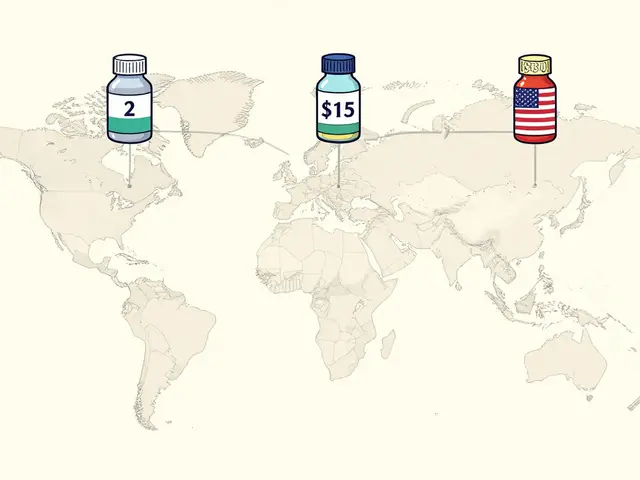
You can buy NARCAN Nasal Spray at any pharmacy - Walgreens, CVS, Walmart, Rite Aid - without a prescription. A two-pack costs about $45-$70 with insurance, or $140 without. Many community health centers, harm reduction programs, and local health departments give it out for free. Search online for “free naloxone near me” or call the National Overdose Response Service at 1-800-222-4357.
Why This Matters
In 2022, over 81,000 Americans died from opioid overdoses - most from fentanyl. But naloxone has already saved an estimated 27,000 lives in the U.S. since 2017. Every time someone learns how to use it, that number grows. You don’t have to be a doctor, a first responder, or a hero. You just have to be willing to act.
That’s all it takes.
Can naloxone nasal spray be used on children?
Yes. Naloxone nasal spray is safe for adults and children of all ages. The dose is the same regardless of weight or age. If a child is unresponsive and showing signs of opioid overdose, use the nasal spray immediately. The risk of not acting far outweighs any theoretical risk from the medication.
Does naloxone have side effects?
Naloxone itself is very safe. But if the person is dependent on opioids, they may go into sudden withdrawal. Symptoms can include nausea, vomiting, sweating, rapid heartbeat, or aggression. These are uncomfortable but not life-threatening. The priority is restoring breathing - and that’s what naloxone does.
What if I give naloxone to someone who didn’t overdose on opioids?
You won’t harm them. Naloxone only affects opioid receptors. If there are no opioids in their system, it does nothing. That’s why health officials say: if you’re unsure, give it anyway. It’s safe, even if unnecessary.
How long does naloxone last?
The effects of naloxone last 30 to 90 minutes. But many opioids - especially fentanyl, carfentanil, or acetylfentanyl - can stay in the body for hours. That’s why you must monitor the person for at least 4 hours after the last dose. A second overdose can happen after naloxone wears off.
Can I reuse a naloxone nasal spray?
No. Each device is single-use only. Once the plunger is pressed, the spray cannot be reused. If you need to give another dose, use a new spray. Always carry at least two doses when possible.
Is it legal to carry naloxone?
Yes. All 50 states and D.C. have laws allowing anyone to possess and administer naloxone. Forty-seven states have Good Samaritan laws that protect people who call 911 or give naloxone in good faith from legal consequences. You cannot get in trouble for trying to save a life.
How should I store naloxone nasal spray?
Store it at room temperature (68°F-77°F). Don’t leave it in a hot car or freezing glove compartment. The shelf life is 24 months. Check the expiration date on the box. If it’s expired, replace it. But if it’s the only one you have during an emergency - use it anyway. An expired dose is better than no dose.
Next Steps: What to Do After Saving a Life
If you’ve used naloxone successfully:
- Stay with the person until EMS arrives.
- Tell the paramedics exactly what you did - how many doses, when, and how they responded.
- Ask if they want help connecting to addiction treatment. Many people who survive overdoses are ready to change - but they need support.
- Replace your used naloxone spray. Keep a fresh one on hand.
- Consider training others. Teach a friend, family member, or coworker how to use it. One more person who knows how to act could save another life.
Overdose doesn’t always look like a movie. Sometimes it’s quiet. Sometimes it’s someone you know. But now you know what to do. And that changes everything.
Comments
Abhishek Mondal
I'm sorry, but this guide is dangerously oversimplified. Naloxone isn't a magic bullet-it's a temporary fix that ignores the systemic failures of pharmaceutical regulation, mental healthcare access, and poverty-driven addiction. You're telling people to just 'act' like it's a first-aid kit, but what about the root causes? This is harm reduction theater, not real solutions.
January 4, 2026 AT 05:35
Oluwapelumi Yakubu
My dear friends, let us not forget that naloxone is but a bridge-not a destination. The human soul yearns for more than chemical reprieve; it craves dignity, connection, and purpose. To hand out sprays like candy is to treat the fever while ignoring the plague that birthed it. Still-I applaud the spirit. Let us walk this path with compassion, not just pharmacology.
January 4, 2026 AT 14:14
josh plum
This is exactly what the government wants you to believe. Naloxone is a tool to keep addicts alive so they can keep using-and keep the system dependent on them. Why not just let nature take its course? The opioid crisis is a population control experiment disguised as public health. You think this spray saves lives? It just prolongs the cycle. Wake up.
January 6, 2026 AT 00:57
John Ross
The pharmacokinetics of naloxone are non-trivial. Its half-life is significantly shorter than that of fentanyl analogs, which is why the 4-hour monitoring window is non-negotiable. The CDC’s 2023 meta-analysis confirms that delayed re-dosing accounts for 68% of post-naloxone mortality. This guide gets the basics right, but misses the clinical nuance: you’re not just reversing receptors-you’re managing a neurochemical cascade. Know your pharmacodynamics.
January 7, 2026 AT 13:03
Clint Moser
i think u guys are missing the point... naloxone is being used by the cia to track addicts?? i read this on a forum... the spray has a microchip in it now... they use it to map drug networks... that’s why they give it away for free... dont trust the pharma giants
January 8, 2026 AT 04:17
Ashley Viñas
Honestly, this guide is too lenient. People who overdose are making poor life choices. Why should *I* be responsible for saving someone who chose to use dangerous drugs? If they’d just stopped after the first time, none of this would be necessary. This isn’t compassion-it’s enabling. And don’t get me started on the fact that these sprays are being handed out to teens like candy.
January 9, 2026 AT 11:09
Jason Stafford
They don’t want you to know this-but naloxone is actually making overdoses *worse*. Why? Because people think they’re invincible now. They take bigger doses. They use fentanyl with no fear. The spray is a placebo that fuels the epidemic. The real crisis isn’t the drugs-it’s the illusion of safety. And the media? They’re complicit. They glorify this ‘heroic’ spray while ignoring the 10,000 people who die every year from *non-opioid* overdoses that no one talks about.
January 9, 2026 AT 19:59
Ethan Purser
I used naloxone on my brother last year. He woke up screaming, punching the wall, calling me a traitor. I cried for three days. But then he got clean. Six months sober. I still carry two sprays in my pocket. Not because I think it’s a cure. But because I didn’t want to lose him. And if you think saving someone is easy-you haven’t held their hand while they choke on their own breath.
January 11, 2026 AT 01:25
Doreen Pachificus
I’ve been a nurse for 18 years. I’ve seen this play out too many times. The real hero isn’t the person who administers naloxone-it’s the one who shows up the next day, the next week, the next year. The one who doesn’t give up. This guide is good. But it’s only step one. What comes after? That’s the hard part.
January 12, 2026 AT 11:08
Charlotte N
I’ve carried naloxone since my cousin died in 2020 I always keep it in my purse next to my lip balm and keys I’ve used it twice both times the person was fine after EMS came I think everyone should have one I don’t know why it’s still not in every school and gas station
January 13, 2026 AT 03:34
Catherine HARDY
I’m not saying this is wrong… but what if the person who overdosed is a criminal? What if they’re the same person who robbed your neighbor? What if they’re going to do it again tomorrow? Is saving them really worth it if they just keep hurting people? I don’t know… I just… I can’t shake the feeling that we’re enabling a system that doesn’t want to change.
January 14, 2026 AT 05:25
Siobhan Goggin
This is exactly the kind of practical, life-saving knowledge we need more of. Thank you for writing this. I just ordered two sprays for my house and one for my daughter’s dorm. Simple, clear, and urgent. We can’t afford to wait for someone to become a statistic.
January 16, 2026 AT 01:24
Shanna Sung
Naloxone is a scam. The government is using it to track everyone who touches it. They’re putting microchips in the packaging. The FDA doesn’t even test the sprays anymore. They just approve them because Big Pharma owns them. I know someone who got a spray and their phone started glitching the next day. Coincidence? I think not.
January 17, 2026 AT 05:13