
Arrhythmias Explained: Atrial Fibrillation, Bradycardia, and Tachycardia
- Colin Hurd
- 8 December 2025
- 12 Comments
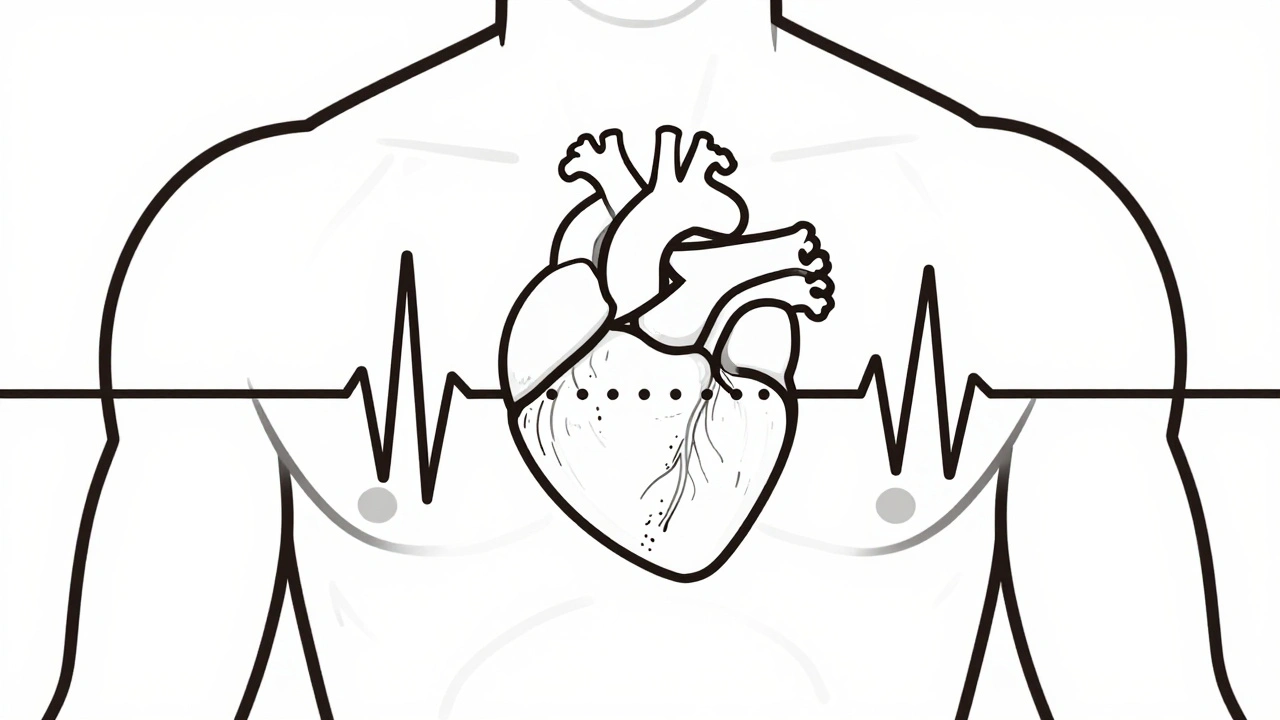
When your heart skips a beat, races like a drum, or feels like it’s fluttering in your chest, it’s not just nerves-it could be an arrhythmia. These irregular heart rhythms are more common than most people think, and while some are harmless, others can be serious. Three of the most frequently diagnosed types are atrial fibrillation, bradycardia, and tachycardia. Understanding what they are, how they feel, and what to do about them can make all the difference in protecting your heart health.
What Is Atrial Fibrillation?
Atrial fibrillation, or AFib, is the most common serious heart rhythm problem. Instead of beating in a steady rhythm, the upper chambers of your heart (the atria) quiver or flutter irregularly. This messes up the normal flow of blood, which can lead to clots, stroke, or heart failure if left untreated. You might notice symptoms like a racing or fluttering heartbeat, shortness of breath, extreme tiredness, dizziness, or chest discomfort. But here’s the catch-some people have no symptoms at all. That’s why AFib can go undetected for years. It’s often found during a routine check-up when a doctor notices an irregular pulse. AFib isn’t just one thing. It comes in different forms:- Paroxysmal AFib: Comes and goes on its own, usually within 24 to 48 hours.
- Persistent AFib: Lasts longer than a week and needs treatment to restore normal rhythm.
- Long-standing persistent AFib: Lasts more than a year.
- Permanent AFib: The heart stays out of rhythm, and doctors focus on controlling the rate instead of trying to fix it.
What Is Bradycardia?
Bradycardia means your heart beats slower than normal-usually fewer than 60 beats per minute. For athletes or very fit people, this is perfectly normal. Their hearts are strong and efficient, so they don’t need to pump as often. But if you’re not an athlete and your heart is slowing down too much, it can be a problem. When your heart doesn’t pump enough blood to your brain and body, you might feel dizzy, faint, fatigued, or short of breath. In severe cases, it can lead to cardiac arrest. Common causes include:- Aging-related changes in the heart’s electrical system
- Damage from heart disease or a heart attack
- Electrolyte imbalances (like low potassium or calcium)
- Underactive thyroid
- Side effects from medications like beta-blockers or calcium channel blockers
What Is Tachycardia?
Tachycardia is the opposite of bradycardia: your heart beats faster than normal-over 100 beats per minute at rest. Like bradycardia, it’s not always dangerous. You might experience it after exercise, during stress, or when you’re anxious. But if your heart races without reason, it could signal a problem. There are different types:- Sinus tachycardia: A normal response to stress, fever, or exercise. Your heart’s natural pacemaker is just working harder.
- Supraventricular tachycardia (SVT): Starts in the upper chambers. Often comes on suddenly and can make your heart pound at 150-250 beats per minute.
- Ventricular tachycardia (VT): Starts in the lower chambers. This is the most dangerous type because it can lead to sudden cardiac arrest.
How Are These Arrhythmias Diagnosed?
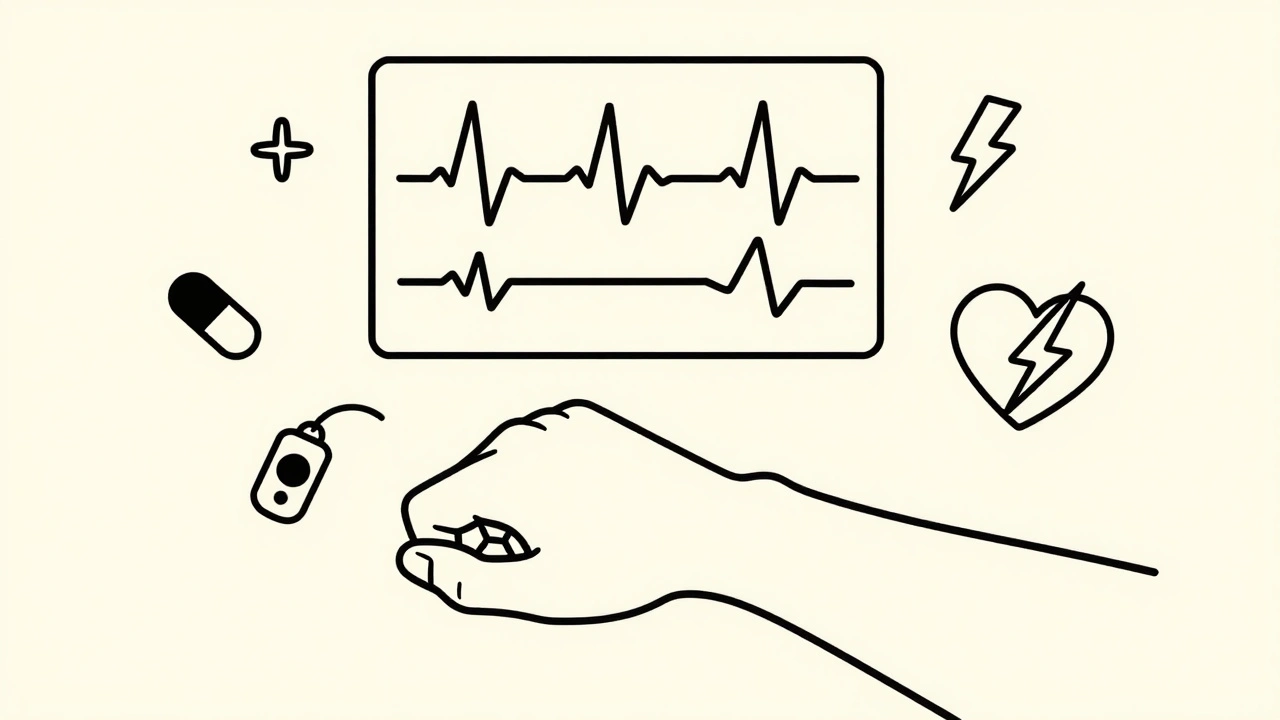
If you’re having symptoms, your doctor won’t just guess. They’ll start with a physical exam and ask about your medical history-especially if you have high blood pressure, diabetes, sleep apnea, or a family history of heart disease. The most important test is the electrocardiogram (ECG). It records your heart’s electrical activity in real time. If your arrhythmia isn’t happening during the test, you might need:- A Holter monitor (worn for 24-48 hours)
- An event recorder (worn for weeks, activated when you feel symptoms)
- A loop recorder (implanted under the skin for long-term monitoring)
Treatment Options: What Works and What Doesn’t
There’s no one-size-fits-all fix. Treatment depends on the type of arrhythmia, how often it happens, and how much it affects your life. For AFib, doctors usually focus on two goals: controlling the heart rate and preventing strokes. Medications like beta-blockers (metoprolol) or calcium channel blockers (diltiazem) help slow the heart. Blood thinners reduce stroke risk. If meds don’t work, cardioversion-using electric shocks or drugs to reset the rhythm-might be tried. For recurring cases, cardiac ablation is becoming more common. Newer techniques like pulsed field ablation use electrical pulses instead of heat or cold, making the procedure safer and reducing damage to nearby tissues. For bradycardia, if it’s not causing symptoms, no treatment is needed. If it is, the answer is often a pacemaker. These devices are implanted under the skin near the collarbone and send tiny electrical signals to keep your heart beating steadily. For tachycardia, the approach varies. For SVT, a simple technique called the Valsalva maneuver (holding your breath and bearing down) can sometimes stop the episode. Medications like adenosine can reset the rhythm quickly. For VT, ablation or an ICD is often necessary. Lifestyle changes matter too. Cutting back on caffeine, quitting smoking, managing stress, and controlling high blood pressure can reduce how often arrhythmias happen. Even losing 10% of your body weight can significantly improve AFib symptoms.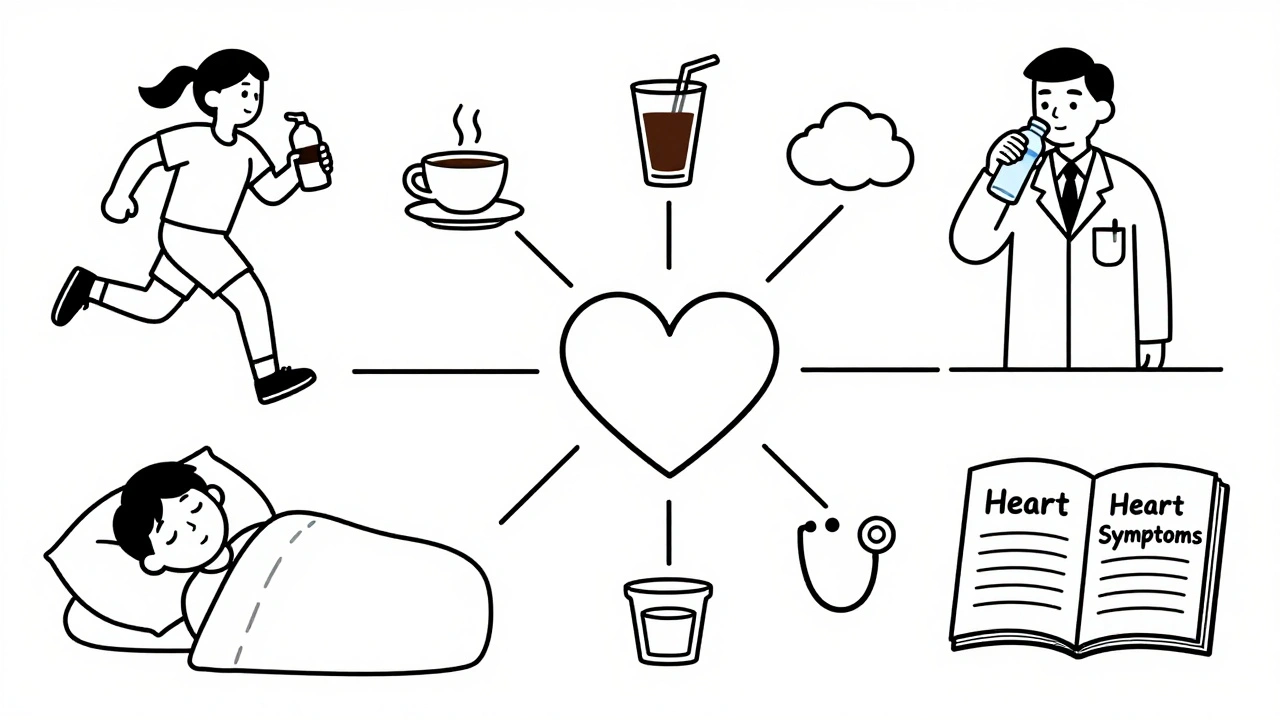
When to Worry-and When Not To
Not every skipped beat means trouble. Occasional palpitations after coffee or a big meal are normal. But if you experience:- Sudden dizziness or fainting
- Chest pain that doesn’t go away
- Shortness of breath at rest
- A pulse that feels irregular and fast for more than a few minutes
Living Well With an Arrhythmia
You can still live a full, active life with atrial fibrillation, bradycardia, or tachycardia. Many people manage their condition with medication, devices, and smart habits. - Track your symptoms in a journal. Note when they happen, what you were doing, and what you ate or drank. - Know your pulse. Check it regularly at your wrist. A steady rhythm is good. A fluttering or racing pulse might mean something’s off. - Stay active. Walking, swimming, and cycling are great. Avoid extreme endurance sports if you have VT or severe AFib. - Avoid triggers. Alcohol, energy drinks, nicotine, and illegal drugs can make arrhythmias worse. - Get regular check-ups. Even if you feel fine, your heart can change over time. Support groups and resources like the Heart Rhythm Society’s UpBeat.org offer practical advice and community. You’re not alone.Final Thoughts
Arrhythmias aren’t a death sentence. They’re a signal-from your heart-that something needs attention. Atrial fibrillation, bradycardia, and tachycardia are different, but they all share one thing: they’re treatable. The key is catching them early, understanding your type, and working with your doctor to find the right plan. Your heart doesn’t need to be perfect. It just needs to be cared for.Can you have atrial fibrillation without knowing it?
Yes. Many people with atrial fibrillation have no symptoms at all. It’s often discovered during a routine check-up when a doctor notices an irregular pulse or an ECG shows abnormal heart rhythms. This is why regular health screenings are important, especially if you’re over 65 or have risk factors like high blood pressure or diabetes.
Is a slow heart rate always dangerous?
No. A slow heart rate (bradycardia) is normal for athletes and healthy, fit individuals. Their hearts are strong and pump more blood with each beat, so they don’t need to beat as often. It becomes dangerous only if the heart rate drops too low to supply enough blood to the brain and body, causing dizziness, fainting, or fatigue.
Can stress cause tachycardia?
Yes. Stress, anxiety, caffeine, or even a sudden fright can trigger sinus tachycardia-a normal, temporary increase in heart rate. But if your heart races without reason, stays fast for long periods, or comes with chest pain or fainting, it could be a more serious type like SVT or ventricular tachycardia, which needs medical evaluation.
Do all arrhythmias need medication?
No. Some arrhythmias, like occasional skipped beats or mild sinus tachycardia, don’t require treatment. Others, like persistent AFib or ventricular tachycardia, often need medication, devices like pacemakers or ICDs, or procedures like ablation. Treatment depends on the type, severity, and impact on your daily life.
Can lifestyle changes help with arrhythmias?
Absolutely. Losing weight, reducing alcohol intake, quitting smoking, managing high blood pressure, and cutting back on caffeine can significantly reduce how often arrhythmias occur. For people with AFib, even a 10% weight loss has been shown to improve symptoms and reduce the need for medication.
Is cardiac ablation risky?
All medical procedures carry some risk, but cardiac ablation is generally safe and effective for many types of arrhythmias. Traditional ablation uses heat or cold to destroy small areas of heart tissue causing the irregular rhythm. Newer techniques like pulsed field ablation use electrical pulses instead, which are less likely to damage nearby structures like the esophagus or nerves. Success rates are high, especially for SVT and some forms of AFib.
What’s the link between AFib and stroke?
In AFib, the heart’s upper chambers don’t contract properly, so blood can pool and form clots. If a clot breaks loose, it can travel to the brain and cause a stroke. People with AFib are five times more likely to have a stroke than those without it. That’s why doctors often prescribe blood thinners to prevent clots, even if the person feels fine.
Can you exercise with an arrhythmia?
Yes, in most cases. Regular, moderate exercise like walking, swimming, or cycling is encouraged. It helps control weight, lowers blood pressure, and improves heart health. But if you have ventricular tachycardia or severe, uncontrolled AFib, you should talk to your doctor before starting or changing your routine. Avoid extreme endurance sports unless cleared by a specialist.
If you’ve been told you have an arrhythmia, don’t panic. You’re not broken. You’re just a little out of sync-and that’s something modern medicine can fix.
Comments
Taya Rtichsheva
so i had afib last year and honestly i thought i was just having panic attacks until my grandma screamed at me to get checked out. turns out i was basically a human who forgot how to beat properly. now i take blood thinners and still drink coffee. life goes on.
December 9, 2025 AT 14:57
Christian Landry
i love how this post breaks it down so simply. my dad got a pacemaker last year and now he walks 5 miles a day and complains about the battery life like it’s his phone. 😅 modern medicine is wild.
December 10, 2025 AT 08:41
Katie Harrison
I’ve noticed that many people dismiss arrhythmias as ‘just stress’-but if your heart is skipping beats while you’re sitting still, that’s not ‘being anxious.’ It’s a signal. Please don’t ignore it. Especially if you’re over 50. Get checked. Seriously.
December 10, 2025 AT 12:56
Mona Schmidt
The part about pulsed field ablation being safer is so important. I work in cardiac rehab, and patients are terrified of ablation because they think it’ll burn a hole in their heart. The new tech is a game-changer-it’s precise, less invasive, and recovery is way faster. More awareness needed.
December 10, 2025 AT 21:06
Guylaine Lapointe
I’m just saying-why are we medicating people for heart rhythms when we could just tell them to stop drinking kombucha and caffeine? I’ve seen 3 people in my yoga class get diagnosed with AFib after they started drinking 3 energy drinks a day. The system is broken.
December 10, 2025 AT 22:37
Michael Robinson
heart beats. if it beats wrong, it needs help. not magic. not fear. just care.
December 12, 2025 AT 04:54
Andrea Petrov
You know who benefits from all these pacemakers and ablations? The companies that make them. Did you know the FDA gets funding from device manufacturers? Coincidence? I think not. Wake up.
December 12, 2025 AT 20:07
Graham Abbas
There’s something poetic about the heart-a muscle that never sleeps, yet can be so fragile. We measure its rhythm like a metronome, but it’s more like a heartbeat in a poem: sometimes erratic, sometimes perfect, always trying to sing. We treat it like a machine. But maybe it’s more like a soul that just needs quiet.
December 14, 2025 AT 18:05
Haley P Law
I had SVT last year and did the Valsalva maneuver in the middle of a Zoom call. My boss thought I was choking. I was like ‘nope, just resetting my heart’ and kept talking. The look on her face? Priceless. 😂
December 16, 2025 AT 05:22
Andrea DeWinter
If you’re over 40 and have high blood pressure or sleep apnea, get an ECG even if you feel fine. I ignored mine for years. Ended up in the ER with AFib. Now I track my pulse daily. It’s like checking your tire pressure. You don’t wait until the tire explodes.
December 16, 2025 AT 18:32
Steve Sullivan
i used to think heart stuff was for old people. then my buddy, 32, got an icd after passing out during a game of basketball. now he lifts weights, plays guitar, and jokes that his chest has a built-in taser. we all laugh. but we also check in. hearts are weird. and awesome.
December 16, 2025 AT 22:35
George Taylor
This article is dangerously oversimplified. You mention lifestyle changes... but you don’t mention the 20-year study from the Mayo Clinic showing that 78% of AFib patients who lost weight still required anticoagulants. You’re giving false hope. People die because they think ‘eating better’ fixes everything. This is irresponsible.
December 18, 2025 AT 13:32