
Obstructive Sleep Apnea: CPAP Therapy and Alternative Treatments
- Colin Hurd
- 29 March 2026
- 10 Comments
The Silent Struggle of Sleepless Nights
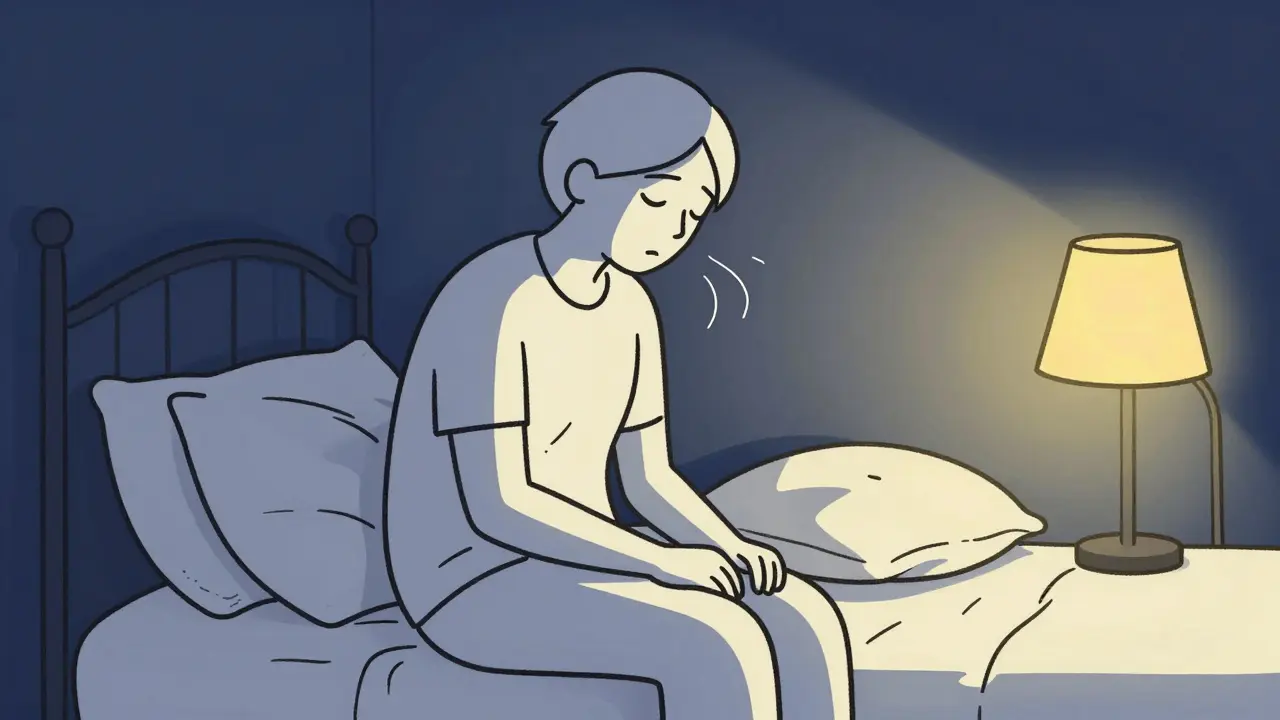
You wake up tired, even after eight hours in bed. Your partner complains about your snoring sounding like a chainsaw starting in the engine room. If this sounds familiar, you might be dealing with Obstructive Sleep Apnea (OSA). It is more than just loud snoring; it is a serious condition where your airway collapses repeatedly while you sleep, cutting off your oxygen supply. The brain panics, briefly wakes you up to breathe, and then you drift back off without remembering. By morning, your body hasn't gotten a single restful hour.
About 1 billion people worldwide live with sleep apnea, yet many go undiagnosed or untreated because the symptoms feel manageable until they become life-threatening. The goal isn't just quiet sleep for your partner; it is protecting your heart, your blood pressure, and your brain function from the strain of nightly hypoxia.
Understanding CPAP Therapy: The Gold Standard
For decades, Continuous Positive Airway Pressure (CPAP) has been the primary weapon against OSA. Developed in Australia by Dr. Colin Sullivan in the early 1980s, this technology uses air pressure to act as a pneumatic splint, holding your throat open so air can flow freely. Think of it like blowing up a paper bag to keep it rigid enough not to collapse under its own weight.
How CPAP Machines Work
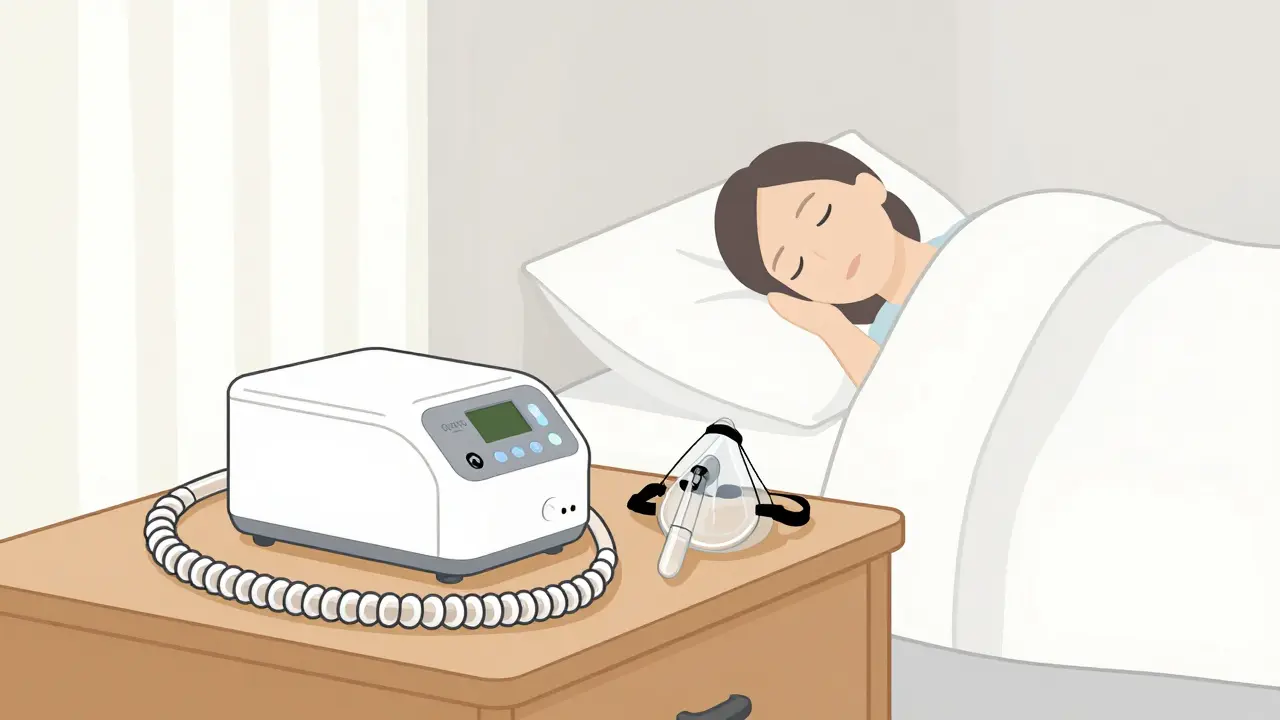
The machine sits on your nightstand and pushes pressurized air through a tube into a mask you wear over your nose or mouth. Modern units are incredibly sophisticated. Older models required manual setting changes, but today's devices use auto-adjusting algorithms. For example, an Auto-CPAP (APAP) device monitors your breathing patterns in real-time. If it detects a narrowing airway or a pause in breathing, it instantly ramps up the pressure. If you breathe normally, it lowers the pressure for comfort.
| Feature | Typical Specification |
|---|---|
| Pressure Range | 4 - 20 cm H2O |
| Noise Level | 26 - 30 decibels (whisper quiet) |
| Connectivity | Bluetooth/Wi-Fi to smartphone apps |
| Maintained Temperature | Heated humidification included |
Major manufacturers like ResMed and Philips Respironics dominate the market, offering machines that weigh less than 3 pounds and connect directly to apps like AirView or DreamMapper. These apps allow you to track your usage hours, leak rates, and residual Apnea-Hypopnea Index (AHI)-the metric doctors use to see if your sleep apnea is under control. A successful night usually sees the AHI drop below 5 events per hour.
The Adherence Challenge: Why People Quit
While CPAP is highly effective medically, human habits are tricky. You might have a machine that works perfectly on paper, but if you aren't wearing it for at least four hours a night, the health benefits vanish. Statistics show that roughly 50% of users struggle to wear their CPAP for more than four hours during the first year. The barriers are physical and psychological.
Many users report feelings of claustrophobia. Wearing a mask connected by a hose makes some feel trapped. Others struggle with leaks. If air escapes around the edges of the nasal mask, it blows right into your eyes, drying them out and causing irritation. Nasal congestion is another huge hurdle; for 30% of patients, a stuffy nose makes breathing through a nasal mask impossible. Some find the pressure feels too "heavy," making exhalation difficult, though modern devices have Exhale Pressure Relief features to counteract this.
If you can't get used to the mask, it doesn't matter how advanced the technology is. That's where alternative treatments become vital options to discuss with your doctor.
Effective Alternatives to CPAP
Not every patient responds well to positive airway pressure. Fortunately, other therapies exist that tackle the same problem-airway collapse-from different angles. Here is a breakdown of the most viable alternatives based on severity and anatomy.
Oral Appliances (Mandibular Advancement Devices)
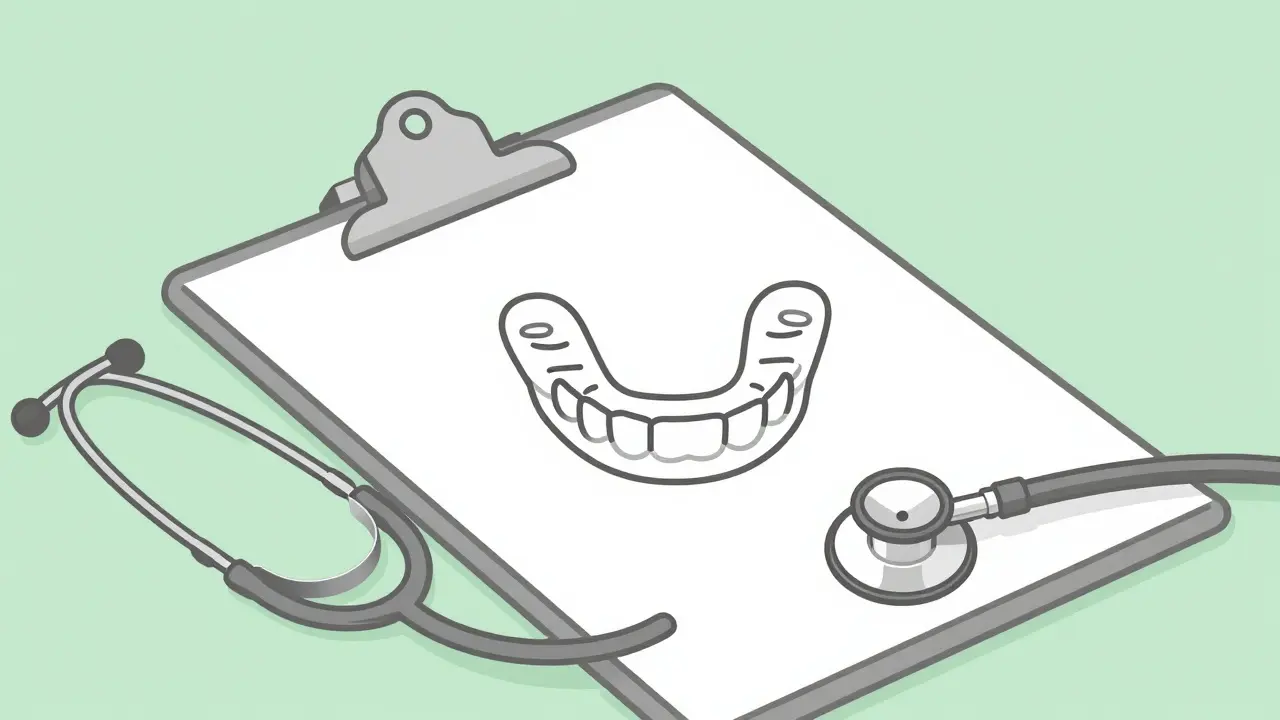
If you have mild to moderate OSA, or even severe OSA where CPAP is intolerable, an oral appliance might be your best bet. These look somewhat like sports mouthguards or orthodontic retainers. They physically push your lower jaw forward, which tightens the tissues in the back of your throat. A study cited by the American Academy of Dental Sleep Medicine found that oral appliances are used for 77% of nights after one year, compared to CPAP's median adherence struggles.
The upside is portability and comfort. There is no machine, no power cord, and no bulky tubing. This makes travel significantly easier. However, they do require adjustment. Over time, wearing the device can shift your teeth alignment slightly, meaning you need regular dental checkups to monitor your bite. Effectiveness varies by chin shape and jaw strength; some people still have high AHI scores despite using the device correctly.
Surgical Interventions
Surgery removes the blockage physically rather than pushing air through it. The most common procedure is Uvulopalatopharyngoplasty (UPPP), which involves removing excess tissue from the soft palate and uvula. Historically, success rates hovered around 40-60%, meaning it often didn't fully resolve the issue, and recurrence was possible due to scar tissue.
A newer, more advanced option is Hypoglossal Nerve Stimulation. This involves implanting a small device similar to a pacemaker behind your ear. It connects to your tongue's nerve. When you inhale, the device stimulates the nerve to pull the tongue forward, opening the airway. This requires surgery but shows high efficacy in clinical trials, reducing AHI by nearly 80% in suitable candidates. However, the cost is significant, often exceeding $35,000 out-of-pocket depending on insurance coverage.
Choosing the Right Path for You
Selecting a treatment isn't just about reading a brochure; it requires analyzing your specific diagnosis and lifestyle.
- Severity Matters: Patients with an AHI greater than 15 (severe) usually see better results with CPAP than oral appliances alone, though combining them can work for some.
- Anatomy Counts: If you have large tonsils or a very narrow throat, surgery might offer permanent relief. If your airway collapses due to positional issues (lying on your back), positional therapy devices could be a low-cost start.
- Lifestyle Fit: Do you travel weekly? Oral appliances win here. Do you have severe hypertension that CPAP could help manage via blood pressure reduction? CPAP remains the strongest evidence-backed option for cardiovascular protection.
Consulting a sleep specialist is non-negotiable. Home testing kits are becoming popular, but they sometimes miss the nuance needed for surgical planning versus device prescription. Ensure your provider checks not just your AHI, but your desaturation levels and comorbidities like atrial fibrillation, which CPAP treats aggressively.
Comments
Calvin H
Good luck finding a doctor who actually prescribes something besides the most expensive CPAP on the market.
March 31, 2026 AT 16:49
William Rhodes
You have to fight for your health because nobody else is going to do it for you! Stop making excuses and get diagnosed now before your heart gives out. It is easy to feel defeated by the initial learning curve but pushing through yields the best results. Ignoring the signs is simply inviting disaster later down the road.
April 1, 2026 AT 16:21
Dan Stoof
Yes yes YES!!! The pressure can feel weird at first but then you realize you are actually breathing!!! Everyone needs to give it a shot!!!!! The apps track everything perfectly!!!!
April 3, 2026 AT 03:36
Christopher Curcio
We need to focus on the residual Apnea-Hypopnea Index rather than subjective feelings. Desaturation levels below ninety percent indicate significant hypoxia during sleep cycles. Mandibular advancement devices work by altering the genioglossus muscle tension effectively. Patients should monitor their AHI scores monthly for consistency.
April 4, 2026 AT 13:24
Katie Riston
I find it fascinating how we quantify human rest with such rigid metrics. The concept of silence being a metric itself is poetic yet terrifying when applied to medical necessity. Perhaps the struggle lies in accepting our physical vulnerabilities rather than fighting against the mechanics of biology. We live in a world that prioritizes productivity over restorative darkness yet here we stand debating machines that save lives during those dark hours. It makes one wonder if technology is truly curing the condition or merely masking the symptoms of an unhealthy modern lifestyle. Our reliance on external pressure to breathe suggests a deeper disconnection from natural bodily rhythms that we ignore at our own peril. Nevertheless the science stands firm and ignoring the numbers would be negligent for anyone facing cardiac risks. We must balance the philosophical doubt with the clinical reality presented in the study data. Every number represents a potential life saved or a family unit preserved from the chaos of chronic fatigue. I cannot help but feel the weight of those statistics pressing down on us all despite the clinical detachment. It is a complex interplay of biology and engineering that demands our full attention. Ultimately the choice reflects how we value our future selves against present comfort. Many people fail to see the long game until the damage becomes irreversible. We are essentially borrowing time from the future every night we skip treatment. Hope remains the strongest motivator alongside fear. These discussions matter because they touch on what it means to survive. I agree with the technical points but feel the soul of the issue is often lost in translation.
April 6, 2026 AT 02:16
Ruth Wambui
Corporate greed drives the prescription pad more than patient well-being. Sometimes I wonder why we aren't fixing the environment causing the apnea instead of masking the symptoms. Every device requires proprietary software that locks you into an ecosystem. They want data on your breathing patterns stored on their servers. Trust nothing that tracks your biological functions remotely.
April 7, 2026 AT 03:11
Carolyn Kask
Oh please stop with the conspiracy nonsense. Medical insurance dictates coverage regardless of your paranoia. If you had proper education you wouldn't worry about servers collecting data. American healthcare standards are far superior so stop whining about foreign tech limitations. We handle sleep disorders better than any other nation. Just follow the protocol and shut up.
April 7, 2026 AT 08:54
Brian Yap
Fair dinkum mate the CPAP gear changed my life completely. Started hating it first week but now I barely notice the mask. Aussie mates swear by the ResMed units mostly. Humidity helps heaps with the nose drying out issues. Worth the hassle if you want energy back.
April 7, 2026 AT 17:23
Adryan Brown
That perspective highlights the importance of patience in adopting new medical technologies. There is validity in your experience regarding the adjustment period many endure. While cultural differences in healthcare access exist the physiological need remains universal. We should strive for understanding between those skeptical of the industry and those grateful for the tools. Compromise seems necessary when discussing financial barriers versus health outcomes. Listening to stories like yours bridges the gap between statistical data and human experience. It is crucial to acknowledge that different anatomies respond differently to interventions. Not everyone finds the same solution working well for their specific case. We must encourage dialogue rather than dismissal of alternative viewpoints in this forum. Your story provides evidence that tolerance develops over time for difficult therapies. The journey to recovery is rarely linear for chronic conditions involving sleep architecture. We should support each other in navigating these challenging health decisions together. Constructive feedback improves the collective understanding of treatment adherence issues. Gratitude for functionality should temper criticism of the cost associated with therapy. Every individual contribution matters in building a supportive community for patients. Please continue sharing personal insights as they validate the experiences of others.
April 9, 2026 AT 16:42
Angel Ahumada
One must consider the epistemological implications of mechanical respiration upon the soul. The machine breathes for you while you surrender autonomy to a compressor. This is not freedom but a new form of domestication by industry. Our ancient ancestors slept without such interventions yet suffered less cardiac strain perhaps. Modernity demands efficiency at the expense of organic function which is tragic. We worship the algorithm that monitors our REM cycles like digital idols. The cost of admission to this technological age is high indeed financially. Yet one cannot deny the visceral relief reported by those who submit to the mask. It creates a dependency loop that pharmaceutical companies surely exploit. We become cyborgs in our bedrooms quietly accepting the hose. Nature intended us to collapse occasionally and wake refreshed not to be sustained artificially. But the heart is fragile and the airway collapses easily in gravity. So we pay the price in blood pressure regulation primarily. It is a bargain struck between mortality and comfort that few understand. We march forward into sleep paralysis mediated by silicone and electricity. This is the price of progress unfortunately.
April 10, 2026 AT 00:58